

Maddy summaryThe SHIELD Act of 2025 withholds federal funding from states or local governments that arrest, detain, or prosecute federal officers for lawful immigration enforcement actions. It directly affects jurisdictions (like cities or counties) that interfere with federal immigration enforcement, such as by blocking ICE operations. The law requires the Attorney General and DHS to determine violations, then blocks all federal grants and contracts for the affected jurisdiction during the fiscal year. Funding withheld is reallocated to compliant jurisdictions, and restoration requires written assurances that interference will stop.
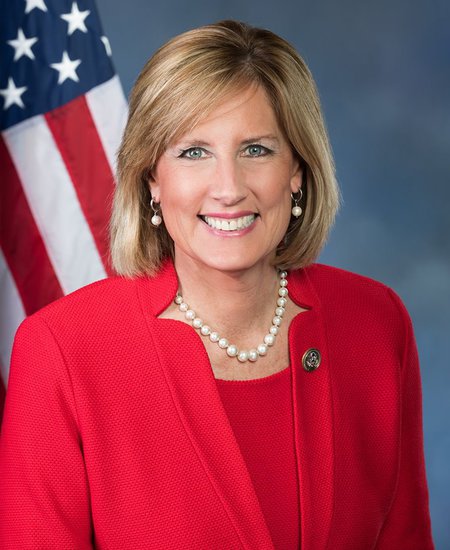
Rep. Claudia Tenney
Sponsored bills
Maddy summaryThis bill establishes new requirements for pharmacy benefit managers (PBMs) working with Medicare Part D prescription drug plans and Medicaid programs. It mandates that PBMs pay pharmacies a specific reimbursement amount based on drug acquisition costs plus a fixed fee, pass through manufacturer rebates directly to beneficiaries at the point of sale, and prohibits steering practices that direct patients to specific pharmacies. The bill applies to Medicare Part D plans and Medicaid managed care organizations beginning January 1, 2027, affecting how PBMs interact with pharmacies and handle drug rebates. Violations could result in criminal penalties of up to $1 million or 10 years in prison for willful noncompliance. The bill aims to increase transparency and fairness in pharmacy drug pricing for Medicare and Medicaid beneficiaries.
Maddy summaryHR 6582, the Flight Risk Reduction Act, changes federal pretrial detention rules for non-citizens facing criminal charges. It creates a legal presumption that non-citizens (not U.S. citizens or lawful permanent residents) cannot be released before trial unless they prove they won’t skip court or harm others, using "clear and convincing evidence." The bill specifically states that having family or jobs in the U.S. cannot be used to challenge this presumption. This directly affects non-citizens charged in federal court who might otherwise seek pretrial release.
Maddy summaryHR 6509, the SAFE Drugs Act of 2025, limits how often pharmacies and healthcare providers can create custom drug formulations that copy standard medications. It restricts compounding any drug essentially identical to a commercially available product to no more than 20 times per month for individual patients. The bill also requires pharmacies compounding such drugs for out-of-state patients more than 20 times monthly to report details to the FDA, while exempting hospital pharmacies. These changes aim to improve safety oversight of non-standard drug compounding by setting clear limits and reporting rules.
Maddy summaryHR 6540, the "Anti-Communism Week Act," designates an annual observance to commemorate historical impacts of communist regimes. The bill requests the President to annually designate a week as "Anti-Communism Week" and issue a proclamation encouraging public ceremonies. It does not create new policies or affect specific groups; it only adds a procedural requirement to the U.S. Code for an annual presidential designation. The bill focuses on commemoration, not policy change, and references historical findings about communism in its preamble.
Maddy summaryThis bill directs the American Battle Monuments Commission to correct historical errors by identifying Jewish World War I and II veterans buried overseas under incorrect Christian markers (Latin crosses) and replacing them with appropriate markers. It establishes a 10-year program to contact families of affected veterans, with the Commission funding the effort at $500,000 annually through nonprofit contracts. The program specifically targets veterans buried in foreign U.S. military cemeteries with markers indicating non-Jewish faith, addressing a documented mistake affecting approximately 900 Jewish servicemembers. This directly affects Jewish veterans' families by honoring their heritage and correcting past burial inaccuracies.
Maddy summaryHRES 932 is a symbolic resolution passed by the House of Representatives that condemns six specific members of Congress (including Senators Kelly and Slotkin and Representatives Crow, Deluzio, Goodlander, and Houlahan) for allegedly making statements that encouraged military and intelligence personnel to disobey orders from the President. The resolution claims these lawmakers falsely suggested the administration issued "illegal orders" and undermined the military chain of command, violating the Uniform Code of Military Justice (UCMJ). It does not create new laws or policies but formally denounces the lawmakers' statements as "dangerous and seditious rhetoric." As a procedural resolution, it has no binding effect on military conduct or policy.
Maddy summaryHR 6466, the Forced Abortion Prevention and Accountability Act, prohibits non-consensual administration of abortion drugs (like mifepristone or misoprostol) to pregnant women without their informed consent. It criminalizes this act with penalties up to 25 years in prison and allows victims to sue for triple damages, psychological/physical injury compensation, and attorney fees. The bill directly affects pregnant women who might face coerced procedures and medical providers or others who administer such drugs without consent. Key provisions include criminal penalties for the act itself, enhanced penalties for serious injury or death, and a civil remedy framework for victims seeking compensation.
Maddy summaryThis bill expands tax credit eligibility for renewable energy projects by broadening the definition of "energy communities" under two existing tax provisions. It specifically adds non-metropolitan (rural) areas to the list of eligible locations for the increased renewable electricity production credit (Section 45) and removes a restriction affecting the clean electricity investment credit (Section 48E). As a result, renewable energy developers in rural communities will now qualify for higher tax credits previously limited to urban areas. The changes align with permanent provisions from the Inflation Reduction Act, making these expanded credits available for projects in non-urban locations.
Maddy summaryThis bill (HR 6469) requires the U.S. State Department, in coordination with the FCC and Treasury, to submit a report within 120 days of enactment assessing internet access options in Iran. The report must evaluate the feasibility of using direct-to-cell wireless technology to expand internet access there, including technical, security, and regulatory considerations. It also analyzes how drone-based systems and signal jamming could affect such technology, surveys Iranian telecom providers (including state ownership and foreign investment), and examines broader implications for communications freedom. The bill does not enact new policy but mandates a government review of potential technological solutions.