This resolution expresses the sense of the House of Representatives that the U.S. Postal Service should restore mail delivery service standards to those of July 1, 2012.
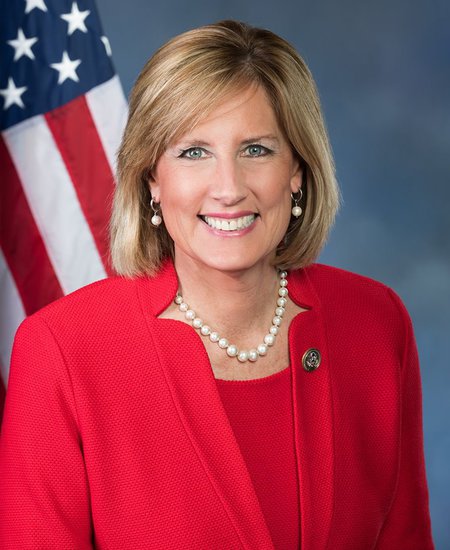
Rep. Claudia Tenney
Sponsored bills
This resolution expresses the sense of the House of Representatives that the U.S. Postal Service should continue door delivery for all customers.
Oversight for Members And Relatives Act or the OMAR Act This bill prohibits the use of campaign funds to compensate the spouse of a candidate or an individual holding federal office. It also requires disclosure of payments made to spouses or immediate family members. Specifically, the bill prohibits an authorized committee of a candidate or any other political committee that is established, maintained, or controlled by a candidate or an individual holding federal office from directly or indirectly compensating the spouse of the candidate or individual for services provided to or on behalf of the committee. The prohibition does not apply to a political committee of a political party. Next, the bill requires a political committee to report on disbursements to the spouse or an immediate family member of the candidate or the individual holding federal office. Finally, the bill requires any penalty for a violation of the bill to be imposed on the candidate or the individual holding federal office if the candidate or individual involved knew of the violation. Further, it prohibits the committee involved from reimbursing the candidate or individual for the penalty.
United States-Israel PTSD Collaborative Research Act This bill establishes a grant program for collaborative efforts between the United States and Israel to advance research on post-traumatic stress disorders. The Department of Defense, in coordination with the Department of Veterans Affairs and the Department of State, shall award grants to eligible academic institutions or nonprofit entities in the United States. Work shall be conducted by the eligible entity and an entity in Israel under a joint research agreement.
Real Economic Support That Acknowledges Unique Restaurant Assistance Needed To Survive Act of 2021 or the RESTAURANTS Act of 2021 This bill temporarily establishes and provides funding for the Restaurant Revitalization Fund, from which the Department of the Treasury shall make grants to eligible food and beverage purveyors to cover specified costs such as payroll, operational expenses, and paid sick leave. For the grant program's initial period, Treasury must (1) prioritize awarding grants to marginalized and underrepresented communities, and (2) only award grants to eligible food and beverage purveyors with annual revenues of less than $1.5 million in 2019. For tax purposes, grant amounts are excluded from the recipient's gross income. An entity that received a loan under the Paycheck Protection Program established to support small businesses in response to COVID-19 (i.e., coronavirus disease 2019) may not apply for or use a restaurant revitalization grant for the same expenses for which the entity received the paycheck protection loan. Further, a grant applicant may request an additional amount to cover the cost of providing 10 days of paid sick leave to its employees. Treasury must report a list of grant recipients with the amount each recipient received, as well as demographics and other specified information.
Reopen Schools Act This bill requires a local educational agency (LEA) to reopen its elementary and secondary schools as a condition for receiving certain supplemental education emergency relief funding. Specifically, an LEA must provide in-person instruction to at least 50% of its students in order to receive the full funding. An LEA that provides in-person instruction to at least some of its students shall have its funding reduced on a pro rata basis.
USPS Fairness Act This bill repeals the requirement that the U.S. Postal Service annually prepay future retirement health benefits.
Protecting Rural Access to Care Act This bill limits the scope of guidance issued by the Centers for Medicare & Medicaid Services (CMS) regarding the secondary road criteria for Medicare critical access hospitals (CAHs). Currently, in order to qualify as a CAH under Medicare, a hospital must either (1) be located more than 35 miles (15 miles in mountainous regions or areas with only secondary roads) from another hospital, or (2) have been certified prior to January 1, 2006, by the state as a necessary provider of services in the area. The CMS issued guidance on July 31, 2015, that provided more detail as to the differences between primary and secondary roads for purposes of CAH certification. The bill specifies that this guidance does not apply to CAHs that were certified prior to July 31, 2015, and that these CAHs are instead subject to the standards that were in place before the guidance was issued. Ongoing CAH certifications are also subject to pre-guidance standards until the CMS issues new guidance after a specified public comment period.
Health Care Fairness for Military Families Act of 2021 This bill modifies the extension of dependent coverage under TRICARE by allowing a dependent under the age of 26 to be covered without an additional premium. Additionally, the bill authorizes such coverage of dependents without a premium regardless of whether they are eligible to enroll in an employer sponsored plan.
Save Democracy Act This bill addresses issues involving voter registration, casting of ballots, and tabulation of ballots in federal elections. Specifically, regarding voter registration for federal elections, the bill prohibits the use of automatic voter registration systems, requires individuals to provide documentary proof of U.S. citizenship to register to vote, requires individuals to provide their full Social Security number on their voter registration application, and requires courts to notify state election officials when an individual is recused from jury duty because the individual is not a U.S. citizen. Next, regarding the casting of ballots in federal elections, the bill requires individuals to provide proof of identification for absentee and in-person voting, prohibits states from mailing unrequested absentee ballots, prohibits the use of a drop box for collecting voted absentee ballots unless it is located inside of a building that serves as an office for the election official, restricts the delivery of ballots by third parties (i.e., prohibits ballot harvesting), requires that absentee ballots be received before the polls close on election day, and requires states to use Social Security numbers to verify the identification of each individual who casts a ballot. Finally, regarding the tabulation of ballots in federal elections, the bill requires states to permit poll watching by at least two campaign representatives per campaign, requires continuous counting of ballots after the closure of polling places on election day, and requires an audit of voting systems.