

Campus Free Speech Restoration Act This bill addresses expressive activities (e.g., peacefully assembling, distributing literature, or carrying signs) on college campuses. First, the bill generally prohibits a public institution of higher education (IHE) that participates in federal student-aid programs from restricting noncommercial expressive activities on campus. Further, the bill prohibits a public IHE from receiving federal funds if the Department of Education determines that the public IHE (1) maintains a policy that infringes upon the expressive rights of students; or (2) maintains or enforces time, place, or manner restrictions on expressive activities, except in limited circumstances. In addition, the bill prohibits retaliation against an individual because the individual reported or complained about restrictions on expressive activities or participated in an investigation or hearing. The bill also requires a private IHE that receives federal funds to provide students with its policies related to expressive rights. The bill also establishes a framework for investigating complaints and for IHEs to regain eligibility for federal funds.
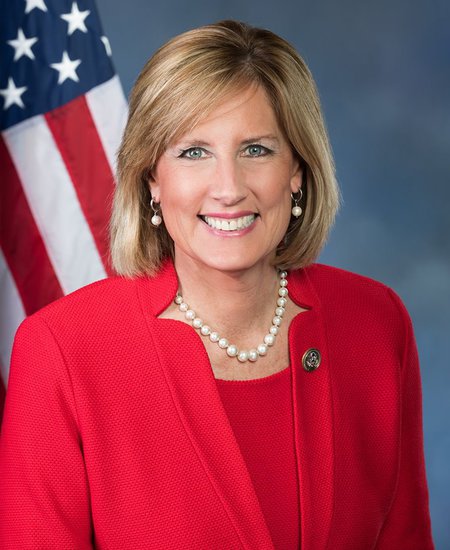
Rep. Claudia Tenney
Sponsored bills
Nicaragua Free Trade Review Act of 2021 This bill requires the U.S. Trade Representative to submit a report on the manner and extent to which Nicaragua is in compliance with the Dominican Republic-Central America-United States Free Trade Agreement.
Reopening to address Every COmplete Record request for Devoted Servicemembers Act of 2021 or the RECORDS Act of 2021 This bill directs the Office of the Archivist of the United States to take specified steps to address record request backlogs. Specifically, the office must take actions to ensure that (1) the number of individuals employed by the National Personnel Records Center is equal to or exceeds the number of such individuals employed on March 2, 2020, and (2) the percentage of such individuals regularly reporting to work in person is equal to or exceeds the percentage of such individuals regularly reporting to work in person on that date. The office shall submit to specified congressional committees a report that provides a comprehensive plan to address the record request backlog of the National Personnel Records Center and improve the efficiency and responsiveness of operations at the center, identifies measurable goals with respect to the comprehensive plan and metrics for tracking progress toward such goals, and describes strategies to prevent future record request backlogs.
Local Journalism Sustainability Act This bill allows individual and business taxpayers tax credits for the support of local newspapers and media. Specifically, individual taxpayers may claim an income tax credit up to $250 for a local newspaper subscription. The bill also allows local newspaper employers a payroll tax credit for wages paid to an employee for service as a local news journalist and certain small businesses a tax credit for local newspaper and media advertising expenses.
Shark Fin Sales Elimination Act of 20 21 This bill addresses the sale of shark fins and the inclusion of rays and skates in the Seafood Traceability Program. The Seafood Traceability Program has data reporting and recordkeeping requirements at the time of entry for imported fish or fish products entered into U.S. commerce. The bill makes it illegal to possess, buy, or sell shark fins or any product containing shark fins, except for certain dogfish fins. A person may possess a shark fin that was lawfully taken consistent with a license or permit under certain circumstances. Penalties are imposed for violations under the Magnuson-Stevens Fishery Conservation and Management Act. The Department of Commerce must revise its regulations to include rays and skates as species that are subject to the Seafood Traceability Program.
Toxic Exposure in the American Military Act or the TEAM Act This bill requires the Department of Veterans Affairs (VA) to expand health care, benefits, and resources for veterans with conditions related to exposure to toxic substances. Specifically, the bill expands eligibility for VA hospital care, medical services, and nursing home care to include veterans who (1) were exposed to toxic substances, radiation, or other conditions, and were awarded certain medals (e.g., the Armed Forces Service Medal); (2) are eligible for inclusion in the Airborne Hazards and Open Burn Pit Registry; or (3) have been identified by the Department of Defense to have been possibly exposed during service to an open burn pit, toxic substance, or specified hazardous sites. (A burn pit is an area used for burning solid waste in open air without equipment.) The bill establishes a presumption of service-connection for diseases associated with exposure to certain toxic substances and that become manifest within a certain time period; the VA must specify such diseases and requirements through regulations. Under a presumption of service-connection, specific conditions diagnosed in certain veterans are presumed to have been caused by the circumstances of their military service. Health care benefits and disability compensation may then be awarded. The bill also requires the VA to take specified actions to (1) evaluate scientific evidence regarding associations between diseases and exposure to toxic substances; (2) train its health care personnel on identifying, treating, and assessing illnesses related to such exposure; and (3) provide resources to veterans exposed to toxic substances.
Time of Service Act This bill adjusts the time limitation on the use of a veteran's educational assistance entitlement under the Post-9/11 GI Bill. Specifically, veterans' entitlements shall not expire for those who were discharged or released from active duty on or after January 1, 2001.
Puerto Rico Statehood Admission Act This bill establishes a process for the admission of Puerto Rico into the union as a state, on an equal footing with all other states, based on a majority vote of the people of Puerto Rico.
Compensation for Americans Act of 2021 This bill requires the Department of State to negotiate with China to secure compensation for China's distortion of information related to the spread of COVID-19. The bill also contains other China-related provisions, such as those imposing sanctions on certain Chinese individuals and entities. As part of such negotiations, the President shall (1) freeze Chinese assets subject to U.S. jurisdiction; (2) suspend the required review of any proposed acquisition of a U.S. entity by a Chinese entity; (3) impose sanctions on Chinese entities in certain industries, such as artificial intelligence and pharmaceuticals; (4) impose sanctions on various individuals, including Chinese government officials and Chinese citizens responsible for stealing intellectual property from U.S. entities; and (5) prohibit using federal funds to procure goods manufactured or sourced from a Chinese company, if such goods pose a supply chain risk to U.S. national security. The President may terminate such prohibitions and sanctions if China and the United States come to an agreement regarding compensation related to COVID-19. The Department of the Treasury shall establish a public repository with information about entities that are owned, financed, or controlled by the Chinese government. Other provisions in this bill include (1) imposing export controls on telecommunications equipment that would help China carry out censorship or surveillance, (2) banning researchers affiliated with China's military from obtaining visas, and (3) requiring U.S. World Bank representatives to end China's eligibility for World Bank assistance.
Trillion Trees Act This bills establishes a variety of requirements and incentives to plant trees and conduct other land management practices for the purposes of capturing and storing carbon in domestic and international trees and forests. Additionally, the bill provides incentives to research or develop other carbon sequestration tools. Specifically, the bill directs the Department of Agriculture (USDA) to set targets to increase forest carbon stock through January 1, 2100, for the purposes of sequestering and storing carbon in U.S. forests. It also establishes and provides funding for the Trillion Trees Challenge Fund to provide grants to nonfederal entities for activities related to reforestation efforts on public or private lands. In addition, it raises the cap on the Reforestation Trust Fund to enhance forest health in the National Forest System and requires the USDA to establish a Tree City USA Grant Program. The bill also allows the U.S. Agency for International Development to enter into an agreement with a nonprofit organization to establish an International Forest Foundation to promote reforestation and prevent deforestation. Additionally, it establishes requirements and incentives to address seedling shortages and support nurseries. Finally, the bill provides market incentives to research or develop other carbon sequestration tools relating to biochar, sustainable building practices, biochemical and bioplastic products, and biomass energy.