Second Amendment is Essential Act of 2021 This bill directs the Department of Homeland Security to designate the business of importing, manufacturing, or dealing firearms, or importing or manufacturing ammunition, as a critical infrastructure sector. Additionally, the bill states that individuals who are employed by those entities are critical infrastructure workers. The term critical infrastructure means systems and assets, physical or virtual, so vital to the United States that the incapacity or destruction of such systems and assets would have a debilitating impact on security, national economic security, national public health and safety, or any combination of those matters.
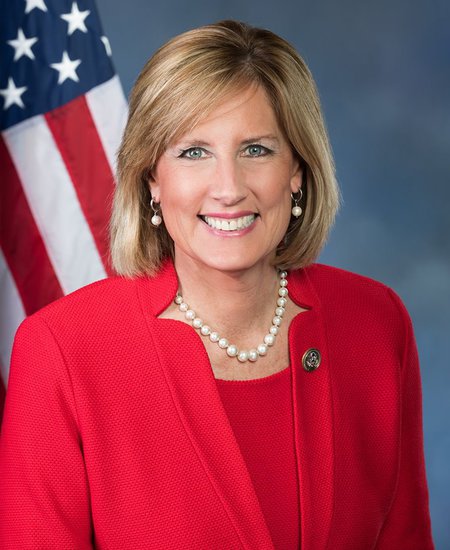
Rep. Claudia Tenney
Sponsored bills
World Deserves To Know Act This bill requires sanctions on certain members of the Chinese Communist Party (CCP) and officials of Chinese health agencies. It also addresses related issues. The President must impose visa- and property-blocking sanctions on any foreign person who is a CCP official and who is knowingly responsible for or complicit in (1) the disappearances of whistleblowers and citizen journalists in China relating to COVID-19, or (2) limiting free speech and academic freedom in China relating to COVID-19. The President must also impose such sanctions on specified individuals who have leadership positions in China's Center for Disease Control and Prevention and China's National Health Commission (NHC). The authority to impose such sanctions shall end when the President certifies to Congress that an independent and unimpeded investigation into the potential origin of COVID-19 from the Wuhan Institute of Virology has taken place. The bill also bars federal funds and certain federal student assistance from going to institutions of higher education that enter into a contract with any element or China-based affiliate of the NHC. Federal funding to the National Academy of Sciences may not be used to enter into a contract with any element or China-based affiliate of the NHC. The Government Accountability Office must report to Congress a review of all funds that the National Institutes of Health have made available to the NHC since FY2010. This report must also be publicly available.
No Vaccine Passports for Americans Act This bill restricts collection and disclosure of an individual's vaccination status, including for COVID-19 vaccinations. It also makes it unlawful to discriminate based on COVID-19 vaccination status and to mandate vaccination in certain circumstances. Specifically, the bill prohibits the use of federal funds to establish or collaborate with federal, state, private, or international systems that track or monitor an individual's COVID-19 vaccination status. Additionally, federal agencies must destroy existing records that contain information about an individual's COVID-19 vaccination status within 30 days. Furthermore, agencies may not issue vaccine passports or similar standardized documentation of COVID-19 vaccination status. The bill also prohibits discrimination based on COVID-19 vaccination status or willingness to provide documentation of vaccination status in employment, public accommodations, and certain public programs and services. Remedies and enforcement mechanisms available under federal civil rights laws apply to violations under this bill. In addition, federal privacy standards for health information must prohibit the disclosure of non-anonymized information about the status of any vaccination without a patient's express consent. Moreover, the bill makes anyone who requests an individual's vaccination status subject to these standards. The bill temporarily bans (1) mandates for vaccines authorized for use under emergency procedures, and (2) administration of those vaccines to minors or individuals who lack capacity to consent to vaccinations without the consent of their parent or guardian. It also prohibits public disclosure of an individual's COVID-19 vaccination status without express, written consent. Violations of these prohibitions are subject to criminal and civil penalties.

Firearm Due Process Protection Act This bill expands the grounds for pursuing judicial remedies related to certain firearm transfers. Additionally, the bill establishes procedural rules applicable to actions for judicial remedies. Current law authorizes judicial remedies for an individual who is erroneously denied a firearm (e.g., an individual is denied a firearm but the individual is eligible to receive or possess a firearm). This bill authorizes remedies for an individual who experiences an extended delay (i.e., a delay of more than 60 days) on a firearm transfer. Additionally, the bill requires an expedited hearing on an action for judicial remedies and places the burden of proof on the respondent to show by clear and convincing evidence that the individual was ineligible to receive or possess a firearm.
Northern Border Reopening Transparency Act This bill requires the Department of Homeland Security to submit a report on considerations relating to easing restrictions on or reopening the United States-Canada border to essential and nonessential travel.
Stars and Stripes Act of 2021 This bill prohibits the Department of State from displaying any flag or banner at a diplomatic or consular post other than specified flags. Such flags are (1) the U.S. flag; (2) the flag of the country wherein the post is located; (3) the flag of a state, territory, or possession of the United States; (4) a departmental or secretarial flag; (5) the flag of an Armed Force; or (6) a flag to honor prisoners of war or those missing in action.
Preventing Anti-Semitic Hate Crimes Act This bill requires a designated officer or employee of the Department of Justice (DOJ) to facilitate the expedited review of anti-Semitic hate crimes and reports of anti-Semitic hate crimes. Further, the bill requires DOJ to issue guidance for state, local, and tribal law enforcement agencies on expanding public education campaigns to raise awareness of anti-Semitic hate crimes. Finally, the bill increases the statutory maximum prison term for an individual who is convicted of a federal hate crime offense after a prior conviction for a hate crime offense under federal law or a hate crime felony under state law.
Major Richard Star Act This bill provides that combat-disabled uniformed services retirees with fewer than 20 years of creditable service may concurrently receive, without reduction, veterans' disability compensation and retired pay or combat-related special compensation.
Mahsa Amini Human rights and Security Accountability Act or the MAHSA Act This bill requires the President to impose property- and visa-blocking sanctions on certain persons (individuals and entities) affiliated with Iran. The President must make determinations about whether certain existing sanctions apply to specified persons and impose the applicable sanctions, including determinations concerning (1) the Supreme Leader of Iran and any official in the Office of the Supreme Leader of Iran, (2) the President of Iran and any official in the Office of the President of Iran, and (3) any entity overseen by the Office of the Supreme Leader of Iran which is complicit in supporting human rights abuses or terrorism.
Global Malnutrition Prevention and Treatment Act of 2021 This act sets out programs and otherwise directs the U.S. Agency for International Development (USAID) to carry out activities to prevent and treat malnutrition globally. Specifically, USAID may leverage resources to address malnutrition through the Global Nutrition Coordination Plan (an interagency effort to strengthen the impact of U.S. investments in nutrition) and its role on the board of directors of the U.S. International Development Finance Corporation. USAID must also select countries based on specified malnutrition-related indicators for purposes of targeting malnutrition prevention and treatment programs and update the selection within five years. Additionally, USAID may establish the Nutrition Leadership Council to coordinate federal government activities to prevent and treat malnutrition; and target resources and nutrition interventions to the populations most susceptible to severe malnutrition and otherwise support efforts to prevent and treat malnutrition globally. The act also requires USAID to provide to Congress an implementation plan and annual reports concerning its programs for treating and preventing malnutrition. The act's provisions terminate seven years after its enactment.