

Maddy summaryThis bill increases per diem payments for homeless veterans receiving VA services. It raises the daily payment rate from $115 to $200 for certain housing-related services, including emergency responses. The change directly affects homeless veterans who qualify for these VA-funded housing supports. The key provision adjusts the payment rate in Section 2012(a)(2)(B) of the U.S. Code to provide higher funding for services assisting homeless veterans.
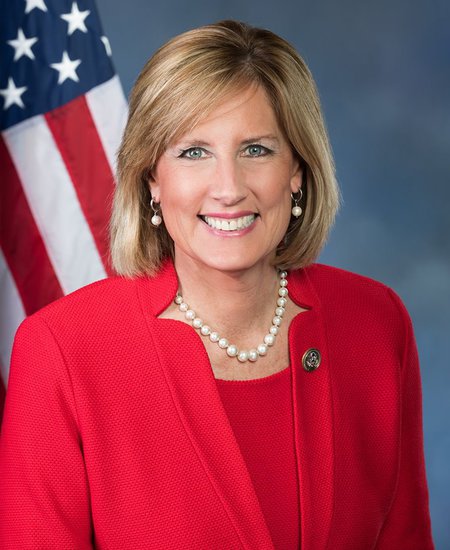
Rep. Claudia Tenney
Sponsored bills
Maddy summaryThe Telehealth Expansion Act of 2023 modifies the Internal Revenue Code to require health insurance plans to cover telehealth services without applying deductibles. It directly affects high deductible health plans (HDHPs) and their enrollees, ensuring telehealth visits aren’t counted toward annual deductibles. The key provision creates a "safe harbor" (Section 223(c)(2)(E)) so plans won’t lose HDHP status for excluding telehealth deductibles. This change applies immediately upon enactment and affects all plans offering telehealth services. It does not create new funding or services but adjusts tax code requirements for existing coverage.
Supply Chain Security Act This bill allows a taxpayer to make an election, without regard to specified Treasury regulations, for purposes of determining whether any Western Hemisphere tax is an income, war profits, or excess profits tax. A Western Hemisphere tax is any tax paid to any U.S. possession or any foreign country (other than Cuba or Venezuela) that is located in North, Central, or South America (including the West Indies).
Maddy summaryHR 3798, the Small Business Flexibility Act, requires the Treasury Secretary to notify small business employers within one year of enactment about existing tax-advantaged health coverage options. The bill specifically directs this notification to focus on small businesses, defining "flexible health insurance benefits" as three existing programs: individual contribution health reimbursement arrangements (HRAs), qualified small employer HRAs (QSEHRAs), and the small employer health insurance credit. These are tax-advantaged options that help small businesses provide health coverage without traditional group plans. The bill does not create new benefits but mandates that employers be informed about these existing tools to help them offer health coverage.
Maddy summaryHR 3996 would impose a 60% tax on the purchase of U.S. agricultural interests (including farmland and livestock production land) by individuals or entities from designated "countries of concern," such as China, Russia, Iran, North Korea, Cuba, and Venezuela. It requires transaction closers (like title companies or attorneys) to report buyer details to the IRS and request an affidavit confirming the buyer is not a disqualified person. If a disqualified person fails to provide the affidavit, the closing entity must inform them of the tax obligation, and the buyer would owe 60% of the purchase price. The tax does not apply to U.S. citizens, lawful permanent residents, or U.S. public companies not controlled by disqualified persons.
Maddy summaryThis bill raises the threshold for businesses to report payments to independent contractors and vendors from $600 to $5,000 annually. It directly affects small businesses and self-employed individuals who receive payments below the new $5,000 level, reducing their reporting burden. The bill also adds an inflation adjustment mechanism to keep the threshold updated annually, rounding increases to the nearest $100. These changes apply to payments made after December 31, 2023, under tax code sections governing Form 1099 reporting and backup withholding.
Maddy summaryThe Neighborhood Homes Investment Act creates a new tax credit for developers who rehabilitate or build affordable homes in distressed communities. The credit is calculated based on the difference between rehabilitation costs and the sale price, with homes required to be sold at affordable prices to qualified homeowners with incomes up to 140% of the local median family income. The bill targets specific "qualified census tracts" defined by high poverty rates, low homeownership, and below-average home values. Developers must ensure homes are sold to qualified homeowners who use them as primary residences for at least five years, with additional safeguards to prevent program abuse and ensure fair housing practices.
Maddy summaryHR 3980 establishes the National Oceanic and Atmospheric Administration (NOAA) as an independent agency within the executive branch, headed by an Administrator appointed by the President with Senate confirmation. The bill defines NOAA's core functions, including conducting scientific research across atmospheric, oceanic, climate, and space weather domains, maintaining the National Weather Service, and managing oceanic and coastal resources. It requires the Administrator to develop a reorganization plan within 18 months to improve efficiency and coordination across NOAA's operations, and mandates a study on consolidating Endangered Species Act and Marine Mammal Protection Act management functions. The bill also creates a Science Advisory Board to provide scientific advice to NOAA and Congress, while ensuring existing NOAA functions and authorities continue without disruption.
Maddy summaryThis bill directs the Secretary of Defense to add the names of 74 crew members lost when the USS Frank E. Evans sank in 1969 to the Vietnam Veterans Memorial Wall within one year of the bill's enactment. It requires consultation with other agencies to address space limitations for name placement and explicitly exempts this addition from standard commemorative memorial rules under the Commemorative Works Act. The measure directly honors the deceased crew members and affects how their names are displayed on a national memorial.
This bill includes the New York county of Wyoming in the regional area of the Northern Border Regional Commission (one of several federal regional commissions created to address economic distress in specific geographic areas).