

Maddy summaryThis bill removes a previous exclusion that prevented temporary federal employees (including U.S. Postal Service staff and Members of Congress) from counting service after January 1, 1988, toward their retirement benefits. It allows these workers to have their post-1988 temporary service counted toward retirement eligibility if they pay a deposit to the retirement system. The change applies to anyone employed by the federal government on or after the bill's enactment date. The Office of Personnel Management must notify affected employees and create rules to implement this change.
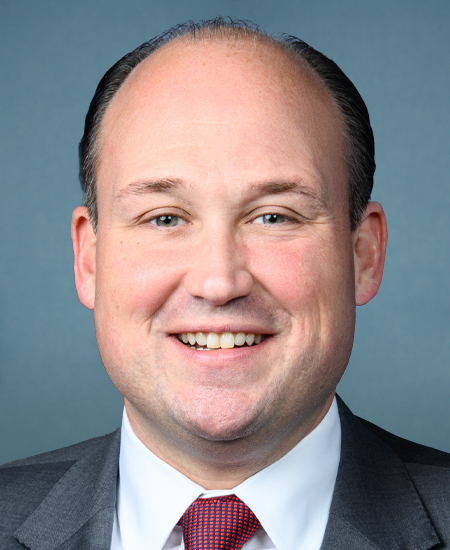
Rep. Nicholas A. Langworthy
Sponsored bills
Maddy summaryThis bill amends the State Department Basic Authorities Act of 1956 to establish a "crisis evacuation loan program" for U.S. citizens needing emergency evacuation abroad during crises. It replaces the previous "repatriations loan program" name and directs existing funding from the Department of Homeland Security’s Shelter and Services Program to the State Department to administer these loans. The program allows the State Department to provide loans for evacuation costs, which must be repaid by the affected citizens. This change primarily affects U.S. citizens abroad facing sudden emergencies requiring urgent travel assistance.
Maddy summaryHR 5954 designates the Finger Lakes region in 14 New York counties (Cayuga, Chemung, Cortland, Livingston, Monroe, Onondaga, Ontario, Schuyler, Seneca, Steuben, Tioga, Tompkins, Wayne, and Yates) as a National Heritage Area. It establishes the Finger Lakes Tourism Alliance as the local managing entity and requires a management plan for the area within three years. Federal funding for the area would end 15 years after the bill's enactment, as specified in the National Heritage Area System.
'Operation Swords of Iron' Iron Dome Supplemental Appropriations Act This bill provides $2 billion in appropriations for the Department of Defense to provide to the government of Israel for the procurement of the Iron Dome defense system to counter short-range rocket threats. The funds must be provided to address emergent requirements in support of Operation Swords of Iron.
Maddy summaryHR 5653, the "No Budget, No Pay Act," requires Congress to pass a budget plan by April 15 and all annual funding bills by September 30 each year, or members lose pay for the period starting the day after each deadline until the bills are approved. It directly affects all voting Members of Congress (including delegates) during the specified penalty periods, excluding the Vice President. The bill imposes a financial consequence for missing these budget deadlines, aiming to incentivize timely fiscal planning by withholding compensation for the duration of the delay. This is a procedural mechanism focused on budget process deadlines, not on substantive policy changes.
Maddy summaryHRES 750 is a symbolic resolution recognizing the "Operation Green Light for Veterans" campaign, which encourages counties to illuminate buildings green (Nov 6-12) to show community support for veterans. It promotes awareness of existing county resources - such as mental health services, job training, housing assistance, and benefits guidance - that help veterans transition to civilian life. The resolution urges all counties to participate in the lighting event and use community outreach to highlight these resources, while commending the National Association of Counties for leading the initiative. It does not create new laws or funding but focuses on raising visibility for existing support systems. (HRES 750, introduced Sept. 29, 2023)
Maddy summaryHJRES 11 proposes a constitutional amendment that would limit Members of Congress to serving a maximum of three terms in the House of Representatives and two terms in the Senate. If passed and ratified, it would prevent any member who has already served the maximum terms from running for re-election, including time spent filling vacancies (for more than one year in the House or three years in the Senate). This amendment directly affects current and future members of Congress by changing eligibility rules for re-election. The proposal is currently a joint resolution in the House, requiring ratification by three-fourths of state legislatures to become part of the Constitution.
Maddy summaryHR 5641, the Pay Our Troops Act, ensures military personnel and their support staff continue receiving pay during fiscal year 2024 if Congress fails to pass regular budget appropriations. It appropriates existing Treasury funds to cover pay and allowances for active-duty troops, reserve components, and civilian employees or contractors supporting military operations. The bill automatically terminates on January 1, 2025, or earlier if Congress enacts a regular budget or continuing resolution. This provision directly affects service members, Department of Defense staff, and Coast Guard personnel (when not under the Navy) during budget implementation gaps.
Pay Our Border Patrol and Customs Agents Act This bill provides FY2024 appropriations for the salaries and expenses of certain U.S. Customs and Border Protection (CBP) employees who are required to work during a lapse in appropriations (i.e., government shutdown) in FY2024. Specifically, the bill provides appropriations to CBP for the salaries and expenses of agents of the U.S. Border Patrol and officers of the Office of Field Operations who are excepted from furlough (i.e., required to work) during a lapse in discretionary appropriations in FY2024.
Maddy summaryThis bill extends the funding period for the Distance Learning and Telemedicine Program from 2023 to 2028. It directly affects rural communities by ensuring continued access to telehealth services and educational programs through this existing federal initiative. The key provision is a simple amendment to the program's authorization date in existing law, without creating new requirements or altering the program's scope. The change ensures uninterrupted support for rural healthcare and education providers relying on this funding.