

Maddy summaryHR 8011, the Iranian Terror Prevention Act, requires the U.S. Secretary of State to designate 12 Iranian-affiliated military groups and any entity controlled by Iran's Revolutionary Guard Corps as Foreign Terrorist Organizations within 90 days. It mandates the President to decide within 60 days whether to impose sanctions under existing law (Executive Order 13224) on these groups, which would block their U.S. assets and restrict transactions. The bill also requires the Secretary of State to submit regular reports to Congress on new entities meeting designation criteria and the President to explain any decisions not to impose sanctions. This law directly affects the listed Iranian military groups and any new entities linked to Iran's Revolutionary Guard Corps.
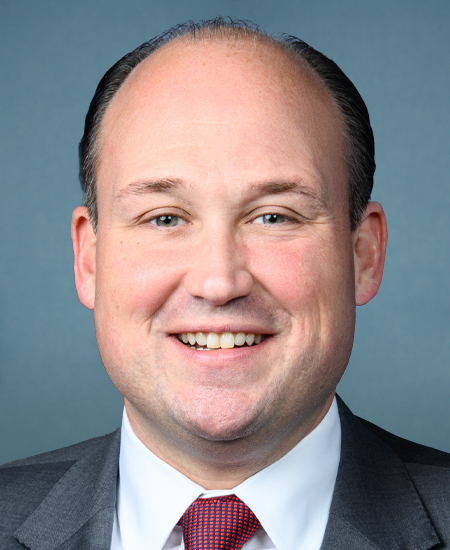
Rep. Nicholas A. Langworthy
Sponsored bills
Maddy summaryHRES 1139 is a non-binding House resolution that formally acknowledges April 17, 2024, as the 500th anniversary of Giovanni da Verrazzano’s 1524 discovery of New York Bay. It recognizes Verrazzano’s role as the first European to map the East Coast of North America, which contributed to the later establishment of New York City and its development as a major economic hub. The resolution highlights historical connections, including Verrazzano’s influence on New York Bay’s exploration and existing commemorations like the Verrazzano-Narrows Bridge. It does not create new laws, allocate funds, or affect any specific group or policy. This is purely a ceremonial acknowledgment by the U.S. House of Representatives.
Maddy summaryThis resolution (HRES 1117) is a formal statement by the U.S. House of Representatives opposing efforts to pressure Israel regarding Gaza. It specifically criticizes calls for an immediate ceasefire, including President Biden's April 4, 2024, statement and UN Security Council Resolution 2728, which the resolution claims was adopted due to the U.S. not vetoing it. The resolution affirms Israel’s right to self-defense following the October 7 Hamas attacks and emphasizes the U.S.-Israel relationship as a major strategic partnership. As a non-binding resolution, it does not change laws or policies but expresses the House’s position on diplomatic pressure related to Gaza.
Maddy summaryThis bill would terminate 39 federal diversity, equity, and inclusion offices across multiple departments, including the State Department, Treasury, Health and Human Services, and Agriculture. It specifically prohibits cabinet-level agencies from developing or maintaining any diversity-related initiatives or plans. The law would take effect immediately upon enactment, eliminating these offices without requiring new funding or implementation steps. This is a structural change to federal agency operations, directly affecting how government departments manage workforce diversity programs.
Maddy summaryHR 7959, the SHIELD Act, adds trespass convictions to grounds for denying immigration entry or ordering deportation. It directly affects immigrants convicted of trespass under any state, local, tribal, or federal law, regardless of whether the trespass is classified as a misdemeanor or felony. The bill amends existing immigration law to make anyone convicted of trespass (or who admits to acts constituting trespass) inadmissible upon entry or deportable after entry. These provisions apply based on the jurisdiction where the trespass occurred, without considering the offense's classification under local law.
Maddy summaryThis bill officially designates the Strong Museum in Rochester, New York, as the National Museum of Play. It recognizes the museum as the only institution exclusively focused on how play encourages learning, creativity, and cultural understanding, while clarifying that this designation does not make it part of the National Park System or require federal funding for the museum.
Maddy summaryHR 7873, the Firearm Due Process Protection Act, directly affects individuals denied firearm purchases through the National Instant Criminal Background Check System (NICS). The bill requires courts to hold hearings on challenges to NICS denials within 30 days and shifts the burden to the government to prove eligibility by "clear and convincing evidence." It also mandates annual FBI reports to Congress detailing the number of challenges processed, reversals of denials, and processing times. These provisions aim to expedite due process for people seeking to correct inaccurate NICS records affecting their firearm rights.
Maddy summaryThis bill freezes new energy efficiency standards for distribution transformers. It prohibits the Energy Secretary from proposing or implementing any rules different from the 2013 standards (published April 18, 2013) for five years after the bill's enactment. The law directly affects the Department of Energy and transformer manufacturers by maintaining existing efficiency requirements. It ensures no changes to the 2013 rule during this five-year period.
Maddy summaryHCONRES 86 is a non-binding congressional resolution expressing that a carbon tax would harm the U.S. economy. It states that such a tax would raise energy prices for essentials like gasoline, electricity, and home heating, disproportionately affecting low-income families, the elderly, and fixed-income individuals. The resolution argues a carbon tax would reduce economic growth, encourage businesses to move overseas, and weaken U.S. global competitiveness, urging focus on pro-growth energy policies instead.
Maddy summaryThis bill amends U.S. immigration law to change eligibility criteria for tribal members crossing the U.S.-Canada border. It replaces the previous requirement of "at least 50% blood quantum" with recognition of membership in federally recognized U.S. tribes or Canadian First Nations with Indian Act status. Specifically, it allows members or eligible members of U.S. tribes, or Canadian First Nations members with Indian Act registration, to cross the border under the same provisions. Individuals admitted under this change receive the status of "alien lawfully admitted for permanent residence," providing clearer legal standing. The bill directly affects tribal members and Canadian First Nations citizens who cross the U.S.-Canada border for travel or residence.