

Maddy summaryThe Apples to Apples Comparison Act of 2025 requires the Centers for Medicare & Medicaid Services (CMS) to publish detailed Medicare spending data starting in 2025. It mandates that CMS release machine-readable, county- and Metropolitan Statistical Area-level expenditure information for over 30 distinct beneficiary categories (e.g., Part A-only enrollees, Medicare Advantage members, and those with supplemental coverage) on its public website. The law also requires the Medicare Payment Advisory Commission (MedPAC) to analyze Medicare Advantage vs. traditional Medicare spending patterns beginning in 2026, with public methodology and data transparency. Additionally, the Medicare Trustees must include disaggregated expenditure data in their annual reports starting in 2026. This bill directly affects how CMS and federal agencies collect and share Medicare spending data, not beneficiaries' coverage or costs.
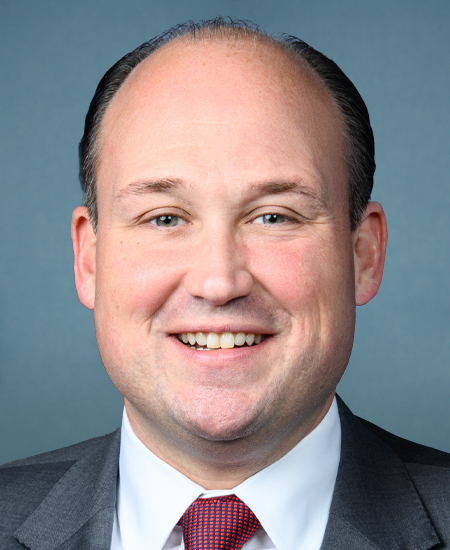
Rep. Nicholas A. Langworthy
Sponsored bills
Maddy summaryHR 2140, the Diesel Emissions Reduction Act of 2025, extends the expiration date of the existing Diesel Emissions Reduction Act program. It amends Section 797(a) of the Energy Policy Act of 2005 by changing the end date from 2024 to 2029. This bill does not create new programs or funding; it simply prolongs the current program's authorization period. The change affects the continuation of the existing federal program that supports state and local efforts to reduce diesel emissions from older vehicles.
Maddy summaryHR 1266, the Combating Illicit Xylazine Act, adds xylazine - a veterinary sedative increasingly found in illicit drug mixtures - to Schedule III of the Controlled Substances Act, regulating its use and trafficking. It directly affects veterinarians, animal owners, and manufacturers by allowing xylazine to be legally dispensed for animal use under specific veterinary prescriptions, while prohibiting non-veterinary human use. The bill includes transition periods (60 days for practitioners, 1 year for labeling) to ease compliance for manufacturers and practitioners, and requires the DEA and FDA to expedite necessary applications. It also mandates two congressional reports on xylazine's illicit use and trafficking patterns, and directs the Sentencing Commission to review penalties for offenses involving xylazine.
Maddy summaryThis bill requires all new passenger vehicles manufactured for sale in the U.S. to include AM radio as standard equipment (not an optional add-on) by 2027-2028, depending on manufacturer size. It mandates that AM radio receivers must be easily accessible to drivers and allows compliance through digital AM broadcast technology. During a transition period, manufacturers must clearly label vehicles without AM radio but cannot charge extra for this feature. The bill also mandates a GAO study on AM radio's role in emergency alerts and includes a 10-year sunset provision for the rule. It preempts state laws regarding AM radio access in vehicles.
Maddy summaryThis bill establishes a regional management framework for double-crested cormorants across four U.S. flyways, requiring the Secretary of the Interior to develop plans within 180 days that specify allowed hunting methods, time periods, and authorized entities including state and tribal agencies, lake managers, and pond managers. The framework must ensure cormorant populations remain sustainable while addressing impacts on fisheries, vegetation, other bird species, human safety, water quality, and endangered species. The bill mandates population surveys every five years and requires the management plans to be reviewed and updated every five years based on survey results and current data.
Maddy summaryThe Pray Safe Act of 2025 establishes a federal Clearinghouse within the Department of Homeland Security to provide houses of worship, faith-based organizations, and nonprofit groups at risk of threats with evidence-based safety resources. The Clearinghouse will publish online best practices for security planning, facility safety, and incident response, while listing existing federal and state grant programs to help these organizations implement these measures. It requires annual updates based on user feedback and includes a centralized resource section for contacts like Protective Security Advisors and Fusion Centers. The program expires four years after enactment and does not create new funding but coordinates existing federal and state safety resources.
National Law Enforcement Officers Remembrance, Support and Community Outreach Act. [ sic ] This bill temporarily directs the Department of the Interior to award a grant to the National Law Enforcement Officers Memorial Fund for the expenses associated with operating and enhancing the community outreach, public education, and officer safety and wellness programs of the National Law Enforcement Museum.
Maddy summaryHR 1706 designates the U.S. Postal Service facility at 1200 William Street, Room 200, in Buffalo, New York, as the "William J. Donovan Post Office Building." The bill updates all federal references in laws, maps, and documents to use this new name for the building. This is a ceremonial naming bill with no policy changes or direct impact on citizens or programs. It solely honors William J. Donovan, a notable historical figure, through official renaming of the post office location.
Maddy summaryThis bill designates the U.S. Postal Service facility at 86 Main Street in Haverstraw, New York, as the "Paul Piperato Post Office Building." It updates all official references - such as maps, documents, and records - to reflect this new name. The change directly affects the postal facility and any official communications or records mentioning its location. No policy changes or new requirements are introduced; it is solely a commemorative naming action.
Maddy summaryThis bill names a U.S. Postal Service facility at 298 Route 292 in Holmes, New York, as the "Sheriff Adrian 'Butch' Anderson Post Office Building." It updates all official references in federal documents, maps, and records to reflect this new name for the location. The bill has no policy provisions or direct impact on constituents beyond commemoration.