

Maddy summaryThe SAFER at the Border Act prohibits the U.S. Department of Homeland Security from temporarily admitting (paroling) certain individuals at the border. It defines "known terrorists" (those arrested, charged, or convicted for terrorism), "suspected terrorists" (reasonably suspected of terrorism), and "special interest aliens" (those with potential terrorism links based on travel patterns). The bill explicitly bans parole for these individuals, even for humanitarian reasons or public benefit, and also prohibits parole for refugees. Additionally, it allows states to sue the Department of Homeland Security if they suffer financial harm exceeding $100 from the parole of such individuals.
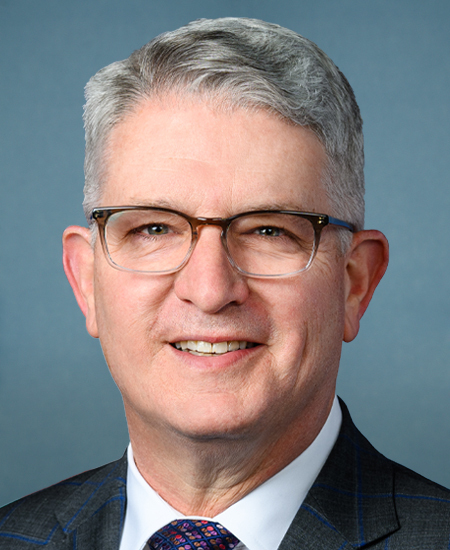
Rep. Brandon Williams
Sponsored bills
Maddy summaryThe Save our Safety-Net Hospitals Act of 2024 modifies Medicaid payment rules to better support hospitals serving large numbers of low-income patients. It removes a restriction that previously prevented some safety-net hospitals from receiving full reimbursement for care provided to these patients. The bill allows these hospitals to count payments from Medicare and other programs when calculating their Medicaid reimbursement, ensuring they are fully compensated for services. This change applies to fiscal years beginning October 1, 2021, and prevents states from recouping past payments made under the old rules.
Maddy summaryHR 9345, the Safe Housing Assistance for Veterans Act, creates a HUD grant program to help veteran homeowners with critical home repairs. It provides subgrants of up to $15,000 per veteran through 10 selected county community development agencies to cover mechanical repairs (plumbing, heating), structural fixes (roof, foundation), safety items (deadbolts, smoke detectors), and lead paint reduction. Eligible veterans must own and occupy their home for at least one year, have current property taxes and insurance, and meet income limits (e.g., under $53,100 annually for a single-person household). The program uses $15 million in existing 2024 appropriations, with grants distributed to agencies from 2025-2028, and requires a report on program outcomes by 2030.
Maddy summaryThis bill (HR 9255) is a simple naming resolution that renames a specific U.S. Postal Service facility. It designates the post office at 114 John Street in New York, New York, as the "Jack Greenberg Post Office." The bill requires all federal references to the building (in laws, maps, documents, etc.) to use the new name. This is a procedural change affecting only the official name of that single post office location.
Maddy summaryHR 9274, the SHAWL Act, establishes two new Smithsonian museums: the National Museum of the American Latino and the American Women’s History Museum. It authorizes both museums to be located within the National Mall’s "Reserve" area, overriding prior restrictions, and requires federal agencies managing potential sites to transfer jurisdiction to the Smithsonian after notifying congressional committees. The bill mandates that both museums accurately represent diverse cultures, histories, and viewpoints within Latino and women’s communities through exhibits and programs, requiring input from a broad range of community experts. It also requires the Smithsonian to submit biennial reports to Congress detailing compliance with these representation requirements.
Maddy summaryHRES 1395 is a non-binding House resolution expressing concern that the U.S. is being outpaced by China and Russia in nuclear energy production and global market share. It cites statistics showing China has 56 operational reactors (vs. the U.S.'s 94, including retired ones) and is actively constructing more, while the U.S. has no reactors under construction. The resolution states it is "unacceptable" that the U.S. is no longer dominant in nuclear energy and urges expanding domestic nuclear capacity and supply chains. As a symbolic resolution, it does not create new laws or funding but highlights perceived strategic competition in nuclear technology.
Maddy summaryHR 9202, the Nuclear Waste Reprocessing Act, directs the U.S. Department of Energy to create policies supporting the commercial recycling of spent nuclear fuel. It requires the Energy Secretary to work with private industry to advance reprocessing technologies, establish partnerships for research and commercialization, and collaborate with the Nuclear Regulatory Commission to align procedures. The bill mandates annual progress reports to Congress on efforts to develop this technology, aiming to address nuclear waste challenges and position the U.S. as a leader in international reprocessing. It directly affects federal agencies, nuclear energy companies, and the management of nuclear waste materials. The key change is shifting focus toward recycling nuclear fuel components rather than solely storing spent fuel as waste.
Maddy summaryThis bill requires the U.S. Energy Secretary to conduct a comprehensive evaluation of the domestic nuclear supply chain within 270 days of enactment. The evaluation must assess regulatory hurdles (like N-stamp certification for safety components), explore how advanced technologies (such as 3D printing and AI) could improve efficiency, analyze U.S.-Canada collaboration, and plan for future demand from advanced nuclear reactors. It directly affects nuclear energy companies, manufacturers, and regulators by mandating a federal review to identify supply chain bottlenecks and opportunities for modernization. The bill does not change existing regulations or funding but sets the stage for potential future policy decisions based on the evaluation’s findings.
Maddy summaryThis bill (HR 9198) updates nuclear licensing rules to require the Nuclear Regulatory Commission (NRC) to use risk-informed and performance-based approaches when making decisions about nuclear facility operations. It amends existing law to define "technology-inclusive regulatory framework" to align with a 1999 NRC document (SRM-SECY-98-144) and mandates annual NRC staff training on these concepts. The bill also includes a non-binding congressional statement emphasizing the importance of shared understanding between the NRC and nuclear industry regarding these regulatory methods. It directly affects NRC staff, nuclear facility operators, and the licensing process for nuclear energy projects.
Maddy summaryHR 9199 limits the scope of reviews conducted by the Advisory Committee on Reactor Safeguards (ACRS) under the Atomic Energy Act. It restricts ACRS to only reviewing nuclear license applications involving novel issues or significant safety concerns, based on risk assessments by the committee. The bill also removes ACRS reviews from the Nuclear Regulatory Commission's (NRC) annual fee calculations for license applications. This directly affects the NRC's process for handling license applications and the fee structure for nuclear facility operators seeking approvals.