

Maddy summaryHRES 1548 is a non-binding resolution supporting the designation of October 2024 as "National Learning Disabilities Awareness Month." It highlights that specific learning disabilities affect 34% of students receiving special education services and notes significant academic challenges, with over 95% of affected 4th and 8th graders not proficient in reading or math in 2022. The resolution calls on schools to continue providing appropriate support for students with learning disabilities but does not create new laws or funding. It aims to raise public awareness about learning disabilities, not to change educational policies.
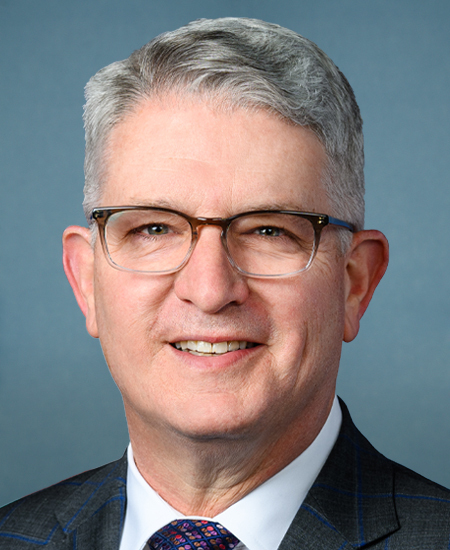
Rep. Brandon Williams
Sponsored bills
Maddy summaryHRES 1537 is a non-binding House resolution condemning Hamas' October 7, 2023, attacks on Israel, which killed over 1,200 people and took 251 hostages, including 7 Americans still held captive. It calls on Hamas to immediately surrender, cease attacks, and release all hostages unconditionally, while reaffirming Israel's right to self-defense. The resolution also urges international organizations to condemn Hamas' actions and address the global surge in antisemitism following the attacks. As a symbolic statement, it does not create new laws or alter policy but expresses congressional position. The bill specifically references the ongoing captivity of seven U.S. citizens: Edan Alexander, Itay Chen, Sagui Dekel-Chen, Gadi Haggai, Judith Weinstein Haggai, Omer Neutra, and Keith Siegel.
Maddy summaryHR 9950, the "Miracle on Ice Congressional Gold Medal Act," authorizes three gold medals to be awarded to the members of the 1980 U.S. Olympic men's ice hockey team for their historic victory over the Soviet Union during the Winter Olympics. The medals, designed by the Treasury Secretary, will be presented by Congress to honor the team's achievement, which revitalized American morale during the Cold War. One medal will be displayed at the Lake Placid Olympic Center, one at the USA Hockey Hall of Fame in Eveleth, Minnesota, and one at the U.S. Olympic Museum in Colorado Springs. The bill also permits the sale of bronze duplicates to cover production costs. This is a ceremonial honor, not a policy change, directly recognizing the team members and their legacy.
Maddy summaryThis bill creates a federal tax credit for individuals who contribute to scholarship granting organizations (SGOs) that provide scholarships for elementary and secondary education. Taxpayers can claim a credit equal to up to 10% of their adjusted gross income or $5,000 (whichever is less) for contributions to SGOs that provide scholarships for students from households earning no more than 300% of the area median income. Scholarships can cover tuition, educational materials, tutoring, testing fees, and educational therapies, with SGOs required to verify income, undergo independent audits, and meet strict distribution rules. The program would operate with a $5 billion annual cap from 2025-2028, prohibit government control over SGOs or private/religious schools, and prevent discrimination based on religious affiliation.
Maddy summaryThis bill directs the Secret Service to use identical standards for determining protection levels for Presidents, Vice Presidents, and major presidential/vice presidential candidates. It requires the Secret Service Director to conduct a review within 180 days of enactment, reporting findings and recommendations to Congress on protection protocols for current and former leaders. The bill standardizes existing practices without increasing security resources, applying the same criteria currently used for sitting officials to candidates. It references the definition of "major candidates" from existing law (18 U.S.C. § 3056), ensuring consistency with current Secret Service procedures.
Maddy summaryHR 9752, the Tren de Aragua Southwest Border Security Threat Assessment Act, requires the Secretary of Homeland Security to submit two reports within 180 days of enactment. The first report (threat assessment) must detail Tren de Aragua's criminal threats, origins, methods, funding, and presence along the southwest border (U.S.-Mexico border), while the second report (strategic plan) must outline DHS's strategy to counter these threats through interagency coordination and disruption efforts. The bill directly affects DHS, intelligence agencies, and border law enforcement by mandating specific analysis and planning to address this transnational criminal group. It does not change existing laws but establishes a process for evaluating and responding to security vulnerabilities.
Maddy summaryThis bill establishes a Department of Energy artificial intelligence research program with $300 million in annual funding for fiscal years 2025-2030. The program will fund research on energy-efficient AI systems, data center optimization, and AI applications for energy, science, and national security challenges. It requires the Department to develop AI testbeds, improve data center energy efficiency, establish AI research institutes, and support workforce development in AI. The bill also mandates a report on data center energy security risks and recommendations for improving energy efficiency in computing infrastructure. This program directly affects the Department of Energy, National Laboratories, research institutions, and private sector partners collaborating on AI development.
Maddy summaryThe Next Generation Pipelines Research and Development Act creates a new demonstration initiative to fund research on advanced pipeline technologies. It authorizes $45 million for fiscal year 2024 (increasing to $50 million annually through 2028) for competitive grants to eligible entities including universities, research organizations, and private companies. The program will focus on developing technologies for leak detection, novel pipeline materials, sensor systems, computational modeling, and cybersecurity to improve pipeline safety and efficiency. The initiative requires coordination with the Department of Transportation and National Institute of Standards and Technology, and will be administered through a National Pipeline Modernization Center.
Maddy summaryHR 1719, the Honoring Our Fallen Heroes Act of 2023, establishes a presumption that certain cancers diagnosed in public safety officers (like police and firefighters) are work-related if linked to their duties. It defines 22 specific cancers (including lung, mesothelioma, and WTC-related cancers) as "exposure-related," allowing officers or their families to receive benefits without proving direct work connection, provided they were diagnosed within 15 years of leaving active service. The bill also creates a process for adding new cancers to the list based on scientific evidence, requiring the Bureau to review petitions and make decisions within 180 days. This applies to deaths or disabilities occurring on or after January 1, 2023, directly affecting officers who developed covered cancers during service.
Maddy summaryThis bill requires states to count military service members (and their dependents) as residents of their home state for Medicaid eligibility if they're temporarily relocated due to active duty but remain legally resident there. It specifically applies to those already receiving home and community-based services under the American Rescue Plan Act of 2021. States must deem these individuals as residents of their home state starting January 1, 2028, ensuring continued access to their existing Medicaid services without requiring a new state residency determination.