

Maddy summaryHJRES 45 is a congressional disapproval resolution targeting a specific Department of Education rule about federal student loans. It seeks to block the rule implementing "One-Time Federal Student Loan Debt Relief" (including modifications to Perkins, FFEL, and Direct Loan programs) by invoking the Congressional Review Act. If passed, this resolution would nullify the rule, preventing the Department of Education from using it to modify or waive student loan obligations. The bill directly affects borrowers who might have qualified for debt relief under the targeted rule.
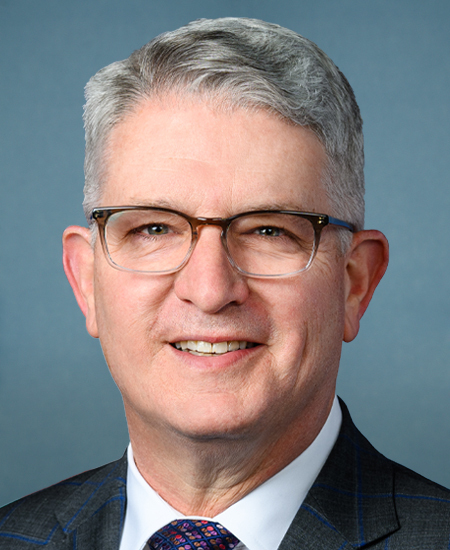
Rep. Brandon Williams
Sponsored bills
Maddy summaryThis bill prohibits providing, facilitating, or possessing wireless devices (like cell phones) in U.S. detention facilities (e.g., prisons, jails) if such actions violate existing federal or state laws. It imposes civil fines up to $50,000 per violation (capped at $1 million total) or criminal fines up to $50,000 for intentional violations. The law explicitly excludes lawful law enforcement activities and state enforcement powers, and defines "detention facility" broadly to include all correctional and penal institutions. It applies to conduct occurring after enactment.
Maddy summaryHR 3946, the FASD Respect Act, establishes a new federal program within the Department of Health and Human Services (HHS) to address fetal alcohol spectrum disorders (FASD). The bill creates FASD Centers for Excellence to build state, tribal, and national capacity for prevention, identification, and support services - directly affecting individuals with FASD, their families, and healthcare providers. Key provisions include developing standardized diagnostic guidelines, expanding screening and training for medical professionals, creating a national resource directory for FASD services, and promoting culturally informed interventions. The program requires HHS to report to Congress on progress within four years. This legislation restructures existing HHS authority to focus comprehensively on FASD across the lifespan, replacing older terminology with consistent "FASD" references.
Maddy summaryThis bill (HR 4145) requires U.S. colleges and universities to disclose foreign gifts or contracts meeting specific thresholds to the Department of Education. Institutions must report gifts/contracts of $250,000 or more from foreign sources not tied to "covered nations" (as defined in 10 U.S.C. §4872(d)(2)), or *any* amount from covered nations. Within 10 days of receiving such reports, the Education Secretary must forward them to the FBI and National Intelligence Director. The law aims to increase transparency around foreign funding in higher education by mandating these disclosures and automatic intelligence sharing.
Northern Border Regional Commission Reauthorization Act of 2023 This bill makes changes to the authorities and programs of regional economic and infrastructure development commissions. Specifically, the bill reauthorizes the Northern Border Regional Commission (NBRC) and establishes and expands NBRC grant programs. Regional commissions may make grants for the planning, construction, equipment, and operation of health, nutrition, and child care projects. The bill also authorizes these regional commissions (as part of economic and infrastructure development grants) to promote the production of housing to meet economic development and workforce needs. Each commission may accept transfers of funds from other federal agencies. Discretionary grants made by a commission to implement significant regional initiatives, to take advantage of special development opportunities, or to respond to emergency economic distress may be made without regard to specified percentage limitations. The bill limits the aggregate amount of discretionary grants.
Maddy summaryThe FAIR Act (HR 4144) establishes a new income-driven repayment assistance plan that would limit borrowers' monthly payments to 10% of their adjusted gross income, with full loan forgiveness after 20 years of payments. It requires the Department of Education to provide borrowers with multiple notifications about repayment options, including the new income-driven plan, and creates new deferment options for borrowers facing economic hardship, medical issues, or military service. The bill modifies loan rehabilitation processes to allow borrowers to rehabilitate loans two times instead of one time and limits the Secretary's authority to issue regulations that could increase subsidy costs. This legislation directly affects borrowers of federal student loans made under Title IV of the Higher Education Act of 1965.
Maddy summaryThe Telehealth Expansion Act of 2023 modifies the Internal Revenue Code to require health insurance plans to cover telehealth services without applying deductibles. It directly affects high deductible health plans (HDHPs) and their enrollees, ensuring telehealth visits aren’t counted toward annual deductibles. The key provision creates a "safe harbor" (Section 223(c)(2)(E)) so plans won’t lose HDHP status for excluding telehealth deductibles. This change applies immediately upon enactment and affects all plans offering telehealth services. It does not create new funding or services but adjusts tax code requirements for existing coverage.
Maddy summaryThe Drone Safety and Efficiency Act (HR 3983) streamlines the Federal Aviation Administration's process for approving drone operation waivers under current rules. It requires the FAA to use risk-based reviews, standardize applications to avoid vague questions, and leverage past waiver data with analytics - while considering whether operators control property access for safety. The bill mandates public posting of waiver terms (with privacy safeguards) and allows faster approvals for similar past waivers, plus expedited modifications for existing waivers. This directly affects drone operators (like delivery services or survey companies) by reducing application complexity and improving regulatory predictability.
Maddy summaryHR 3980 establishes the National Oceanic and Atmospheric Administration (NOAA) as an independent agency within the executive branch, headed by an Administrator appointed by the President with Senate confirmation. The bill defines NOAA's core functions, including conducting scientific research across atmospheric, oceanic, climate, and space weather domains, maintaining the National Weather Service, and managing oceanic and coastal resources. It requires the Administrator to develop a reorganization plan within 18 months to improve efficiency and coordination across NOAA's operations, and mandates a study on consolidating Endangered Species Act and Marine Mammal Protection Act management functions. The bill also creates a Science Advisory Board to provide scientific advice to NOAA and Congress, while ensuring existing NOAA functions and authorities continue without disruption.
Maddy summaryThis bill amends federal law to criminalize "swatting" - making false reports to trigger emergency responses like police raids. It imposes criminal penalties (up to life in prison if death occurs) for intentionally spreading false information that causes emergency deployments, such as falsely reporting violent crimes. It also allows victims or responding agencies to sue for costs incurred due to these false reports. The law specifically covers false claims about serious crimes, threats to public safety, or emergencies that prompt police or emergency services action.