

Dairy Farm Resiliency Act This bill updates the Dairy Margin Coverage (DMC) program. (The DMC program was enacted in the 2018 farm bill to support dairy operations by allowing producers to buy a guaranteed margin for their milk production. The margin is the difference between the Department of Agriculture's [USDA's] national all milk price and a calculated feed cost, which provides producers optional risk protection on price and feed costs.) The bill requires that a dairy operation's production history for DMC be based on the most recent three-year history and be recalculated every five years. (A participating dairy producer must have an established milk production history with USDA's Farm Service Agency.) The bill also increases Tier 1 margin coverage for annual milk production to 6 million pounds or less (currently 5 million pounds or less) and Tier 2 margin coverage to over 6 million pounds (currently over 5 million pounds).
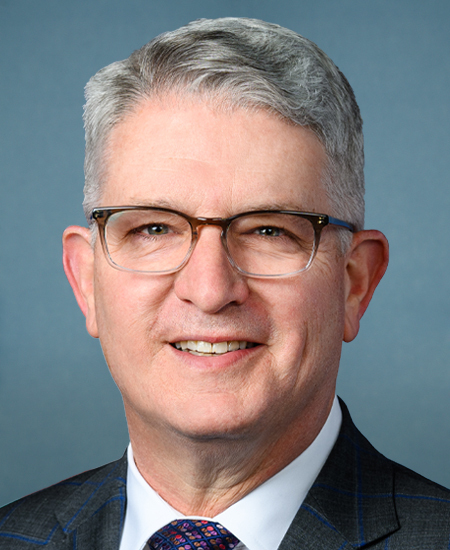
Rep. Brandon Williams
Sponsored bills
Maddy summaryThis bill establishes the New York-New Jersey Watershed Restoration Program to coordinate habitat restoration and water quality improvements across the shared watershed region. It creates a grant program providing competitive federal funding (up to 90% for disadvantaged communities) to state/local governments, nonprofits, and tribes for projects like river restoration, green infrastructure, and community engagement. The program prioritizes environmental justice communities, advances climate-resilient solutions, and requires annual congressional reporting. The bill authorizes $20 million annually from 2024-2029, with a sunset provision ending in 2030.
Maddy summaryThis resolution (HRES 620) is a non-binding House of Representatives statement expressing support for Japan's efforts to secure justice for Japanese citizens abducted by North Korea. It directly urges North Korea to release any remaining abductees, return remains and provide details about deceased victims, offer appropriate restitution, and issue a formal apology. The resolution references North Korea's 2002 admission of abductions (after 24 years of captivity for some) and emphasizes the conflict with human rights principles. As a symbolic gesture, it does not impose new legal requirements but calls for North Korea to address past actions.
Maddy summaryHR 4942 extends and modifies the Conrad State 30 program, which allows states to sponsor foreign medical graduates to work in medically underserved areas in exchange for a commitment to practice for three years. The bill directly affects foreign medical graduates seeking to work in the U.S., states that sponsor them, and health facilities in underserved communities. Key provisions include creating mechanisms for physicians to change employers or states if they face issues with their current employment, adding requirements for employment agreements (including prohibitions on non-compete clauses), and establishing exceptions to the three-year work requirement under certain circumstances. The bill also creates a process for states to recapture waiver slots when physicians leave their employment and requires annual reporting on the program's usage. These changes aim to improve physician retention in underserved areas by providing more flexibility and protections for foreign medical graduates.
Maddy summaryHR 3933, the TAP Promotion Act, requires standardized presentations about Veterans Affairs (VA) benefits during military transition counseling for service members separating from the armed forces. These presentations must be approved by the VA, delivered by authorized veterans service organizations (VSOs), and include information on how VSOs assist with VA claims - without encouraging membership in specific organizations. The bill mandates a one-hour limit per presentation and requires the VA to submit annual reports to Congress detailing which VSOs presented, attendance numbers, and recommendations for improvement. This policy directly affects service members preparing for civilian life and the VSOs providing these transition resources.
Maddy summaryThis bill directs the U.S. Treasury to mint commemorative coins marking the Marine Corps' 250th anniversary in 2025. It authorizes three coin types: $5 gold coins (max 50,000), $1 silver coins (max 400,000), and half-dollar coins (max 750,000), with surcharges of $35, $10, and $5 respectively. The surcharge proceeds will fund the Marine Corps Heritage Center's educational programs, with no net cost to taxpayers as the Treasury must recover all minting costs through the surcharges. The coins can only be issued during 2025, and the Treasury must ensure all costs are covered before distributing funds to the Heritage Foundation.
Maddy summaryThis bill expands eligibility for business loans at credit unions to include veterans. It amends the Federal Credit Union Act to define "member business loan" as including loans made to veterans, using the standard definition of "veteran" from Title 38 of U.S. Code. Credit unions offering these loans will now be able to serve veteran business owners under the same terms as other qualifying borrowers. The policy change directly affects veterans seeking business financing and credit unions providing such loans.
Maddy summaryHR 4157, the "Not Just a Number Act," requires the Department of Veterans Affairs (VA) to produce annual reports on veteran suicide rates and their connection to VA healthcare and benefits. The reports must break down suicide rates by age, gender, and race, and examine how engagement with VA services (like Vet Centers, healthcare enrollment, benefits claims, and housing loans) correlates with suicide trends. The bill also mandates a VA toolkit for state/local coroners to improve veteran suicide death reporting, and a study on creating a dedicated VA suicide prevention office. These measures aim to standardize data collection and identify effective prevention strategies, directly affecting VA operations, congressional oversight, and veteran care systems.
Maddy summaryHR 3941, the Schools Not Shelters Act, prohibits public schools and colleges receiving federal funds from using their facilities to house non-admitted immigrants. This applies to all K-12 public schools and institutions of higher education that accept federal financial assistance. The rule is a condition for receiving such funding, with exceptions for emergency shelter during specified disasters (like fires or floods). The bill does not restrict schools from using facilities for educational purposes or other non-immigrant-related housing.
Maddy summaryThis bill reauthorizes the Helen Keller National Center through fiscal years 2024-2028, extending funding for its existing services. It updates the definition of employment support to require "competitive integrated employment" (as defined in federal workforce law) instead of "vocational objectives," aligning the center's mission with current employment standards. The bill also adjusts outdated fiscal year references in funding sections and updates the center's organizational name from "Helen Keller Services for the Blind, Incorporated" to "Helen Keller Services." It directly affects the center's operations and the blind individuals it serves through vocational training and employment programs. The changes are administrative updates to maintain program continuity without creating new policies.