

Maddy summaryThis bill establishes a formal process for selecting and assessing a "fiscal agent" to manage the finances of the Patrick Leahy Lake Champlain Basin Program (LCBP). The Steering Committee and EPA Administrator must jointly select a qualified entity (prioritizing organizations headquartered in the Lake Champlain drainage basin) to handle payroll, payments, and program administration, with assessments required every five years. The bill also adds a new provision allowing the Great Lakes Fishery Commission to collaborate on Lake Champlain projects like fisheries research and invasive species control. It does not change the program's environmental goals but clarifies administrative management.
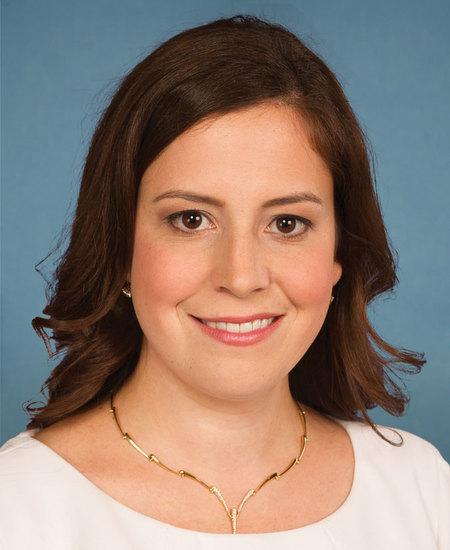
Rep. Elise M. Stefanik
Sponsored bills
Maddy summaryHR 7498, the After Hours Child Care Act, creates a new Child Care and Development Innovation Fund to expand child care access for parents working nontraditional hours (like evenings, nights, or weekends). The bill directly affects working parents with young children who struggle to find care outside standard 9-to-5 hours, aiming to help them stay employed and advance in their careers. It authorizes $25,000-$500,000 grants for up to 5 years to eligible entities (such as child care providers or partnerships with businesses) to expand existing programs, establish new onsite workplace child care, or improve facilities and staff training. Grantees must cover 25% of costs, and the Secretary of Health and Human Services must report every two years on the program’s impact, including children served and changes in child care availability.
Maddy summaryThe PART Act requires new vehicles to have catalytic converters marked with a unique identification number that links directly to the vehicle's identification number, stored in a law enforcement-accessible database. It establishes a $7 million grant program to help repair shops, dealers, law enforcement, and fleet owners purchase equipment for marking converters with visible, durable identifiers (using die or pin stamping and high-visibility paint). The bill also mandates that businesses buying catalytic converters keep detailed seller records (including vehicle information) for two years and use traceable payments, banning cash or cryptocurrency transactions. Additionally, it creates new federal criminal penalties for stealing or trafficking in catalytic converters, with potential sentences of up to five years in prison.
This bill designates the facility of the United States Postal Service located at 15422 NY 104 in Martville, New York, as the "Sergeant Staret J. Engleston Memorial Post Office Building".
Maddy summaryThe TSP Fiduciary Security Act of 2026 requires the Thrift Savings Fund (TSP), which manages retirement savings for federal employees and uniformed service members, to avoid investments harming national security. It adds a new duty for the TSP's managing board to prevent investments from threatening U.S. national security, directing the Secretary of Labor to create regulations within one year to establish standards for TSP investments and voting rights. These regulations will presume investments in China-based entities, or those breaching government contracts involving critical defense technology, as non-compliant. The bill also explicitly prohibits TSP mutual funds from including investments in China-based companies or their subsidiaries. Additionally, it mandates annual congressional reports on TSP investment reviews and enforcement outcomes.
Maddy summaryThis bill prevents state or local governments from banning or restricting energy connections (like installation, modification, or access) based on the type or source of energy, such as electricity, natural gas, or renewable fuels. It directly affects consumers choosing energy providers and energy companies seeking to offer services. The key provision prohibits local laws, regulations, or policies that limit energy services sold in interstate commerce, covering all energy types listed in the bill’s definitions. It does not create new programs but limits regulatory authority at the state or local level. The law aims to ensure open access to diverse energy sources without source-based restrictions.
Maddy summaryThis bill ensures that unpaid veterans' pension benefits due at the time of a veteran's death are paid to surviving family members in a specific order: first the spouse, then children equally, then dependent parents equally, and finally the estate (unless it would otherwise go to the state). It applies to veterans approved for pension benefits before death but whose payments are issued after death. Family members must apply within one year of the veteran's death to claim the benefits; otherwise, the unpaid amount goes to the estate. The law directly affects surviving spouses, children, and dependent parents of veterans who qualify for pension benefits.
Maddy summaryThe VSAFE Act of 2025 establishes a Veterans Scam and Fraud Evasion Officer within the Department of Veterans Affairs to prevent and address fraud targeting veterans. This officer will develop communication plans, training, and reporting systems for veterans, families, caregivers, and survivors to identify and avoid scams, while coordinating with agencies like the IRS, DOJ, and Social Security Administration. The bill also modifies a home loan fee deadline in the VA loan program, changing a date from June 9, 2034, to June 23, 2034. It does not create new full-time positions or alter existing Inspector General authority.
Maddy summaryHR 7208, the PROTECT the Grid Act, requires the U.S. Commerce Department to assess national security risks posed by foreign adversary-controlled applications managing high-wattage smart home devices (like electric vehicle chargers or smart appliances exceeding 500 watts). The bill mandates a report to Congress within 270 days, evaluating how such devices - potentially controlled by entities under foreign adversaries like China - could be exploited to manipulate grid demand and cause blackouts. Key provisions include analyzing deployment levels of these devices, vulnerabilities in foreign-controlled apps, and recommending security measures such as certification requirements or restrictions on federal procurement. The report will inform future actions to prevent grid instability without imposing immediate bans or altering existing laws.
Maddy summaryThis bill establishes a Senior Advisor for National Security within the USDA to coordinate national security efforts related to food and agriculture. It requires the USDA Secretary to submit biennial reports to Congress and the National Security Council identifying vulnerabilities such as foreign control of agricultural data, supply chain disruptions, cybersecurity risks, and dependence on foreign-sourced inputs. The bill mandates improved interagency coordination, including sharing personnel with defense and intelligence agencies, and requires the USDA to assess gaps in security efforts and propose solutions. The primary direct effect is on the USDA's internal operations and reporting structure, not on agricultural policies or farmers.