

Maddy summaryHJRES 88 is a resolution seeking to block a Department of Education rule that would have improved income-driven repayment options for federal student loan borrowers. The rule, published in the Federal Register on July 10, 2023, targeted the William D. Ford Direct Loan Program and the Federal Family Education Loan (FFEL) Program. This resolution uses the Congressional Review Act process to disapprove the rule, preventing it from taking effect and preserving the current repayment structure. If enacted, it would stop the proposed changes to repayment terms without altering existing loan policies.
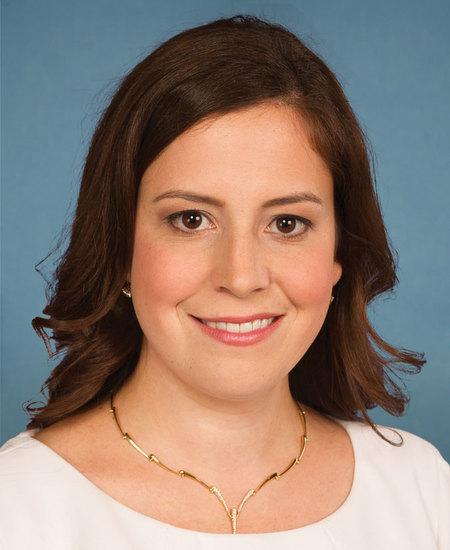
Rep. Elise M. Stefanik
Sponsored bills
Maddy summaryHR 6573, the Protecting Military Servicemembers' Data Act of 2023, prohibits data brokers from selling, reselling, or sharing military servicemember lists to "covered nations" (as defined in federal law). It directly affects military members by preventing their personal information - contained in specialized lists created for compiling military service details - from being sold to specific foreign governments. The key mechanism bans the commercial transfer of these lists, with enforcement handled by the Federal Trade Commission and state attorneys general. The law takes effect within one year of enactment or when the FTC issues final rules, whichever comes first. This is a concrete policy change targeting data brokers' practices, not a procedural measure.
Maddy summaryThe DETERRENT Act requires institutions of higher education to disclose foreign gifts and contracts meeting specific value thresholds ($50,000 or more) to the Department of Education, with special rules for contracts involving "foreign countries of concern" or "foreign entities of concern." It creates a public database of these disclosures, mandates faculty and staff to report foreign gifts related to research, and establishes a waiver process for institutions seeking to contract with prohibited foreign entities. Institutions that fail to comply face fines ranging from 1% to 100% of their federal funding, depending on the violation and whether it's a first or repeat offense. The bill applies primarily to institutions receiving significant federal funding, particularly those with substantial research programs. It aims to increase transparency around foreign influence in higher education while maintaining academic freedom.
Maddy summaryThe BOP Direct-Hire Authority Act (HR 6628) allows the Bureau of Prisons to hire qualified candidates for positions that would normally require competitive hiring without following standard federal hiring procedures, such as public announcements or competitive exams. This directly affects the Bureau of Prisons' ability to fill vacancies at its facilities more quickly. The authority expires once 96% of competitive service positions across all Bureau of Prisons facilities are filled. The bill changes the hiring process for existing positions but does not alter the total number of positions available.
Maddy summaryThis bill designates the United States Postal Service facility at 298 Route 292 in Holmes, New York, as the "Sheriff Adrian 'Butch' Anderson Post Office Building." It updates all federal references (including laws, maps, and documents) to use this new name for the location. The bill has no policy changes or financial impact - it solely commemorates Sheriff Adrian "Butch" Anderson through a building designation.
Maddy summaryHR 6578 establishes a 9-member bipartisan commission to study antisemitism in the United States. The commission will investigate current manifestations of antisemitism, evaluate government efforts to combat it, and report findings and recommendations to Congress within one year. It directly affects Jewish communities by examining incidents like the 300% surge in antisemitic activity reported by the Anti-Defamation League, and impacts federal, state, and local governments through its evaluation of existing policies. The commission terminates 120 days after submitting its report, with no predetermined conclusions or interference in ongoing law enforcement.
Maddy summaryThis bill requires the President to block transactions involving "covered Iranian funds" processed by foreign or international financial institutions. These funds refer specifically to money transferred from South Korea to Qatar under certain Iran sanctions waivers. The law imposes sanctions under existing U.S. authorities to block all U.S.-related transactions with institutions handling these funds. Sanctions can be lifted if Iran stops supporting terrorism and dismantles its weapons programs, as certified by the President. The bill directly affects global financial institutions processing these specific Iranian-linked transfers.
Maddy summaryThis bill prohibits federal funding for housing undocumented immigrants on public lands managed by specific federal agencies. It blocks the use of federal money to provide temporary or permanent shelter (including encampments) for "specified aliens" - defined as individuals not legally admitted to the U.S. - on lands under the National Park Service, Bureau of Land Management, Fish and Wildlife Service, or Forest Service. The restriction applies to all housing arrangements, including leases or contracts, and directly affects how these agencies manage public lands. The policy change prevents federal agencies from using taxpayer funds to support shelter for non-admitted immigrants on federally managed properties.
Maddy summaryThis bill requires U.S. Customs and Border Protection (CBP) to obtain fingerprints from noncitizen children under 14 years old if officers suspect they are trafficking victims upon entering the U.S. It also creates a new federal crime for adults (18+) who knowingly use a minor for entry without being a relative or guardian, punishable by fines or up to 10 years in prison. The bill mandates sharing fingerprints collected under this provision with the Department of Health and Human Services for unaccompanied minors and requires CBP to report monthly data on trafficking-related apprehensions and annual data on fingerprinting to Congress. These provisions directly affect CBP officers, unaccompanied children, and individuals suspected of exploiting minors for entry.
Maddy summaryThis bill reauthorizes the Never Again Education program, which funds Holocaust education initiatives in schools. It extends the program's funding authorization period from ending after four fiscal years to continuing annually through fiscal year 2030. The bill modifies the existing law (Public Law 116-141) by updating the funding timeline without changing program requirements or eligibility. It directly affects the existing grant program supporting educational materials and teacher training on the Holocaust. The change ensures continued federal funding for these specific educational efforts until 2030.