

Maddy summaryThe Veterans Appeals Efficiency Act of 2025 requires the Department of Veterans Affairs to track and report on key aspects of the appeals process, including average claim processing times after remand and reasons for case dismissals. It mandates the creation of guidelines for advancing cases on the Board's docket and authorizes the Board to aggregate appeals with common legal or factual issues to improve efficiency. The bill also expands the Court of Appeals' jurisdiction to handle class action claims and requires a study on common legal questions to help the Board make more consistent decisions. These changes aim to reduce delays and improve the accuracy of benefits decisions for veterans seeking appeals.
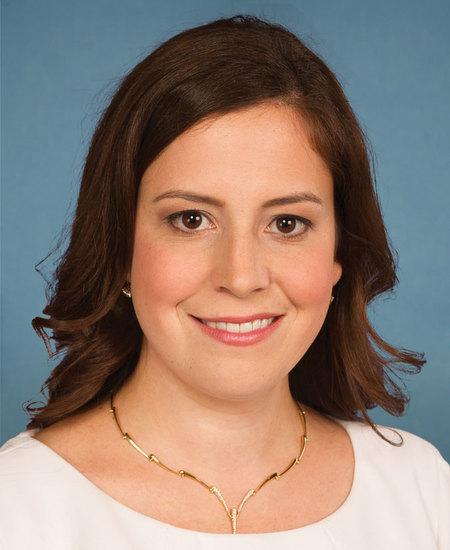
Rep. Elise M. Stefanik
Sponsored bills
Maddy summaryHRES 527 is a symbolic resolution designating June 2025 as "National Dairy Month" to honor dairy's role in nutrition and the agricultural economy. It recognizes dairy as a key source of calcium and vitamin D (per Dietary Guidelines), supports over 3.2 million jobs, and highlights the industry's $793 billion economic impact. The resolution encourages public support for dairy farmers while condemning unfair regulatory burdens on the sector. As a non-binding expression of support, it does not create new laws or funding.
Maddy summaryThis symbolic House resolution (HRES 521) expresses support for Israel’s military actions against Iran’s nuclear facilities, citing Iran’s nuclear enrichment progress (including 60% enriched uranium stockpiles nearing weapons-grade levels) and Iran’s attacks on Israeli civilians. It specifically endorses Israel’s "proportional" strikes on Iranian nuclear sites and military targets following Iran’s rejection of diplomatic efforts, while condemning Iran’s attacks that killed 24 Israelis and wounded 590. The resolution calls on Iran to halt nuclear enrichment and dismantle its program, reaffirms U.S. support for Israel’s security, and urges global condemnation of Iran’s nuclear activities. As a non-binding resolution, it does not enact policy but formally aligns the House with Israel’s actions against Iran’s nuclear program.
Maddy summaryHR 4049, the Employer-Directed Skills Act, creates a new system where employers can pay for training programs tailored to their specific hiring needs, with the federal government reimbursing a portion of the costs through "employer-directed skills accounts." Employers must pay 10-50% of program costs (based on company size) and commit to hiring participants after successful completion. Workers selected by employers for these programs receive training without needing individual assessments, and local workforce boards approve agreements based on alignment with local job market needs and support for small businesses. The bill replaces some existing individual training account provisions and requires employers to provide documentation for reimbursement.
Maddy summaryHR 4050, the Advancing Skills-Based Hiring Act of 2025, creates a voluntary program allowing employers with over 100 employees to submit validation evidence for skills-based hiring assessments to the Equal Employment Opportunity Commission (EEOC). Employers can request an EEOC determination confirming their assessments are job-related and consistent with business necessity under federal law, with a fee required for review. If approved, employers gain a legal "safe harbor" to defend against discrimination claims related to those assessments. The bill requires employers to include adverse impact data in submissions but protects submitted information from future enforcement actions or court use without consent. It directly affects businesses using skills-based hiring tools, aiming to streamline compliance verification through EEOC review.
Maddy summaryThis bill proposes a constitutional amendment that would grant Congress the power to pass laws banning the physical desecration of the U.S. flag (such as burning, trampling, or defacing it). If ratified, it would directly affect individuals who engage in such acts by making them subject to federal criminal penalties under new laws Congress could create. The amendment would add a specific clause to the Constitution stating: "Congress shall have power to prohibit the physical desecration of the flag of the United States." Ratification would require approval by 3/4 of state legislatures within seven years of submission.
Maddy summaryHR 3946, the FIGHT Act of 2025, amends the Animal Welfare Act to specifically prohibit gambling on animal fighting events and restrict the interstate transport of roosters used in such ventures. It defines "rooster" as male chickens over six months old and makes it unlawful to sponsor, exhibit, attend (for those under 16), or gamble on animal fighting events - whether in-person or broadcast. The bill creates a civil enforcement mechanism allowing any person to file a lawsuit to stop violations after providing 60 days' notice to authorities, with potential fines up to $5,000 per violation. It also establishes seizure of property used to facilitate violations and clarifies that state laws on animal fighting remain in effect unless directly conflicting with federal provisions.
Maddy summaryThis bill changes how federal Bureau of Prisons employees in the "Rest of U.S." pay locality receive compensation. It directs that employees whose official worksite is in "Rest of U.S." be treated as working in the nearest other pay locality (within 200 miles) with the highest comparability payment, rather than the default "Rest of U.S." rate. This adjustment applies to all Bureau of Prisons employees, including prevailing rate staff, and takes effect 180 days after enactment. The change directly affects federal correctional officers and staff working in remote locations currently covered by the "Rest of U.S." pay rate.
Maddy summaryThis bill requires U.S. Customs and Border Protection (CBP) to update its Northern Border Security Threat Analysis every five years, including specific new elements. It mandates assessments of current staffing levels versus projected needs, future retirement surges (noting a 400% increase expected by 2028), housing challenges, and local recruitment plans for northern border ports. The bill also requires CBP to develop and update a plan addressing retirement surges, staffing shortages, and the feasibility of recruitment tools like bonuses or student loan repayment. These provisions directly affect CBP staffing at northern border ports, which face unique challenges like harsh weather and housing shortages that hinder officer retention.
Maddy summaryHR 3881, the "Stop Dangerous Sanctuary Cities Act," denies certain federal grants to states or localities that restrict sharing immigration status information or comply with federal immigration detainers. Specifically, it defines "sanctuary jurisdictions" as those with policies prohibiting cooperation with federal immigration enforcement requests (under Sections 236/287 of the Immigration and Nationality Act). The bill blocks recipients from receiving Economic Development Administration grants and Community Development Block Grants if they are deemed a sanctuary jurisdiction. Local officials complying with federal detainers gain legal protections, including immunity from lawsuits, while jurisdictions violating the law face mandatory return of funds. The policy takes effect October 1, 2025.