

Maddy summaryHR 5783, the Blue Collar and Green Collar Jobs Development Act, establishes a federal program to improve training and education for workers in energy-related industries, directly affecting educational institutions, energy employers, and individuals seeking jobs in these sectors. The bill requires the Secretary of Energy to create a nationwide workforce development program that prioritizes disadvantaged communities and minority-serving institutions, provides grants to cover training costs for eligible workers, and establishes a public clearinghouse with regional workforce data on energy job needs. Key provisions include developing voluntary STEM education guidelines for energy careers, creating a grant program to cover up to 45% of training wages for small businesses, and requiring collaboration with state workforce boards and energy industries. The program authorizes $15 million annually for workforce development and $50 million for the grant program through 2028. This legislation aims to connect job seekers with training opportunities in sectors like renewable energy, energy efficiency, and advanced manufacturing without mandating adoption by states or schools.
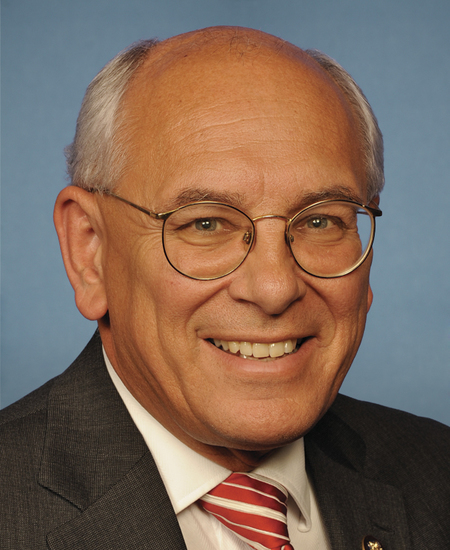
Rep. Paul Tonko
Sponsored bills
Maddy summaryThis bill requires federal agencies to adjust contract prices to reimburse contractors for paying employees during government funding lapses (e.g., shutdowns). It covers costs for furloughed, laid-off, or reduced-hour workers, or for restoring paid leave used during the lapse, with a weekly cap of $1,442 per employee. Directly affecting federal contractors and their employees who experienced work disruptions due to funding gaps, it mandates agencies to make these adjustments promptly after enactment. Contractors must provide proof of costs, and the Office of Federal Procurement Policy must report on implementation to Congress within a year.
Maddy summaryHR 5784 would provide federal grants to public schools (including Bureau of Indian Education schools) to make them more environmentally sustainable and equitable. It prioritizes schools in the most vulnerable communities (based on CDC Social Vulnerability Index) for full funding to become "healthy zero-carbon schools" through energy-efficient retrofits and new construction, while offering reduced funding for less vulnerable schools. The grants require community engagement in planning, mandate hiring from local communities with specific diversity goals, fund social services and mental health support, and include strict energy efficiency standards for all projects. The bill also includes funding for educational equity planning and climate resiliency programs to help schools serve as community centers during disasters.
Maddy summaryThe Alice Cogswell and Anne Sullivan Macy Act amends the Individuals with Disabilities Education Act to better serve children and youth who are deaf, hard of hearing, deafdisabled, blind, visually impaired, or deafblind. It requires states to identify and provide appropriate services to these students regardless of how they're classified in disability categories, ensures access to language instruction in the student's primary language (including American Sign Language), and mandates improved data collection about these students. The bill establishes the Anne Sullivan Macy Center on Visual Disability and Educational Excellence to support research, training, and program development for blind and visually impaired students. These changes aim to improve educational outcomes by addressing the unique language, communication, and learning needs of students with sensory disabilities through concrete policy changes to IDEA.
Maddy summaryThis bill establishes a new Office of Fossil Energy and Carbon Management within the Department of Energy to coordinate federal research on carbon dioxide removal (CDR) technologies. It authorizes over $2 billion in funding for research, development, and demonstration projects focused on direct air capture, soil carbon management, forest restoration, and other CDR approaches across multiple federal agencies. The legislation requires lifecycle analyses of environmental impacts, considers social and economic factors, and mandates cross-agency coordination. It creates a framework for competitive demonstration projects with cost-sharing requirements for private sector participation. The bill aims to advance CDR technologies to help address climate change by removing carbon dioxide from the atmosphere through federally funded research and development.
Maddy summaryThe Agricultural Worker Justice Act (HR 4978) improves working conditions for agricultural and meatpacking workers through several key provisions. It requires USDA to only purchase from entities paying prevailing wages (based on local rates and collective bargaining agreements), prohibits stock buybacks by USDA-funded companies, and creates a list of companies with labor violations that would be ineligible for USDA contracts. The bill establishes new safety standards for meatpacking plants including restrictions on line speeds (requiring safety inspections before increases), requirements for toilet facilities, and enhanced protections for workers reporting safety concerns. It also mandates a GAO report on racial disparities in meatpacking employment and authorizes $400 million for local food purchase programs. The bill directly affects meatpacking facilities, agricultural businesses receiving USDA funds, and the workers employed in these industries.
Maddy summaryHR 5250, the Flooding Prevention, Assessment, and Restoration Act of 2023, requires the U.S. Department of Agriculture to conduct a national study on flood risks to agricultural lands within two years, analyzing economic losses, downstream effects, and existing flood data. It amends the Emergency Watershed Program to allow federal restoration projects that exceed immediate needs for long-term watershed health and adjusts funding for watershed rehabilitation projects, providing up to 65% federal cost coverage (up to 90% for "limited resource areas") for structural repairs near or past their lifespan. The bill directly affects farmers, agricultural producers, and local watershed management groups by mandating a comprehensive flood risk assessment and modifying federal support for flood prevention infrastructure. Key provisions include requiring detailed reports on flood impacts to crops/livestock and establishing new funding tiers for rehabilitation projects.
Maddy summaryThe Supporting Armenians Against Azerbaijani Aggression Act of 2023 authorizes $30 million in U.S. humanitarian assistance for Armenians in Armenia and Nagorno-Karabakh affected by Azerbaijani military actions and blockade. It repeals a longstanding restriction on aid to Azerbaijan, allocates $10 million for military assistance to Armenia, and requires the U.S. government to develop a strategy protecting Armenians' rights in Nagorno-Karabakh. The bill also mandates a report on alleged Azerbaijani atrocities, authorizes $650 million for energy sector development in Armenia, and requires sanctions on Azerbaijani officials responsible for attacks and the blockade of Nagorno-Karabakh.
Maddy summaryThis bill amends the Higher Education Act to require all U.S. colleges and universities receiving federal financial aid to create detailed anti-harassment policies covering physical, online, and institution-sponsored settings. It mandates policies prohibiting harassment based on race, sex (including sexual orientation and gender identity), disability, religion, and other protected characteristics, including harassment via institutional email, computers, or electronic messaging. The bill also establishes a $50 million annual grant program to fund colleges developing prevention programs, victim support services, and training for students and staff on recognizing and addressing harassment. These policies and grants must comply with existing civil rights laws like Title IX but add specific requirements for reporting and prevention.
Maddy summaryHRES 703 is a symbolic resolution supporting the designation of September 2023 as "National Voting Rights Month" to raise awareness about voting access. It encourages all U.S. citizens to uphold voting rights, urges Congress to pass specific voting rights legislation (like the Freedom to Vote Act and Democracy Restoration Act), and recommends that schools teach about voting history and current voter access issues. The resolution does not create new laws or directly affect specific groups, but it aims to promote broader public engagement with voting rights through education and advocacy. As a non-binding resolution, it expresses support for these goals without implementing any concrete policy changes.