

Maddy summaryThis bill directs the U.S. government to immediately restore funding to the United Nations Relief and Works Agency for Palestine Refugees (UNRWA), reversing a temporary funding pause. It repeals two appropriations acts that halted payments and requires the Secretary of State to resume UNRWA funding under existing authorities. The legislation specifically aims to support UNRWA’s critical humanitarian work - providing shelter, education, healthcare, and aid to Palestinian refugees across Gaza, the West Bank, Syria, Lebanon, and Jordan - during an acute famine risk in Gaza. It also mandates quarterly reports to Congress on UNRWA’s implementation of reforms from an independent review, ensuring accountability for its humanitarian mission.
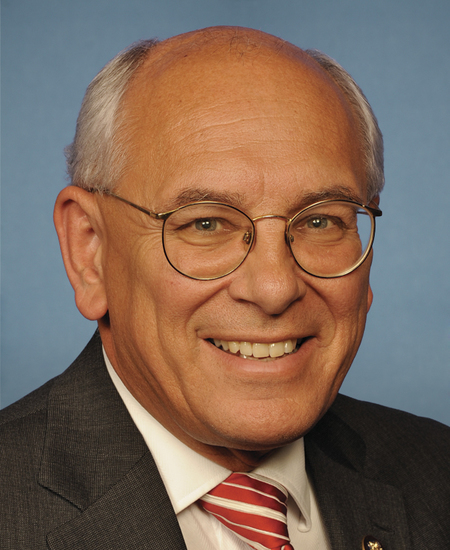
Rep. Paul Tonko
Sponsored bills
Maddy summaryThis bill modifies Medicaid and CHIP rules to let eligible out-of-state healthcare providers enroll without extra state screening. It applies to providers already in Medicare or their home state program, with low fraud risk, serving children under 21 with complex medical conditions. Providers would receive 5 years of enrollment under this streamlined process, eliminating state-level barriers. The change directly affects children seeking specialized care across state lines and the providers who serve them.
Maddy summaryHRES 1461 is a symbolic resolution designating September 2024 as "National Voting Rights Month" to raise awareness about voting access. It encourages all U.S. citizens to uphold voting rights, supports existing voting rights legislation like the Freedom to Vote Act, and recommends schools teach about voting history and current restrictions. The resolution specifically aims to highlight efforts to address historical and ongoing barriers affecting historically marginalized groups, including Black, Latino, and disabled voters. It does not create new laws but promotes educational initiatives and media campaigns about registration deadlines and election access.
Maddy summaryHR 9635, the Seizure Awareness and Preparedness Act, creates a federal grant program to support schools in caring for students with epilepsy or seizure disorders. It provides funding for training school staff - including nurses, teachers, and bus drivers - on recognizing seizures, implementing customized emergency care plans, and managing medication. The bill requires schools to develop individualized health plans with input from families and medical providers, covering care during activities, sports, and school trips. It also protects school staff from liability for good-faith actions related to seizure care, while ensuring funds supplement, not replace, existing resources.
Maddy summaryHR 9639, the AI Ads Act, amends the Federal Election Campaign Act to prohibit using AI-generated content (like deepfakes or synthetic media) in campaign materials as fraudulent misrepresentation of campaign authority or fraudulent fund solicitation. It directly affects political campaigns, candidates, committees, and anyone creating campaign ads by requiring that AI-generated content cannot falsely claim to represent a candidate, party, or committee. The bill updates existing rules to explicitly include "content generated in whole or in part with artificial intelligence" within the definitions of fraud under Sections 322(a)(1) and 322(b)(1). This ensures that misleading AI-generated ads - such as those falsely attributing a statement to a candidate - would be treated as illegal fraud under current campaign finance law.
Maddy summaryHRES 1448 is a non-binding House resolution stating that the House believes every person has the right to emergency health care, including abortion care, during medical emergencies. It specifically addresses concerns that abortion restrictions force medical providers to choose between treating patients in life-threatening situations or risking criminal charges. The resolution highlights that such restrictions disproportionately harm Black, Indigenous, people of color, immigrants, low-income individuals, and LGBTQI+ patients. It does not change existing laws but expresses congressional support for ensuring access to emergency care without legal barriers. The resolution was introduced by multiple House members and referred to the Energy and Commerce Committee.
Maddy summaryHRES 1447 is a non-binding resolution expressing support for designating the week of September 22-28, 2024, as "Gold Star Families Remembrance Week." It directly honors families who lost loved ones while serving in the U.S. military (referred to as "Gold Star Families") and families of veterans. The resolution encourages Americans to observe the week by performing community service and celebrating the sacrifices of fallen service members, without creating new laws or obligations. It aligns with existing recognition of Gold Star Mother’s Day (the last Sunday in September) but expands the focus to all affected families.
Maddy summaryThe SAFE Bet Act establishes federal standards for state-run sports wagering programs, requiring states to create approved programs with specific consumer protections and integrity safeguards. Key provisions include banning bets on amateur/intercollegiate events, prohibiting betting on events already underway, creating a national self-exclusion list for problem gamblers, and setting deposit limits (no more than 5 deposits per 24 hours, with affordability checks for larger bets). The bill also mandates annual nationwide surveys on problem gambling, restricts advertising targeting vulnerable populations, and requires sports wagering operators to implement data security and transparency measures. It affects state governments (which must administer approved programs), sports wagering operators (which must comply with strict regulations), and bettors (who gain new protections and restrictions). The law aims to balance sports wagering access with public health safeguards while preserving state authority to implement more stringent rules.
Maddy summaryHR 9589, the "Stop Illegal Campaign Coordination Act," clarifies when independent campaign spending is considered coordinated with a candidate or party. It expands the definition of coordinated spending to include any expenditure that matches a candidate's or committee's instructions - such as targeting specific voters, using similar messaging, or following suggested media methods - even if those instructions weren't publicly shared. This change directly affects outside groups and political committees making election-related ads or communications, as it makes it easier for the Federal Election Commission to determine if their spending was coordinated. The bill adds six specific factors the Commission must consider when evaluating coordination, like whether instructions included audience details or messaging elements.
Maddy summaryThe American Energy Worker Opportunity Act of 2024 creates a new Office of American Energy Workers within the Treasury Department to support workers displaced by coal mine or fossil fuel plant closures. It provides eligible workers (those with 12+ months of near-full-time employment at a closing facility) with 60 months of wage replacement payments (adjusted for inflation), health insurance premium assistance, retirement savings contributions, and educational benefits for them and their children. The bill requires facility operators to notify the Treasury 90 days before closure and prioritizes hiring these workers for new clean energy projects funded by federal grants. This law directly affects workers in coal and fossil fuel industries facing permanent layoffs, offering concrete financial and career transition support.