

Maddy summaryHR 10126, the Public Health Funding Restoration Act, restores annual funding for the Prevention and Public Health Fund to $2 billion starting in fiscal year 2025. This bill directly affects the Centers for Disease Control and Prevention (CDC), state, local, tribal, and territorial health departments, and community-based public health programs. It amends the Affordable Care Act to set the annual funding level at $2 billion, reversing previous cuts and enabling expanded investments in evidence-based prevention efforts like immunizations, chronic disease management, tobacco cessation, and pandemic preparedness. The restored funding aims to support proven programs that reduce healthcare costs and improve public health outcomes nationwide.
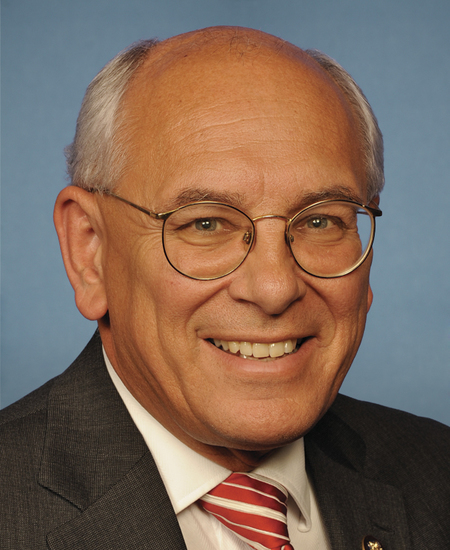
Rep. Paul Tonko
Sponsored bills
Maddy summaryThis resolution (HRES 1558) is a symbolic House of Representatives measure supporting October as "National Domestic Violence Awareness Month." It does not create new laws or allocate funding but formally expresses the House's support for raising awareness about domestic violence and its impacts, and urges continued backing for existing programs that address domestic violence. The resolution cites statistics on domestic violence prevalence (e.g., 24 people per minute affected by intimate partner violence) to underscore the importance of the observance. It directly affects public awareness efforts but does not change policies or directly impact individuals.
Maddy summaryThis bill modifies how disability benefits are treated for homeless disabled veterans seeking housing assistance. It excludes certain disability payments (under Chapter 11 or 15 of Title 38, U.S. Code) from income calculations when determining eligibility for HUD-assisted housing programs, including the supported housing program under Section 8(o)(19) and housing on Department property. Specifically, it ensures these benefits are not counted toward income for housing eligibility, though they still count for "adjusted income" definitions. The bill directly affects disabled veterans applying for HUD housing assistance who receive these specific disability benefits. It makes a concrete change to income calculation rules without altering benefit amounts or creating new funding.
Maddy summaryThe VA Employee Fairness Act of 2024 modifies collective bargaining rules for employees of the Veterans Health Administration (VHA). It removes existing subsections (b), (c), and (d) from the law governing VHA employee bargaining and renumbers the remaining provision. This change streamlines the collective bargaining framework but does not alter the Secretary of Veterans Affairs' existing authorities over incentive pay and expedited hiring. The bill directly affects VHA employees by changing how their collective bargaining rights are structured under federal law. The law remains neutral, focusing solely on procedural adjustments to the existing bargaining framework.
Maddy summaryThis bill establishes minimum safety standards for railroad bridges and requires railroad carriers to provide detailed inspection reports classifying bridges as poor, fair, or good condition, including repair timelines and costs for bridges in poor condition. It mandates railroad carriers to post visible signs identifying bridge ownership and a contact number for public safety concerns, and creates a public database showing basic bridge condition information without detailed technical specifications. The bill also establishes a safety concern reporting system for the public and authorities, and requires the Department of Transportation to conduct randomized bridge inspections to verify reported conditions. Railroad carriers that fail to meet safety requirements face civil penalties, including weekly fines for continued operation of unsafe bridges.
Maddy summaryThis resolution expresses the U.S. House of Representatives' support for designating October 8, 2024, as "National Hydrogen and Fuel Cell Day." It recognizes hydrogen and fuel cell technologies for their role in clean energy, transportation (including vehicles and industrial applications), and grid reliability. The resolution has no legal effect - it is purely symbolic, acknowledging the importance of these technologies without creating new laws or funding. It was introduced by multiple representatives and refers to hydrogen's historical and potential future applications.
Maddy summaryThis bill temporarily removes buprenorphine products (used to treat opioid use disorder) from the Suspicious Orders Report System (SORS) during the opioid public health emergency. It exempts these medications from SORS reporting requirements for 270 days after the emergency ends, aiming to test if this change increases patient access to treatment. Pharmacies and patients with opioid use disorder are directly affected, as the exemption addresses concerns that SORS reporting burdens limit buprenorphine availability. The bill requires a federal report 90 days after the emergency ends, evaluating whether the exemption improved access and recommending whether to keep the exemption permanent. The measure is a temporary data-gathering step, not a permanent policy change.
Maddy summaryHRES 1516 is a resolution passed by the U.S. House of Representatives to commend Big Brothers-Big Sisters of America on its 120th anniversary. It recognizes the organization’s work in providing youth mentorship that helps young people graduate from school and plan for their future. The resolution highlights how the organization, operating in over 5,000 communities nationwide, has supported millions of young people through long-term mentor relationships. As a symbolic gesture, it does not create new laws or policies but expresses congressional support for the organization’s mission.
Maddy summaryHRES 1518 designates November 12 as Creutzfeldt-Jakob Disease (CJD) Awareness Day. The resolution supports raising public awareness about CJD, a rare, fatal brain disorder affecting approximately 1-2 people per million annually in the U.S., which causes rapid neurological decline and death within months to a year. It highlights the disease's impact on patients and families and emphasizes the need for ongoing research into prion diseases like CJD, which share similarities with Alzheimer's and related dementias. As a symbolic resolution (not a law), it does not create new programs or funding but aims to increase recognition of this rare condition.
Maddy summaryHR 9857, "Mel’s Law," requires U.S. colleges and universities to establish a policy for awarding posthumous degrees to students who died before completing their degree programs. Specifically, it mandates that institutions must certify they have a policy to award such degrees to deceased students who were enrolled, died prior to graduation, and met the academic standing requirements for graduation at the time of death. The bill also amends accreditation standards to ensure they do not consider the number of posthumous degrees awarded when evaluating institutions. The law takes effect one year after enactment.