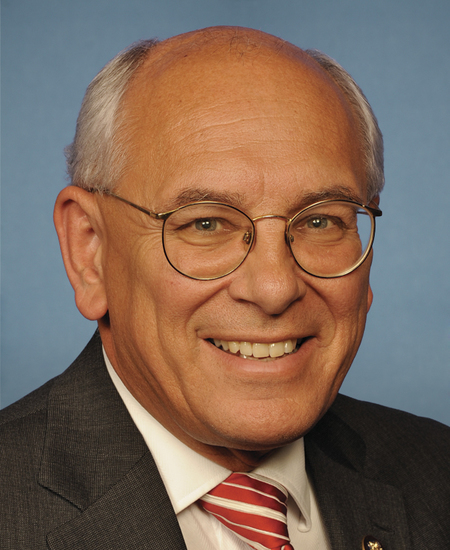
Photo of Paul Tonko
D United States House · District 20 · New York On the 2026 ballot

Rep. Paul Tonko

Compare
Total votes
2,837
all sessions
Attendance
99%
21 missed
Near the chamber average
With party
98%
of cast votes
Higher than 82% of chamber peers
Bipartisan score
1%
crosses aisle rarely
Lower than 82% of chamber peers
Sponsored
2,025
bills & resolutions
Higher than 93% of chamber peers
Committees
5
assignments
2,025 bills and resolutions

Sponsored bills

Total
2,025
Primary
95
Co-sponsor
1,930
This page
2,025
matching current filters
Co-sponsor HR 1627
In committee · United States House · Co-sponsor
TREATS Act

Maddy summaryThis bill changes rules for prescribing certain medications used to treat substance use disorders. It allows healthcare providers to use telehealth for the initial patient evaluation instead of requiring an in-person visit, but only for drugs approved by the FDA for addiction treatment (schedules III-V). The telehealth must meet specific standards, including real-time audio/video communication. This affects doctors and other practitioners who prescribe these medications for substance use disorders.

In committee Feb 26, 2025 1 co-sponsor
Co-sponsor HR 1638
In committee · United States House · Co-sponsor
CROWN Act of 2025

Maddy summaryHR 1638, the CROWN Act of 2025, prohibits discrimination based on hair texture or hairstyle that is commonly associated with race or national origin, particularly affecting Black individuals who wear natural or protective styles like braids, locs, cornrows, twists, or Afros. The bill explicitly expands protections under existing federal civil rights laws (including the Civil Rights Act of 1964 and the Fair Housing Act) to cover hair-based discrimination in federally funded programs, housing, public accommodations, employment, and equal rights. It requires schools, employers, and other entities receiving federal funds to eliminate grooming policies that disproportionately target these hairstyles. The law clarifies that such discrimination violates federal law and provides enforcement through existing civil rights mechanisms.

In committee Feb 26, 2025 1 co-sponsor
Co-sponsor HR 1564
In committee · United States House · Co-sponsor
Ethan's Law

Maddy summaryEthan's Law requires gun owners to store firearms securely in homes where minors live or where residents are legally prohibited from owning guns. It makes it unlawful to leave firearms unsecured if a minor or ineligible person could access them, with fines of $500 per violation and harsher penalties if injury or death occurs. The bill creates a federal grant program to help states implement similar secure storage laws and treats unsafe storage as negligence in legal cases. It directly affects households with children or residents who cannot legally possess firearms, aiming to reduce accidental shootings and unauthorized access.

In committee Feb 25, 2025 1 co-sponsor
Co-sponsor HRES 160
In committee · United States House · Co-sponsor
Recognizing January 2025 as "National Mentoring Month".

Maddy summaryHRES 160 designates January 2025 as "National Mentoring Month" to highlight the positive impact of mentoring relationships on young people. The resolution emphasizes how mentoring improves academic performance, mental health, career readiness, and social skills - particularly for underserved youth - and addresses the "mentoring gap" where one in three young people lacks a supportive adult outside their family. It calls for expanding mentoring programs in schools, communities, and workplaces without creating new laws or funding. As a symbolic resolution, it aims to raise public awareness and encourage participation in existing mentoring initiatives.

In committee Feb 24, 2025 1 co-sponsor
Co-sponsor HR 1518
In committee · United States House · Co-sponsor
New Era of Preventing End-Stage Kidney Disease Act

New Era of Preventing End-Stage Kidney Disease Act This bill establishes regional centers of excellence, postgraduate fellowships, and training for health professionals relating to the diagnosis and treatment of rare kidney disease. It also requires the Department of Health and Human Services (HHS) to conduct various studies on rare kidney disease. Specifically, it authorizes the National Institute of Diabetes and Digestive and Kidney Diseases to award funding to public and private nonprofit entities for establishing regional centers of excellence that will increase public awareness, conduct research, and develop resources for diagnosing and treating rare kidney diseases. A center may receive such funding for up to five years, unless extended by the institute.  The bill also requires health professions schools receiving a grant from the Health Resources and Services Administration (HRSA) Centers of Excellence program to award fellowships for training on preventing, diagnosing, and treating rare kidney disease in disproportionately impacted populations. Also, the bill expands the priorities of HRSA’s Primary Care Training and Enhancement program to include training for health care workers to care for individuals with kidney disease. Additionally, HHS must conduct several studies and report to Congress on topics such as treating rare kidney disease in disproportionately affected populations, eliminating the need for dialysis or kidney transplants, and increasing public awareness of rare kidney disease.

In committee Feb 24, 2025 1 co-sponsor
Co-sponsor HR 1517
In committee · United States House · Co-sponsor
Prevent Interruptions in Physical Therapy Act of 2025

Maddy summaryThis bill allows physical therapists to use temporary replacement staff (locum tenens) under Medicare, similar to how physicians currently can. It directly affects physical therapists providing outpatient services and Medicare beneficiaries relying on those services. The key change modifies Medicare rules to apply the same provisions for physical therapy services as are already used for physician services. This means physical therapists can more easily fill temporary staffing gaps without disrupting patient care. The amendment applies to services provided after the bill's enactment date.

In committee Feb 24, 2025 1 co-sponsor
Co-sponsor HR 1546
In committee · United States House · Co-sponsor
Erie Canal Bicentennial Commemorative Coin Act

Maddy summaryHR 1546 authorizes the minting of commemorative coins to celebrate the 200th anniversary of the Erie Canal. It specifies three coin types ($5 gold, $1 silver, and half-dollar) to be issued in 2026, with surcharges ($35, $10, and $5 per coin, respectively) directed to the Erie Canalway Heritage Fund. These surcharges fund preservation, recreation, and educational programs for the Erie Canalway National Heritage Corridor. The bill does not impose new taxes or regulations but creates a dedicated funding stream for canal corridor maintenance and history initiatives.

In committee Feb 24, 2025 1 co-sponsor
Co-sponsor HR 1532
In committee · United States House · Co-sponsor
Scientific EXPERT Act of 2025

Maddy summaryHR 1532, the Scientific EXPERT Act of 2025, creates a new process for FDA to host annual "science-focused drug development meetings" (EL-SFDD meetings) specifically for rare diseases. The bill requires the Reagan-Udall Foundation to convene at least four such meetings yearly, bringing together FDA staff, drug developers, medical experts, patient groups, and scientific organizations to discuss scientific challenges and align on approaches like clinical trial designs and endpoints. The FDA must publicly summarize meeting outcomes and explain how input influenced drug approvals, while also reporting annually on meeting impact. This directly affects rare disease drug developers, FDA review divisions, and patient advocacy groups participating in these structured scientific discussions. The bill does not change drug approval standards but aims to streamline development through better scientific alignment.

In committee Feb 24, 2025 1 co-sponsor
Co-sponsor HR 1448
In committee · United States House · Co-sponsor
PEER Mental Health Act of 2025

Maddy summaryHR 1448, the PEER Mental Health Act of 2025, provides federal grants to schools for mental health training. It requires training school staff, students, parents, and caregivers to recognize mental health symptoms in youth, refer students to services, and apply basic response techniques during immediate distress. The bill mandates that at least 25% of annual funding ($24.96 million per year for 2026-2030) supports rural schools, with streamlined application processes and technical assistance for grantees. The program directly affects public schools, their personnel, and students by expanding access to mental health awareness and community resource education.

In committee Feb 21, 2025 1 co-sponsor
Co-sponsor HR 1464
In committee · United States House · Co-sponsor
MODERN WIC Act of 2025

More Options to Develop and Enhance Remote Nutrition in WIC Act of 2025 or the MODERN WIC Act of 2025 This bill permanently allows individuals to remotely certify their eligibility for, and receive benefits through, the Special Supplemental Nutrition Program for Women, Infants, and Children (WIC). Specifically, the bill requires that a state agency allow an individual seeking a WIC certification, recertification, or a nutritional risk evaluation to do so by phone or through video teleconference, in addition to the in-person option. A state agency has 90 days to collect data for a nutritional risk evaluation for a remotely certified individual. Further, a state agency may consider an applicant who meets the income eligibility standards to be temporarily eligible on an interim basis to participate in the program and may certify the individual for immediate participation without waiting for a nutritional risk evaluation. The bill also allows states to provide benefits on WIC electronic benefit transfer cards through mail or remote issuance instead of requiring participants to pick up or reload benefits in person at a WIC office. Further, the Department of Agriculture must report to Congress about the use of remote technologies and other digital tools in the WIC program. Currently, individuals are generally required to be physically present to certify their WIC eligibility and receive benefits, with exceptions. The Food and Nutrition Service  has temporarily waived these requirements and allowed remote certification and benefits using authorities that were provided by laws that were enacted to address COVID-19.

In committee Feb 21, 2025 1 co-sponsor
Showing 591 to 600 of 2,025 bills
Previous 1 … 59 60 61 … 203 Next