

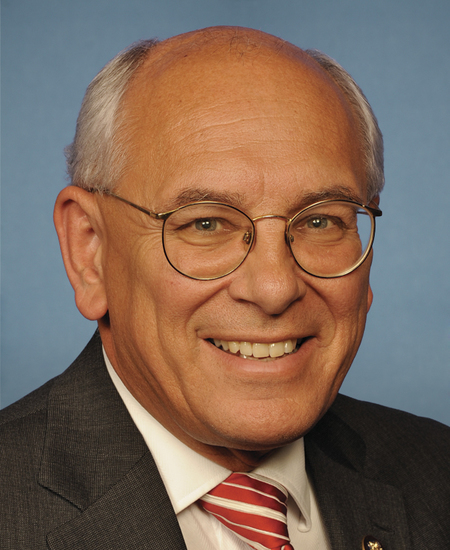
Photo of Paul Tonko
D United States House · District 20 · New York On the 2026 ballot

Rep. Paul Tonko

Compare
Total votes
2,837
all sessions
Attendance
99%
21 missed
Near the chamber average
With party
98%
of cast votes
Higher than 82% of chamber peers
Bipartisan score
1%
crosses aisle rarely
Lower than 82% of chamber peers
Sponsored
2,025
bills & resolutions
Higher than 93% of chamber peers
Committees
5
assignments
2,025 bills and resolutions

Sponsored bills

Total
2,025
Primary
95
Co-sponsor
1,930
This page
2,025
matching current filters
Co-sponsor HR 3254
In committee · United States House · Co-sponsor
Disaster Relief for Farm Workers Act

Maddy summaryThis bill creates annual emergency grants for farm workers affected by covered disasters. It directly helps migrant and seasonal farm workers who lose income or cannot work due to events like hurricanes, wildfires, pandemics, or extreme weather. Grants fund immediate relief (food, shelter), rebuild community capacity, and support long-term resilience against future disasters. Eligible organizations, including farm worker groups or qualified nonprofits, receive funds to distribute aid without time limits.

In committee May 7, 2025 1 co-sponsor
Co-sponsor HR 3226
In committee · United States House · Co-sponsor
Law Enforcement Officers Equity Act

Maddy summaryThe Law Enforcement Officers Equity Act expands federal retirement benefits to include specific non-traditional law enforcement roles, such as IRS tax collection officers, U.S. Postal Inspection Service employees, Department of Veterans Affairs police, and certain U.S. Customs and Border Protection seized property specialists. It directly affects current and future federal workers in these positions who were previously excluded from law enforcement retirement benefits under the Federal Employees Retirement System and Civil Service Retirement System. The bill allows current employees (incumbents) to elect to count prior service toward retirement by paying a deposit covering the difference in retirement contributions, with government contributions made over 10 years. It also temporarily exempts law enforcement officers from mandatory separation for three years after enactment.

In committee May 7, 2025 1 co-sponsor
Co-sponsor HRES 392
In committee · United States House · Co-sponsor
Expressing support for the designation of May as "National Bladder Cancer Awareness Month".

Maddy summaryHRES 392 is a non-binding congressional resolution expressing support for designating May as "National Bladder Cancer Awareness Month." It does not create new laws or programs but formally urges the public, research groups, and affected individuals to promote awareness and early detection of bladder cancer during May. The resolution cites statistics showing over 84,000 new bladder cancer diagnoses and 17,420 deaths expected in the U.S. in 2025, emphasizing that early detection improves survival rates. It specifically highlights the disease's impact on veterans, firefighters, and women (who often face later diagnoses), and references ongoing efforts like the Bladder Cancer Advocacy Network's work. The resolution calls for community observances and increased focus on research, but has no direct effect on policy or funding.

In committee May 6, 2025 1 co-sponsor
Co-sponsor HR 3184
In committee · United States House · Co-sponsor
PFAS Alternatives Act

Maddy summaryHR 3184, the PFAS Alternatives Act, funds research to develop turnout gear (firefighter safety clothing) without harmful PFAS chemicals, directly affecting firefighters who wear this gear. It authorizes $25 million annually (2025-2029) for grants to eligible organizations to research and test PFAS-free gear, requiring partnerships with firefighting groups to translate findings into practice. The bill also allocates $2 million yearly (2027-2031) for training programs on safe gear use and decontamination. Its goal is to reduce firefighters' exposure to chemicals linked to occupational illnesses during operations.

In committee May 6, 2025 1 co-sponsor
Co-sponsor HR 3204
In committee · United States House · Co-sponsor
BASIC ACT

Maddy summaryHR 3204, the BASIC ACT, increases tax incentives for semiconductor manufacturing. It raises the advanced manufacturing investment credit from 25% to 35% for qualifying semiconductor production facilities and extends the deadline for claiming the credit from 2026 to 2030. The bill directly affects companies building or expanding semiconductor manufacturing plants in the U.S. The changes apply to property placed in service after the bill's enactment date. This provides longer-term financial support for domestic semiconductor investment.

In committee May 5, 2025 1 co-sponsor
Co-sponsor HRES 372
In committee · United States House · Co-sponsor
Recognizing the impact the stigmatization of menstruation has on the lives of women, girls, and people who menstruate, and expressing support for the designation of the month of May as "National Menstrual Health Awareness Month".

Maddy summaryHRES 372 is a symbolic resolution designating May as "National Menstrual Health Awareness Month" to address stigma around menstruation. It does not create new laws but formally recognizes how menstrual stigma impacts women, girls, and people who menstruate in areas like education, health, and daily life. The resolution supports efforts to normalize menstruation, improve access to menstrual products and sanitation facilities, and promote research on menstrual health conditions. It urges awareness and education to advance gender equity but has no legal force or direct policy changes.

In committee May 1, 2025 1 co-sponsor
Co-sponsor HRES 369
In committee · United States House · Co-sponsor
Expressing the sense of the House of Representatives that the Secretary of Health and Human Services should withdraw a reduction in public notice and comment opportunities.

Maddy summaryThis resolution urges the Secretary of Health and Human Services (HHS) to withdraw a March 2025 Federal Register notice (90 Fed. Reg. 11029) that would have reduced public notice and comment periods for proposed regulations. It specifically asks HHS to restore the pre-February 27, 2025 process, which required public input on rulemaking. The resolution emphasizes that public participation in HHS rulemaking - impacting millions through health and human services regulations - is essential for fair policy. As a non-binding resolution, it does not change law but expresses congressional preference for maintaining transparency in the regulatory process.

In committee May 1, 2025 1 co-sponsor
Co-sponsor HR 3139
In committee · United States House · Co-sponsor
Public Service Worker Protection Act

Maddy summaryThis bill expands OSHA safety protections to cover public employees, including teachers, police, and sanitation workers, who were previously excluded from federal workplace safety regulations. It directly affects state and local government workers by amending the Occupational Safety and Health Act to explicitly include "the United States, a State, or a political subdivision of a State" under OSHA coverage. The key mechanism is a technical amendment to the law’s definition of covered employees, ensuring public service workers fall under the same safety standards as private-sector employees. The bill takes effect 90 days after enactment for most workplaces, with a 36-month delay for state/local governments without existing OSHA plans.

In committee May 1, 2025 1 co-sponsor
Co-sponsor HR 3112
In committee · United States House · Co-sponsor
Better CARE for Animals Act of 2025

Maddy summaryHR 3112, the Better CARE for Animals Act of 2025, strengthens enforcement of the federal Animal Welfare Act by requiring dealers and exhibitors to hold valid licenses for animal sales or transport (Section 4). It expands enforcement authority by allowing the Attorney General to sue violators for up to $10,000 per day, seize animals, and seek injunctions (Section 20), while clarifying that courts can address violations of related rules and regulations. The bill directly affects animal dealers, exhibitors, the USDA, and the Department of Justice, creating clearer pathways for holding violators accountable. Key provisions include updating definitions, broadening inspection powers to cover all regulations, and directing penalty funds toward temporary animal care costs during legal proceedings.

In committee Apr 30, 2025 1 co-sponsor
Co-sponsor HR 3115
In committee · United States House · Co-sponsor
Assault Weapons Ban of 2025

Assault Weapons Ban of 2025 This bill makes it a crime to knowingly import, sell, manufacture, transfer, or possess a semiautomatic assault weapon (SAW) or large capacity ammunition feeding device (LCAFD). The prohibition does not apply to a firearm that is (1) manually operated by bolt, pump, lever, or slide action, except for certain shotguns; (2) permanently inoperable; (3) an antique; (4) only capable of firing rimfire ammunition; or (5) a rifle or shotgun specifically identified by make and model. The bill also exempts from the prohibition the following, with respect to a SAW or LCAFD: importation, sale, manufacture, transfer, or possession related to certain law enforcement efforts, or authorized tests or experiments; importation, sale, transfer, or possession related to securing nuclear materials; and possession by a retired law enforcement officer. The bill permits continued possession, sale, or transfer of a grandfathered SAW, which must be securely stored. A licensed gun dealer must conduct a background check prior to the sale or transfer of a grandfathered SAW between private parties. The bill permits continued possession of, but prohibits sale or transfer of, a grandfathered LCAFD. Newly manufactured LCAFDs must display serial number identification. Newly manufactured SAWs and LCAFDs must display the date of manufacture. The bill also allows a state or local government to use Edward Byrne Memorial Justice Assistance Grant Program funds to compensate individuals who surrender a SAW or LCAFD under a buy-back program.

In committee Apr 30, 2025 1 co-sponsor
Showing 441 to 450 of 2,025 bills
Previous 1 … 44 45 46 … 203 Next