

Build America's Libraries Act This bill establishes and provides funds through FY2024 for the Build America's Libraries Fund, from which the Institute of Museum and Library Services (IMLS) must allocate funding to states and, through them, need-based grants to libraries to make long-term improvements to library facilities. The IMLS must also award grants to Indian tribes and organizations that primarily serve and represent Native Hawaiians. Specifically, the bill requires each state that receives an allocation, and each library that receives a grant, to carry out certain activities to improve library facilities. These activities include constructing and renovating library facilities, investing in infrastructure projects to improve internet access and connectivity, improving indoor air quality, and making facilities accessible to individuals with disabilities. The bill also outlines administrative and oversight provisions, including by requiring library projects to use iron and steel products that are produced in the United States.
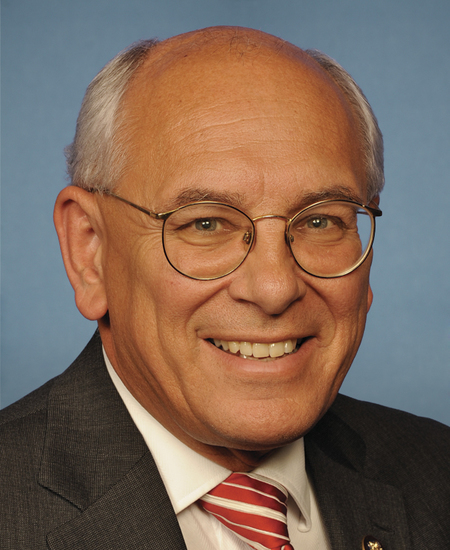
Rep. Paul Tonko
Sponsored bills
Berta Caceres Human Rights in Honduras Act This bill prohibits U.S. assistance to the police or military of Honduras. The Department of the Treasury shall instruct U.S. representatives of multilateral development banks to vote against providing loans to the Honduran police or military. The prohibition shall be lifted if the Department of State certifies to Congress that various conditions have been met, including that the Honduran government has (1) pursued all legal avenues to reach verdicts in specified crimes, such as the killings of indigenous land-rights activist Berta Caceres and of 100 small-farmer activists in the Aguan Valley; (2) investigated and prosecuted members of the military and police who have violated human rights; and (3) taken effective steps to establish the rule of law.
Open Back Better Act of 2021 This bill directs the Department of Energy (DOE) to provide grants to federal and state agencies and tribal organizations to implement building projects that increase resiliency, energy efficiency, renewable energy, and grid integration. It also provides grants for projects that may have combined heat and power and energy storage as project components. States must use at least 40% of grant funds to implement projects in environmental justice communities or low-income communities that have been adversely impacted by the COVID-19 (i.e., coronavirus disease 2019) pandemic.
Research Investment to Spark the Economy Act of 2021 or the RISE Act of 2021 This bill authorizes the Departments of Agriculture, Commerce, Defense, Education, Energy, the Interior, Health and Human Services, and Transportation, National Aeronautics and Space Administration (NASA), National Science Foundation, and Environmental Protection Agency to provide support for research regarding COVID-19 (i.e., coronavirus disease 2019) or research disrupted by the COVID-19 pandemic. Support may be used to provide supplemental funding to extend the duration of a grant to a research institution, national laboratory, or individual that was awarded prior to the enactment of this bill, or to expand the purposes of such a grant as specified; issue awards to research the effects of the current pandemic and potential future pandemics; and provide flexibility on awards to account for facility closures or other limitations during the COVID-19 public health emergency. Agencies must provide the support as rapidly as possible. Provided funds shall remain available through FY2021.
Clean Energy and Sustainability Accelerator Act This bill establishes and capitalizes a Clean Energy and Sustainability Accelerator. The independent, nonprofit accelerator must invest in clean energy technologies and infrastructure to reduce greenhouse gas emissions. The accelerator must make capital available to state, territorial, or local green banks. The banks must be public or nonprofit specialized finance entities that use finance tools to mitigate climate change. The accelerator may also provide technical assistance and funding to states and other political subdivisions that do not have green banks to establish such banks. When investing in projects that mitigate greenhouse gas emissions, the accelerator must prioritize investments that serve climate-impacted communities (e.g., communities of color or low-income communities). In addition, the accelerator must explore the establishment of a program to provide low-interest and zero-interest loans, up to 30 years in length, to any school, metropolitan planning organization, or nonprofit organization seeking financing for the acquisition of zero-emissions vehicle fleets or associated infrastructure. Finally, the accelerator must explore the establishment of an accelerated clean energy transition program to (1) expedite the transition within the power sector to zero-emissions power generation facilities or assets, and (2) invest in local economic development in communities affected by this transition away from carbon-intensive facilities or assets.
Rural Wind Energy Modernization and Extension Act of 2021 This bill expands the energy tax credit to include qualified distributed wind energy property. The bill defines qualified distributed wind energy property to include property that uses one or more wind turbines used to produce electricity in a single project with a total nameplate capacity not exceeding 10 megawatts.
Enhancing North Korea Humanitarian Assistance Act This bill addresses humanitarian concerns related to sanctions on North Korea. The Office of Foreign Assets Control shall take one or more specified actions relating to U.S. sanctions on North Korea, such as (1) expanding the current humanitarian exception to such sanctions to include items that meet basic human needs and are not subject to the Export Administration Regulations, or (2) exempting certain nonsensitive items for humanitarian operations from specific licensing requirements. For the purposes of such sanctions, personal computers for authorized humanitarian activities by nongovernmental organizations shall not be considered luxury goods. The Department of State shall direct the U.S. representative to the United Nations (UN) to urge the UN to make it less burdensome for nongovernmental organizations to apply for humanitarian exemptions to UN sanctions on North Korea. The State Department shall offer to brief Congress on a strategy to expedite and simplify the process for U.S. passport holders to obtain permission to travel to North Korea to provide humanitarian assistance.
Alzheimer's Caregiver Support Act This bill authorizes grants to expand training and support services for families and caregivers of individuals living with Alzheimer's disease or a related dementia. The Department of Health and Human Services may award these grants to community organizations and health care and social service providers.
This bill requires the Joint Committee on the Library to obtain, and the Architect of the Capitol to permanently install in the U.S. Capitol or on the U.S. Capitol Grounds, a monument honoring Associate Justice of the Supreme Court Ruth Bader Ginsburg.
Arctic Refuge Protection Act This bill repeals the Arctic National Wildlife Refuge oil and gas program. The bill designates approximately 1,559,538 acres of land within Alaska in the Arctic National Wildlife Refuge as a component of the National Wilderness Preservation System.