

Quit Because of COVID-19 Act This bill provides for Medicaid and Children's Health Insurance Program (CHIP) coverage of certain tobacco cessation services. Specifically, the bill provides for coverage, without cost-sharing, of diagnostic, therapy, and counseling services and pharmacotherapy, including prescription and nonprescription tobacco cessation agents, that are provided under medical supervision and in accordance with specified guidelines. It also applies a 100% Federal Medical Assistance Percentage (i.e., federal matching rate) for such items and services during the public health emergency relating to COVID-19 and for two years after the emergency period ends.
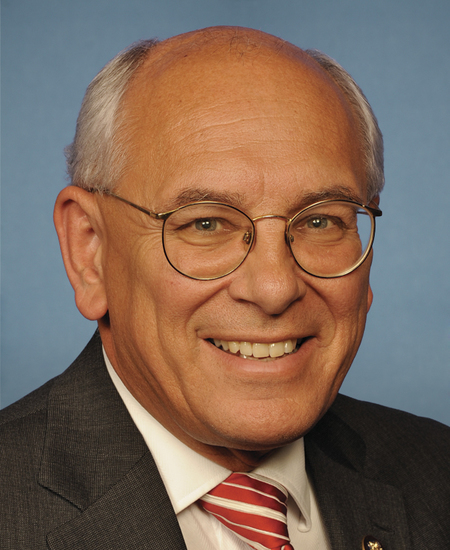
Rep. Paul Tonko
Sponsored bills
This joint resolution eliminates the deadline for the ratification of the Equal Rights Amendment, which prohibits discrimination based on sex. The amendment was proposed to the states in House Joint Resolution 208 of the 92nd Congress, as agreed to in the Senate on March 22, 1972. The amendment shall be part of the Constitution whenever ratified by the legislatures of three-fourths of the states.
Neighborhood Homes Investment Act This bill establishes a new business-related tax credit to finance home building and rehabilitation in neighborhoods that meet certain eligibility criteria relating to poverty rates, income, and home values. The credit is limited to 35% of the lesser of the qualified development cost (i.e., the cost of construction, substantial rehabilitation, demolition, and environmental remediation of residential properties) or 80% of the national median sale price for new homes. The credit applies to single family homes containing four or fewer residential units, condominiums, or houses or apartments owned by cooperative housing corporations.
Safe Step Act This bill requires a group health plan to establish an exception to medication step-therapy protocol in specified cases. A medication step-therapy protocol establishes a specific sequence in which prescription drugs are covered by a group health plan or a health insurance issuer. A request for such an exception to the protocol must be granted if (1) an otherwise required treatment has been ineffective, (2) such treatment is expected to be ineffective and delaying effective treatment would lead to irreversible consequences, (3) such treatment will cause or is likely to cause an adverse reaction to the individual, (4) such treatment is expected to prevent the individual from performing daily activities or occupational responsibilities, (5) the individual is stable based on the prescription drugs already selected, or (6) there are other circumstances as determined by the Employee Benefits Security Administration. The bill requires a group health plan to implement and make readily available a clear process for an individual to request an exception to the protocol, including required information and criteria for granting an exception. The bill further specifies timelines under which plans must respond to such requests.
Improving Child Care for Working Families Act of 2021 This bill increases the limitation on the exclusion from employee gross income for employer-paid dependent care assistance from $5,000 to $10,500.
Dental Care for Veterans Act This bill expands eligibility for veterans for dental care provided by the Department of Veterans Affairs (VA). Specifically, the bill makes all veterans who are enrolled in the VA health care system eligible for VA-provided dental services. Currently, only veterans who have a service-connected dental issue or meet other narrow criteria are eligible for certain dental services. The bill phases in eligibility over four years based upon existing eligibility, degree of service-connected disability or other disability, prisoner of war status, award of a Purple Heart, financial need, or VA health care eligibility.
Ethan's Law This bill establishes a framework to regulate the storage of firearms on residential premises at the federal, state, and tribal levels. At the federal level, the bill establishes statutory requirements for firearms on residential premises to be safely stored if a minor is likely to gain access without permission or if a resident is ineligible to possess a firearm. An individual who violates the requirements is subject to criminal penalties. A firearm stored in violation of the requirements is subject to seizure and forfeiture. At the state and tribal levels, the bill requires the Department of Justice to award grants to implement functionally identical requirements for the safe storage of firearms.
Improving Access to Mental Health Act of 2021 This bill increases the Medicare reimbursement rate for clinical social worker services. The bill excludes clinical social worker services from the prospective payment system in which predetermined amounts form the basis for payment under Medicare. Additionally, the bill alters the definition of clinical social worker services as it relates to Medicare. Under current law, such services (1) include services performed for the diagnosis and treatment of mental illnesses, and (2) exclude services furnished to an inpatient of a skilled nursing facility as a condition of the facility's participation in the Medicare program. The bill repeals these provisions and instead specifies that such services include certain types of health behavior assessment and intervention.
Whole Milk for Healthy Kids Act of 2021 This bill revises requirements for milk provided by the National School Lunch Program of the Department of Agriculture (USDA). Currently, schools participating in the program must provide milk that is consistent with the most recent Dietary Guidelines for Americans; USDA regulations require milk to be fat-free or low-fat and allow only fat-free milk to be flavored. The bill removes these restrictions and instead permits schools to offer students whole, reduced-fat, low-fat, and fat-free flavored and unflavored milk.
Huntington's Disease Disability Insurance Access Act of 2021 This bill expedites payment of Social Security Disability Insurance (SSDI) benefits and eligibility for Medicare coverage for those with Huntington's disease. This is an inherited disorder that causes brain cells to die, including in areas of the brain that help to control voluntary movement. Specifically, the bill eliminates the 5-month waiting period for SSDI benefits and the subsequent 24-month waiting period for Medicare coverage for individuals with Huntington's disease. Under current law, individuals generally must wait five months after the onset of disability to begin receiving SSDI benefits and an additional 24 months to become eligible for Medicare.