

Pregnant Workers Fairness Act This bill prohibits employment practices that discriminate against making reasonable accommodations for qualified employees affected by pregnancy, childbirth, or related medical conditions. A qualified employee is an employee or applicant who, with or without reasonable accommodation, can perform the essential functions of the position, with specified exceptions. Specifically, the bill declares that it is an unlawful employment practice to fail to make reasonable accommodations to known limitations of such employees unless the accommodation would impose an undue hardship on an entity's business operation; require a qualified employee affected by such condition to accept an accommodation other than any reasonable accommodation arrived at through an interactive process; deny employment opportunities based on the need of the entity to make such reasonable accommodations to a qualified employee; require such employees to take paid or unpaid leave if another reasonable accommodation can be provided; or take adverse action in terms, conditions, or privileges of employment against a qualified employee requesting or using such reasonable accommodations. The bill sets forth enforcement procedures and remedies that cover different types of employees in relation to such unlawful employment practices. The Equal Employment Opportunity Commission must provide examples of reasonable accommodations that shall be provided to affected employees unless the employer can demonstrate that doing so would impose an undue hardship. The bill prohibits state immunity under the Eleventh Amendment to the Constitution from an action for a violation of this bill.
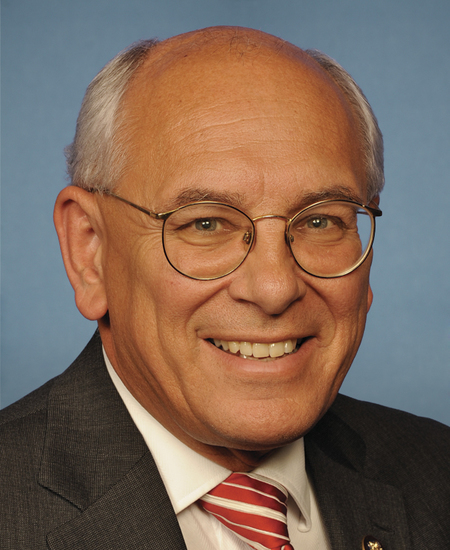
Rep. Paul Tonko
Sponsored bills
This bill waives certain eligibility requirements for hospitals participating in the 340B drug discount program (i.e., a program that allows entities to receive covered outpatient drugs at reduced prices from manufacturers) during the COVID-19 (i.e., coronavirus disease 2019) public health emergency. Specifically, the bill waives the required minimum proportion of low-income patients served for hospitals that began participating in the program during or prior to the COVID-19 emergency.
Providing Resources for Emergency Preparedness And Resilient Enterprises Act or the PREPARE Act This bill reauthorizes through FY2026 a pre-disaster mitigation program, administered by the Small Business Administration, for disbursing economic injury disaster loans to small businesses for protection of real estate, equipment, inventory, supplies, and materials. The bill also increases the amount for loans to take mitigating actions to protect damaged or destroyed property from possible future disasters.
Metastatic Breast Cancer Access to Care Act This bill expedites payment of Social Security Disability Insurance (SSDI) benefits and eligibility for Medicare coverage for those with metastatic breast cancer (i.e., breast cancer that has spread to other sites in the body). Specifically, the bill eliminates the 5-month waiting period for SSDI benefits and the subsequent 24-month waiting period for Medicare coverage for individuals with metastatic breast cancer. Under current law, individuals generally must wait five months after the onset of disability to begin receiving SSDI benefits and an additional 24 months to become eligible for Medicare.
I am Vanessa Guillén Act of 2021 This bill addresses the policies and procedures of the Department of Defense (DOD) for cases or allegations of sex-related offenses.
Helping Emergency Responders Overcome Act or the HERO Act This bill establishes a series of programs relating to the behavioral health of law enforcement officers, first responders, 9-1-1 operators, and other public safety officers and health care providers. The programs include a public safety officer suicide-reporting system at the Centers for Disease Control and Prevention, a grant program for peer-support behavioral health and wellness programs within fire departments and emergency medical services agencies, and a grant program for behavioral health and wellness programs for health care providers.
Pursuing Equity in Mental Health Act This bill establishes and expands programs to address racial and ethnic disparities in mental health. Specifically, the Department of Health and Human Services (HHS) must award grants to establish interprofessional behavioral health care teams in areas with a high proportion of racial and ethnic minority groups. In addition, HHS may award grants to incorporate best practices and competencies to address mental health disparities in curricula for training social workers, psychologists, and other behavioral health professionals. HHS must also promote behavioral and mental health and reduce stigma associated with mental health conditions and substance use disorder through outreach to racial and ethnic minority groups. HHS must consult with appropriate advocacy groups and behavioral health organizations to develop a strategy for this outreach. The bill also (1) reauthorizes the minority fellowship program to support the education of mental health professionals who provide services to racial and ethnic minorities, and (2) requires studies on mental health disparities and the effects of social media use on adolescents.
Suicide Training and Awareness Nationally Delivered for Universal Prevention Act of 20 21 or the STANDUP Act of 2021 This bill requires state, tribal, and local educational agencies that receive grant funding for priority mental-health needs, including through the Project AWARE State Education Agency Grant Program, to establish and implement evidence-based suicide awareness and prevention training policies. In addition, the Substance Abuse and Mental Health Services Administration, in coordination with the Department of Education and Bureau of Indian Education, must provide educational agencies with best practices for these trainings.
Accelerating Kids' Access to Care Act This bill requires state Medicaid programs to establish a process through which qualifying out-of-state providers may enroll as participating providers without undergoing additional screening requirements. Among other things, a qualifying provider must (1) serve minors, or adults whose condition began as a minor; and (2) have previously been screened for Medicare participation or for participation in the Medicaid program of the state in which the provider is located.
Breast Cancer Patient Equity Act This bill provides for Medicare coverage of custom fabricated breast prostheses following the surgical removal of the breast (i.e., a mastectomy), including replacements of such prostheses. Currently, Medicare covers surgically implanted breast prostheses, as well as some external breast prostheses (e.g., post-surgical bras).