Responsive Energy Demand Unlocks Clean Energy Act or the REDUCE Act This bill requires organizations that operate electric grid transmission facilities (e.g., Regional Transmission Organizations or Independent System Operators) to accept bids in a power market from demand response programs of a certain size. In a demand response program, end-use electricity customers are typically remunerated for voluntarily decreasing their short-term electrical consumption generally in response to compromised grid reliability or high wholesale electricity prices.
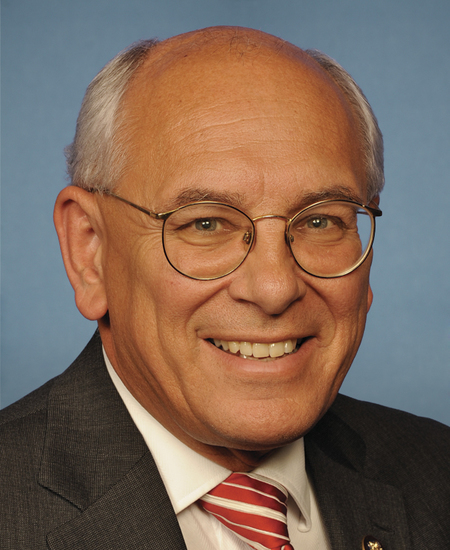
Rep. Paul Tonko
Sponsored bills
Microelectronics Research for Energy Innovation Act or the Micro Act This bill directs the Department of Energy (DOE) to carry out a cross-cutting program of research, development, and demonstration of microelectronics relevant to the mission of DOE and in the service of the nation's global competitiveness in the field of microelectronics. In carrying out such program, DOE shall award financial assistance to eligible entities, such as national laboratories, to carry out research projects in, among other things, foundational science areas and methods for leveraging artificial intelligence. The Office of Science within DOE shall establish up to four Microelectronics Science Research Centers to conduct mission-driven research to address foundational challenges in the design, development, and fabrication of microelectronics and to facilitate the translation of research results to industry. The Office of Science, in coordination with the Office of Technology Transitions, shall implement partnerships with industry groups to facilitate the translation and transfer of research results produced by the centers.
Public Safety Officer Support Act of 2022 This act extends death and disability benefits under the Public Safety Officers' Benefits (PSOB) program to certain public safety officers and survivors of public safety officers who suffer or suffered from post-traumatic stress disorder, acute stress disorder, or trauma and stress-related disorders following an exposure to one or more traumatic events while on duty. The PSOB program provides death, disability, and education benefits to public safety officers and survivors of public safety officers who die or become disabled as a direct and proximate result of a personal injury in the line of duty. The act specifies that post-traumatic stress disorder, acute stress disorder, or trauma and stress-related disorders suffered by a public safety officer following an exposure to a traumatic event while on duty constitutes a personal injury in the line of duty if exposure to the traumatic event was a substantial factor in the disorder. Further, for the purposes of death and disability benefits, the act creates a presumption that an officer's death or permanent disability was directly caused by a personal injury in the line of duty if the officer took an action intended to bring about his or her death and exposure to a traumatic event was a substantial factor in that action or that action occurred within 45 days of an exposure and was consistent with a psychiatric disorder. Finally, the act requires the Government Accountability Office to report on the details of benefits issued pursuant to this act, including recommendations to improve the PSOB program.
Maddy summaryThis non-binding House resolution supports designating August 14-20, 2022, as "Warehouse Worker Recognition Week" to honor logistics workers. It highlights challenges these nearly 2 million U.S. workers face, including dangerous heat, low pay, lack of benefits, and pandemic-era supply chain pressures. The resolution encourages public awareness of their role in keeping supply chains running and acknowledges them as frontline workers during the pandemic. It also commits to reducing workplace injuries but has no legal effect, as it is a symbolic gesture.
Bottles and Breastfeeding Equipment Screening Enhancement Act This bill directs the Transportation Security Administration to issue or update guidance to minimize the risk for contamination of breast milk, baby formula, purified deionized water for infants, and juice (as well as ice packs, freezer packs, frozen gel packs and other accessories required to cool breast milk, baby formula, and juice) that is subject to re-screening or additional screening, including by ensuring adherence to hygienic standards.
No Cost for Monkeypox Testing Act of 2022 This bill requires specified public health care programs and private health insurance to cover, through December 31, 2023, testing for monkeypox without imposing cost-sharing, including deductibles, coinsurance, and copayments. (Monkeypox is a viral disease that is endemic to parts of Africa and causes symptoms similar to, but less severe than, smallpox.) The bill also establishes procedures for uninsured individuals to access such testing at no cost.
Harriet Tubman Bicentennial Commemorative Coin Act This bill directs the Department of the Treasury to mint and issue 50,000 $5 gold coins, 400,000 $1 silver coins, and 750,000 half-dollar clad coins emblematic of the legacy of Harriet Tubman as an abolitionist. The Secretary may issue coins under this bill only during the period of January 1, 2024, through December 31, 2024. All surcharges received by Treasury from the sale of such coins must be paid equally to the National Underground Railroad Freedom Center in Cincinnati, Ohio, and The Harriet Tubman Home, Inc. in Auburn, New York, for the purpose of accomplishing and advancing their missions.
National World War II Memorial Commemorative Coin Act This bill directs the Department of the Treasury to mint and issue up to 50,000 $5 coins, 400,000 $1 silver coins, and 750,000 half-dollar clad coins in commemoration of the National World War II Memorial in the District of Columbia. The design of the coins shall be emblematic of the memorial and the service and sacrifice of American soldiers and civilians during World War II. All surcharges received from the sale of such coins shall be paid to the Friends of the National World War II Memorial to support the National Park Service in maintaining and repairing the memorial, and for educational and commemorative programs.
Assault Weapons Ban of 2022 This bill makes it a crime to knowingly import, sell, manufacture, transfer, or possess a semiautomatic assault weapon (SAW) or large capacity ammunition feeding device (LCAFD). The prohibition does not apply to a firearm that is (1) manually operated by bolt, pump, lever, or slide action, except for certain shotguns; (2) permanently inoperable; (3) an antique; (4) only capable of firing rimfire ammunition; or (5) a rifle or shotgun specifically identified by make and model. The bill also exempts from the prohibition the following, with respect to a SAW or LCAFD: importation, sale, manufacture, transfer, or possession related to certain law enforcement efforts, or authorized tests or experiments; importation, sale, transfer, or possession related to securing nuclear materials; and possession by a retired law enforcement officer. The bill permits continued possession, sale, or transfer of a grandfathered SAW, which must be securely stored. A licensed gun dealer must conduct a background check prior to the sale or transfer of a grandfathered SAW between private parties. The bill permits continued possession of, but prohibits sale or transfer of, a grandfathered LCAFD. Newly manufactured LCAFDs must display serial number identification. Newly manufactured SAWs and LCAFDs must display the date of manufacture. The bill also allows a state or local government to use Edward Byrne Memorial Justice Assistance Grant Program funds to compensate individuals who surrender a SAW or LCAFD under a buy-back program.

Net Neutrality and Broadband Justice Act of 2022 This bill expressly classifies broadband internet as a telecommunications service rather than an information service for purposes of regulation by the Federal Communications Commission. (Current law treats providers of telecommunications services as common carriers and subjects them to more stringent requirements.)