Elder Pride Act of 2022 This bill authorizes the Administration on Aging to award grants to state or tribal governments or other eligible organizations (e.g., area agencies on aging and multipurpose senior centers) for providing sexual health and other services for older adults in rural areas, with a particular focus on older lesbian, gay, bisexual, transgender, queer, or intersex individuals.
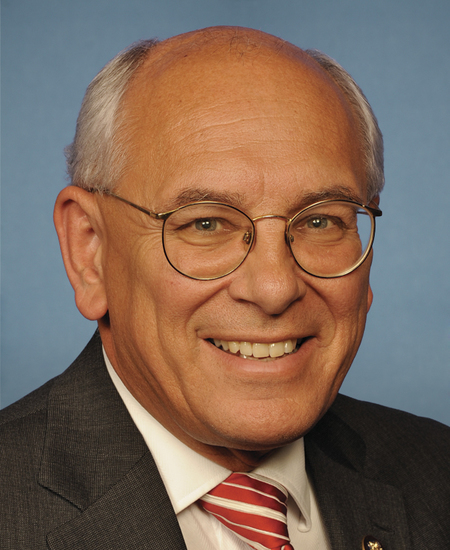
Rep. Paul Tonko
Sponsored bills
This bill designates the facility of the United States Postal Service located at 3900 Crown Road Southwest in Atlanta, Georgia, as the John R. Lewis Post Office Building.
National Museum of American LGBTQ+ History and Culture Act This bill establishes within the Smithsonian Institution the National Museum of American LGBTQ+ History and Culture. The museum (1) may carry out educational and liaison programs in support of its goals, and (2) shall establish specified grant and scholarship programs.
Commission To Study the Potential Creation of a National Museum of American LGBTQ+ History and Culture Act This bill establishes the Commission to Study the Potential Creation of a National Museum of American LGBTQ+ History and Culture. The commission shall submit reports that address the feasibility of establishing and maintaining such a museum, the availability and cost of collections to be acquired and housed in the museum, the impact of the museum on existing American LGBTQ+ history-related museums, development of criteria for evaluating possible locations for the museum, and the feasibility of the museum becoming part of the Smithsonian Institution. The commission shall develop a fundraising plan that will address the support of the museum through contributions from the public. No federal funds may be obligated to carry out this bill.
IDs for an Inclusive Democracy Act This bill directs the Social Security Administration (SSA) to produce and make available at no cost to certain individuals in the United States an identification (ID) for the purpose of allowing such individuals to satisfy ID requirements. Such ID must include a photograph and specified information, as well as security features. It shall be valid for a 10-year period. To receive an ID, an individual must be at least 14 years of age. The SSA must develop and implement a campaign to educate the public with respect to the ID, including how an individual can receive and use it. The U.S. Postal Service (USPS) must develop and implement a process that enables individuals to apply for the ID through the USPS, including a process for a first-time ID and renewal, modeled after the process for passport applications. The bill establishes a Task Force on Federal Identification Cards for the purpose of determining the requirements to produce and make available the ID. The task force shall (1) issue a report on the requirements, including a requirement that the SSA and the USPS establish procedures to prevent the unauthorized disclosure of any information obtained with respect to individuals who seek assistance in obtaining the ID; and (2) develop and publish recommendations for voluntary best practices for nonprofit organizations and entities that provide services to vulnerable populations with respect to how such organizations and entities can assist individuals to obtain the ID.

Maximizing Outcomes through Better Investments in Lifesaving Equipment for (MOBILE) Health Care Act This bill allows a health center that currently receives funding through a Health Resources & Services Administration Health Center Program grant to use a New Access Point grant to set up a mobile unit regardless of whether the health center also establishes a permanent health care delivery site. New Access Point grants help health centers establish new delivery sites to provide comprehensive primary care to medically underserved populations. Under current law, health centers may only use the grants to set up a mobile unit if they also establish a permanent site.
This resolution expresses support for the six protected classes of prescription drugs under the Medicare prescription drug benefit: antidepressants, antipsychotics, anticonvulsants, immunosuppressants, antiretrovirals, and antineoplastics.
Maddy summaryHRES 1386 is a non-binding resolution designating the week of September 26-30, 2022, as "National Clean Energy Week." It expresses the House’s support for this designation and encourages individuals, organizations, and governments to promote clean energy solutions. The resolution highlights clean energy’s economic benefits (like supporting 7.8 million jobs in 2021) and urges investment in affordable, low-emission energy technologies. It does not create new laws, funding, or obligations - it is purely symbolic recognition of the clean energy sector’s role in the U.S. economy.
Social Security Fairness Act of 2021 This bill repeals provisions that reduce Social Security benefits for individuals who receive other benefits, such as a pension from a state or local government. The bill eliminates the government pension offset , which in various instances reduces Social Security benefits for spouses, widows, and widowers who also receive government pensions of their own. The bill also eliminates the windfall elimination provision , which in some instances reduces Social Security benefits for individuals who also receive a pension or disability benefit from an employer that did not withhold Social Security taxes. These changes are effective for benefits payable after December 2021.
Maddy summaryThis resolution (HRES 1370) is a symbolic statement supporting National HIV/AIDS and Aging Awareness Day, observed September 18 each year. It directly affects older adults living with HIV/AIDS in the U.S., highlighting that over half of people with HIV are aged 50+ and many face late diagnosis and healthcare challenges. The resolution encourages governments, healthcare providers, and community organizations to recognize the day, reduce stigma, improve access to HIV testing and treatment (including for older adults), and support existing programs like the Ryan White HIV/AIDS Program. It does not create new laws or allocate funds but urges action based on data showing older people with HIV often need culturally competent care and face unique barriers.