

Maddy summaryThis bill establishes federal standards for labor-management cooperation between public safety employers (state and local governments) and public safety workers (law enforcement officers, firefighters, and emergency medical services personnel). It requires the Federal Labor Relations Authority to determine if states substantially provide rights like collective bargaining, union representation, and binding arbitration for these workers. States found lacking would need to follow federal bargaining procedures after a two-year transition period or following the next legislative session. The bill explicitly respects existing state laws that provide comparable or better rights to public safety workers. It also prohibits strikes or work stoppages that would disrupt emergency services.
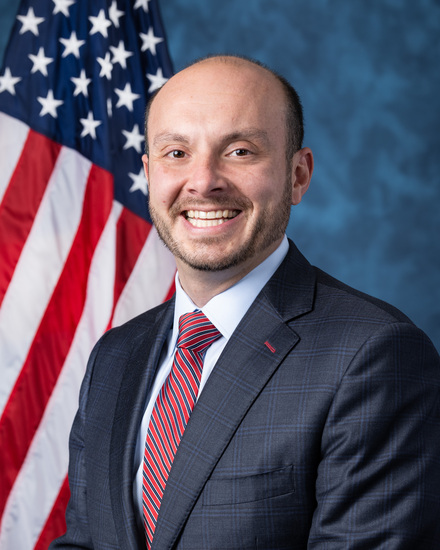
Rep. Andrew R. Garbarino
Sponsored bills
Maddy summaryThe POLICE Act of 2023 would amend the Immigration and Nationality Act to make it a grounds for deportation if a non-citizen assaults a law enforcement officer. This provision directly affects non-citizens (aliens) who commit such assaults, requiring mandatory deportation proceedings under immigration law. The bill adds a specific clause to the list of deportable offenses without changing criminal penalties for the assault itself. As a result, non-citizens who physically attack police officers or other law enforcement personnel would automatically face deportation as a consequence of their actions.
Maddy summaryThis bill requires the Comptroller General to annually investigate nationwide theft of mail and USPS property for five years, reporting findings to specific congressional committees. The reports must detail current USPS theft prevention measures and offer concrete recommendations for improving security. This directly affects the U.S. Postal Service by mandating regular oversight and providing Congress with data to inform future policy decisions. The legislation focuses on establishing a structured reporting process to address theft patterns, without specifying new funding or enforcement actions.
Maddy summaryHR 3435, the Charitable Act, creates a temporary tax deduction for charitable contributions for individual taxpayers who do not itemize deductions. It allows these taxpayers to deduct up to one-third of their standard deduction amount for charitable gifts in 2023 and 2024. The bill directly affects millions of filers who typically take the standard deduction instead of itemizing, making charitable giving more tax-advantageous for them during these two years. The provision expires after 2024 and does not change the standard deduction amount itself.
Enhancing COPS Hiring Program Grants for Local Law Enforcement Act This bill allows funds under the Community Oriented Policing Services grant program to be used to provide bonuses for the recruitment and retention of law enforcement officers or career law enforcement officers.
National Law Enforcement Officers Remembrance, Support and Community Outreach Act This bill directs the Department of Justice (DOJ) to establish a National Law Enforcement Officers Remembrance, Support, and Community Outreach Program. The bill further directs DOJ to award a grant under the program to the National Law Enforcement Officers Memorial Fund for the expenses associated with community outreach, public education, and officer safety and wellness programs operated by the of the National Law Enforcement Officers Memorial Fund and National Law Enforcement Museum.
Maddy summaryHRES 363 is a resolution expressing support for recognizing National Police Week, an annual observance established by law to honor law enforcement officers who have died in the line of duty. The resolution acknowledges 556 officers killed in the line of duty during 2022 and calls for ensuring law enforcement officers have necessary equipment, training, and resources to protect both themselves and the public. It encourages the American public to observe National Police Week by honoring law enforcement personnel and recognizing their essential mission in serving communities across the United States. This resolution does not create new law but formally expresses congressional support for an existing observance.
Maddy summaryHR 3331, the Improving Mental Health and Wellness in Schools Act, requires public schools participating in federal school meal programs to integrate mental health into their wellness policies. The bill mandates schools to form teams including mental health professionals to develop and update these policies, and to promote mental health assessments, encourage mental health support, and build resilient school environments. It amends the National School Lunch Act to add mental health promotion alongside physical activity and eating disorder prevention, and extends a policy review deadline from 2014 to 2026. This directly affects all K-12 schools receiving federal nutrition funding.
Maddy summaryThe FIGHT Act (HR 2742) amends the Animal Welfare Act to specifically target animal fighting events, such as cockfighting, by defining "rooster" as any male chicken over six months old and banning the live broadcasting (simulcasting) of such events. It prohibits using the postal service or interstate transport to move roosters for animal fighting purposes and adds civil enforcement tools allowing citizens to sue violators after a 60-day notice period. Fines up to $5,000 per violation may be imposed, and property used in animal fighting ventures can be seized. These changes strengthen enforcement against animal fighting by expanding legal remedies for the public and authorities.
Maddy summaryHCONRES 41 is a non-binding congressional resolution expressing formal support for open water lifeguards. It reaffirms that lifeguards already qualify as first responders and emergency response providers under U.S. law, recognizing their essential role in protecting lives and property during water rescues, medical emergencies, and other incidents. The resolution specifically highlights that lifeguards perform the four defined duties of emergency response employees (responding, treating, assisting, and transporting victims) and aligns with the four tenets defining first responders (protecting life, property, evidence, and the environment). This resolution does not create new laws or funding but formally acknowledges lifeguards' existing status, directly affecting open water lifeguards nationwide who serve in coastal, lake, and river environments.