

Maddy summaryThis bill adds spotted lanternfly control to the list of high-priority research initiatives funded by the USDA. It enables federal grants for developing and sharing practical tools to combat this invasive insect pest, directly affecting agricultural researchers and farmers in affected areas (like Pennsylvania, where the pest causes significant crop damage). The key provision modifies existing law to specifically include lanternfly research under funding programs, without changing current grant rules. The bill also extends the funding authorization period for such initiatives through 2028.
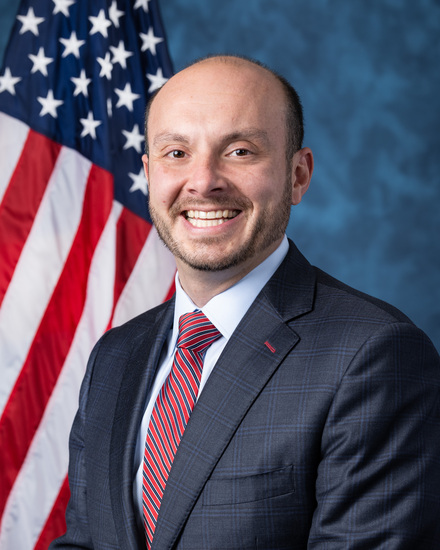
Rep. Andrew R. Garbarino
Sponsored bills
Maddy summaryHCONRES 57 is a non-binding concurrent resolution expressing Congress's support for Israel. It states three key points: (1) that Israel is not a racist or apartheid state, (2) that Congress rejects antisemitism and xenophobia, and (3) that the U.S. will remain a steadfast supporter of Israel. This resolution does not create new laws or alter policies - it simply records the expressed sentiment of Congress. It directly affects the U.S. government's public stance on Israel, with no legal effect on citizens or other entities.
Maddy summaryThis bill requires the Director of the Cybersecurity and Infrastructure Security Agency (CISA) to develop a framework for assessing risks in open source software components used by federal agencies. It mandates annual assessments of critical open source software, considering factors like security practices, deployment scope, and community health, and requires public sharing of results and tools. The law directly affects federal agencies (which must use these assessments) and the open source software community (which must be consulted in framework development). Key provisions include publishing risk frameworks, automating assessments, and conducting a study on extending assessments to critical infrastructure sectors.
Maddy summaryThis bill clarifies legal pathways for victims of terrorism to collect judgments against foreign states that sponsor attacks. It removes barriers by updating references in federal law to ensure victims can pursue claims under Section 2333(d)(1) without being blocked by prior legal interpretations. The bill also expands the definition of "national of the United States" to include U.S.-organized entities for these cases, making it easier for more victims to qualify. These changes apply to all pending or future lawsuits filed after the bill's enactment.
Strategic Lebanon Security Reporting Act This bill requires the Department of State to provide Congress with a report addressing security in Lebanon. Specifically, the report must include details regarding the extent of Iranian and Syrian influence in Lebanon, the capability of the Lebanese Armed Forces, Lebanese Armed Forces' actions to prevent the forced return of refugees to Syria, Hezbollah's influence on governmental and financial institutions in Lebanon, and implementation activities related to U.N. Security Council Resolution 1701 and successor resolutions.
Maddy summaryThis bill directs the U.S. Treasury to mint commemorative coins marking the Marine Corps' 250th anniversary in 2025. It authorizes three coin types: $5 gold coins (max 50,000), $1 silver coins (max 400,000), and half-dollar coins (max 750,000), with surcharges of $35, $10, and $5 respectively. The surcharge proceeds will fund the Marine Corps Heritage Center's educational programs, with no net cost to taxpayers as the Treasury must recover all minting costs through the surcharges. The coins can only be issued during 2025, and the Treasury must ensure all costs are covered before distributing funds to the Heritage Foundation.
Maddy summaryHR 984, the Commitment to Veteran Support and Outreach Act, authorizes $50 million annually (2024-2028) for grants to states and tribes to improve outreach to veterans and their families. The bill provides funding to hire more county/Tribal veterans service officers, expand existing outreach programs, and ensure equitable access to benefits for vulnerable groups like American Indian veterans, elderly veterans, and women veterans. States and tribes must submit detailed plans, track how quickly veterans receive benefits, and report annually on progress toward outcome measures set by the Veterans Affairs Secretary. Grants must supplement, not replace, existing state/local funding and prioritize areas with critical officer shortages or high veteran suicide rates.
Food Supply Chain Capacity and Resiliency Act This bill allows the Department of Agriculture (USDA) to expand the Food Supply Chain Guaranteed Loan Program. The program may guarantee loans to support new investments in the start-up or expansion of projects in the United States that will increase U.S. food supply chain capacity to aggregate, process, manufacture, store, transport, wholesale, or distribute food. In awarding loan guarantees under this bill, USDA must give preference to loans for projects that create jobs in economically distressed communities or to help create a more resilient, diverse, and secure U.S. food supply chain. USDA must prescribe such regulations as may be necessary to carry out this program. The bill specifies that USDA must use the amounts made available to carry out this bill to supplement, and not supplant, funds provided under other federal, state, or local law.
Maddy summaryHR 4769, the PFAS Alternatives Act, funds research and training to develop PFAS-free turnout gear for firefighters. It authorizes $25 million annually (2024-2028) for grants to eligible organizations to research, develop, and test next-generation gear without per- and polyfluoroalkyl substances (PFAS), which are linked to firefighter cancer risks. The bill requires partnerships with firefighting organizations to ensure research translates into practical training and gear care guidance, including decontamination protocols. It also allocates $2 million yearly for training programs on proper gear use and maintenance, aiming to reduce exposure to hazardous chemicals during fire operations.
Maddy summaryHR 4787, the Volunteer First Responder Housing Act, provides housing benefits for volunteer firefighters and emergency medical responders who meet specific service requirements. It allows qualified volunteers to receive an $18,000 annual income deduction when applying for USDA single-family home loans, and qualifies them for discounted home purchases under HUD’s Good Neighbor Next Door program (normally for certified firefighters/EMTs). To qualify, volunteers must have served continuously for two years (meeting minimum hour requirements or active membership) and hold state certification, with employer verification confirming their eligibility. This directly affects volunteer first responders in communities served by eligible fire departments or emergency services organizations.