

Flood History Information Act of 2024 This bill provides for the sharing of National Flood Insurance Program policy and claim information. Specifically, the Federal Emergency Management Agency (FEMA) may share this data through an agreement with certain private insurance providers for the purposes of policy underwriting, establishing premium rates, and adjusting claims. Additionally, FEMA must provide specified flood insurance information to a purchaser, lessee, or current owner of a property upon request.
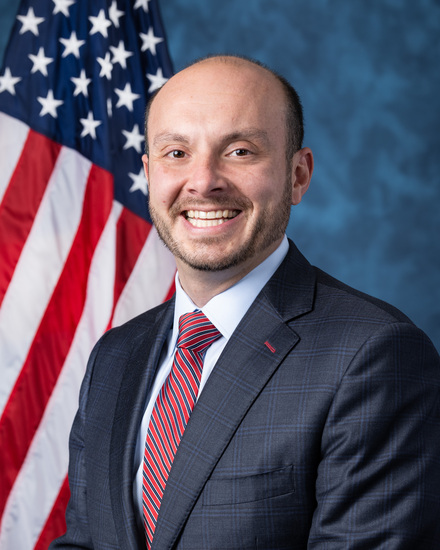
Rep. Andrew R. Garbarino
Sponsored bills
Maddy summaryHRES 1032 is a symbolic resolution designating the week of February 26-March 1, 2024, as "Public Schools Week" in the U.S. House of Representatives. It expresses congressional support for public education, highlighting its role in preparing students and communities. The resolution has no legal effect or funding provisions - it solely serves as a formal expression of backing for public schools. It directly affects no individuals or entities but aims to raise awareness about public education. This is a non-binding gesture, not a policy change.
Maddy summaryThe Uyghur Policy Act of 2023 establishes a U.S. Special Coordinator for Uyghur Issues within the State Department to coordinate policy and advocate for the protection of Uyghur cultural, religious, and linguistic identity in Xinjiang. It authorizes $250,000 annually for Uyghur human rights advocates to speak at public diplomacy events in Muslim-majority countries and mandates Uyghur language training for U.S. diplomats. The bill also directs the U.S. government to support United Nations monitoring of Xinjiang human rights issues and oppose efforts to block discussions of Xinjiang at the UN. These provisions focus on diplomatic advocacy and information-sharing, not direct sanctions or enforcement actions against China.
Maddy summaryHR 7411, the Recover Pride in Service Act, requires the Department of Defense to automatically upgrade all military discharges based solely on sexual orientation to honorable status without veterans needing to apply. It directly affects veterans discharged under such policies, including those separated before September 20, 2011. Key provisions include amending review procedures to eliminate documentation requirements for veterans seeking review, establishing a Defense Outreach Unit to notify affected veterans within 60 days, and mandating a 5-year timeline for full implementation. The bill also requires annual progress reports to Congress on discharge upgrades and final reports detailing outcomes like the number of upgrades completed.
Maddy summaryHR 7373, the Recognize AGS Act, would require the Centers for Disease Control and Prevention (CDC) to add alpha-gal syndrome to its official list of nationally notifiable diseases. This means doctors and health facilities would be mandated to report diagnosed cases of alpha-gal syndrome to public health authorities, similar to how they report diseases like measles or Lyme disease. The bill directly affects individuals diagnosed with this rare condition (caused by a tick bite and triggering meat allergies), healthcare providers who treat it, and public health agencies tracking disease patterns. This change would improve national data collection on alpha-gal syndrome but does not alter treatment or funding.
Maddy summaryHR 7307, the Health Care Workforce Innovation Act of 2024, establishes a new federal grant program to expand training for allied health professionals - such as medical assistants, community health workers, pharmacy technicians, and dental hygienists - in underserved communities and rural areas. Eligible applicants include Federally-qualified health centers and rural health clinics, which can use grants (up to $2.5 million per award for at least 3 years) to develop community-driven training partnerships with schools, vocational programs, and healthcare facilities. Funds support specific activities like apprenticeships, culturally competent training, and building career pathways for individuals from disadvantaged backgrounds, while prohibiting construction costs or replacing existing workforce funding. The program authorizes $100 million annually from 2025-2029 to address healthcare workforce shortages in areas lacking access to care.
Maddy summaryThe CBP HiRe Act of 2024 creates special hiring and retention tools for U.S. Customs and Border Protection (CBP) employees working in rural or remote border areas. It allows direct hiring without standard civil service rules for critical positions, plus recruitment/relocation bonuses (up to 100% of salary) and retention bonuses (up to 50% of salary) for employees in these areas. CBP hiring officials must prove staffing challenges are directly tied to an area’s remote location before using these authorities, and must report annually on their effectiveness to Congress. The law expires after five years and requires annual reviews to ensure these flexibilities address actual hiring and retention needs.
Maddy summaryHR 7382 amends existing law to allow law enforcement agencies using Byrne JAG funds (a federal grant program) to specifically fund programs aimed at reducing demand for commercial sex trafficking. This change directly affects state and local law enforcement agencies that receive Byrne JAG grants, enabling them to allocate these funds toward demand reduction initiatives like public awareness campaigns or victim services. The key mechanism is adding "programs to reduce the demand for trafficked persons" as an explicitly authorized use of Byrne JAG funds under the 1968 Crime Control Act. This policy change expands the scope of existing federal funding to target the demand side of sex trafficking, without creating new programs or altering other funding categories.
Maddy summaryThis bill allows law enforcement officers, firefighters, and emergency medical personnel (covered employees) to sue their public safety employers if they face termination or other punishment for expressing personal opinions about work-related issues. It specifically protects speech on topics like public safety service delivery, pay/benefits, working conditions (including equipment), workplace policies, and even political/religious views. However, the protection does not cover on-duty speech, speech advocating violence or discrimination, disclosure of confidential information, or threats to withhold essential services. The law creates a new legal remedy but explicitly states it does not override existing federal or state civil rights laws.
Maddy summaryHRES 966 is a symbolic resolution condemning alleged sexual violence committed by Hamas during its October 7, 2023, attack on Israel. It specifically references eyewitness accounts, forensic evidence, and Hamas fighters' admissions of ordering gang rape, sexual mutilation, and assault against Israeli civilians. The resolution calls for international condemnation of such acts as weapons of war, urges nations to criminalize sexual violence, and supports investigations into Hamas' actions. As a non-binding resolution, it does not create new laws or directly affect any individuals but formally expresses the House's position on the issue.