

Maddy summaryHR 957, the Public Safety Retirees Healthcare Protection Act of 2023, increases a tax exclusion for public safety retirees. It amends the Internal Revenue Code to raise the amount excluded from taxable income for health and long-term care insurance premiums paid from retirement distributions - from $3,000 to $6,000 annually. This change directly affects public safety officers (like police and firefighters) who have retired and receive government retirement benefits. The provision applies to taxable years beginning after December 31, 2023, providing greater tax relief for these retirees' healthcare costs.
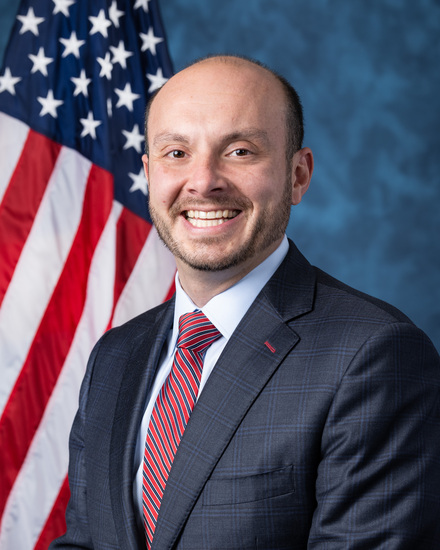
Rep. Andrew R. Garbarino
Sponsored bills
Maddy summaryHR 549, the Metastatic Breast Cancer Access to Care Act, removes waiting periods for disability and Medicare coverage for people diagnosed with metastatic breast cancer. Specifically, it amends Social Security Act sections to allow immediate eligibility for disability insurance benefits (eliminating the standard waiting period) and immediate Medicare coverage (waiving the 24-month waiting period) for these patients. The bill directly affects individuals with metastatic breast cancer who would otherwise face delays in accessing critical benefits. These changes apply to applications filed or benefits beginning after the bill's enactment date. The law makes no other policy changes beyond these specific eligibility adjustments.
Maddy summaryHR 497, the Freedom for Health Care Workers Act, eliminates a federal requirement for healthcare workers in Medicare and Medicaid programs to be vaccinated against COVID-19. The bill directly affects healthcare providers who treat patients under these federally funded programs by preventing the enforcement of the November 2021 HHS rule mandating staff vaccinations. Its key provision prohibits the Department of Health and Human Services from implementing, enforcing, or creating a similar rule regarding vaccination for these workers. This bill changes the policy by removing a specific vaccine mandate for providers in Medicare and Medicaid programs.
Maddy summaryHJRES 142 is a congressional disapproval resolution targeting a Department of Labor rule issued on April 25, 2024. It seeks to block the "Retirement Security Rule: Definition of an Investment Advice Fiduciary" (89 Fed. Reg. 32122), which defined standards for financial advisors handling retirement accounts. If passed, this resolution would make the Labor Department's rule ineffective, directly affecting retirement plan advisors and financial institutions subject to the regulation. The bill uses a specific procedural mechanism under Title 5, U.S. Code, to nullify the rule without creating new law.
Maddy summaryHR 1584, the Plum Island National Monument Act, establishes Plum Island, New York, as a national monument to protect its natural ecosystems, historical sites, and cultural heritage. The bill designates the Secretary of the Interior as the managing agency, requiring coordination with other federal departments through written agreements for lands within the monument area. It mandates the development of a management plan within three years of funding, which must then be submitted to specific congressional committees. This act directly affects the federal management of Plum Island and sets the framework for conservation and public access to the site.
Maddy summaryHR 9689 creates a paid cybersecurity internship program within the Department of Homeland Security (DHS) for eligible students. It directly affects U.S. citizens aged 16+ enrolled in secondary, vocational, community college, or degree programs who participate in DHS cybersecurity roles aligned with their education. The bill requires DHS to ensure diverse participation across school types (including historically Black colleges and minority-serving institutions) and mandates annual reports to Congress detailing recruitment, participant numbers by education level, and internship duties. The program establishes a formal framework for DHS to hire student interns without altering existing cybersecurity policies or operations.
Maddy summaryThis bill establishes a commission to study whether the Weitzman National Museum of American Jewish History in Philadelphia should be transferred to the Smithsonian Institution. The commission, composed of 8 members appointed by congressional leaders with expertise in Jewish American history and museum administration, will examine the museum's collections, financial status, governance, and feasibility of transfer within two years. The commission must submit a report detailing findings, a fundraising plan, and legislative recommendations for any potential transfer. The bill does not transfer the museum but creates a process to evaluate the possibility.
Maddy summaryHR 7438 directs the U.S. Treasury to mint commemorative coins for the 2026 FIFA World Cup, including 100,000 $5 gold coins, 500,000 $1 silver coins, and 750,000 half-dollar coins. The coins will be sold to the public at face value plus surcharges ($35, $10, and $5 per coin, respectively), with all surcharge revenue paid to FWC2026 US, Inc. for U.S. soccer programs. These funds must support soccer initiatives, particularly in underserved communities and youth development, as specified in the bill. The coins are legal tender but will only be issued during 2026, with no net cost to the U.S. government.
Maddy summaryHR 6751 authorizes the U.S. Mint to produce commemorative coins honoring Roberto Clemente, a Hall of Fame baseball player and humanitarian, including 50,000 $5 gold coins, 400,000 $1 silver coins, and 750,000 half-dollar coins. The coins must feature Clemente's image and inscriptions like "Roberto Clemente" and "2027," with all sales including a surcharge ($5-$35 per coin) paid to the Roberto Clemente Foundation. The foundation, which supports youth sports, education, and disaster relief programs, will use these funds for its mission, while the U.S. Treasury must recover all production costs. The coins will be sold exclusively in 2027, with no net cost to the government.
Maddy summaryHRES 609 is a House resolution expressing opposition to New York City's proposed Central Business District Tolling Program, which would charge drivers up to $23 daily to enter Manhattan south of 60th Street. The resolution highlights that this fee could cost daily commuters about $5,000 annually and disproportionately burden small businesses (still recovering from pandemic lockdowns), low-income families, and students. It disapproves of the program, calls for a public economic impact report, and urges federal and state authorities to halt its implementation. The resolution notes the program is intended to generate $1 billion yearly for the MTA’s capital projects and operations, following the agency’s $690 million 2022 revenue loss.