

Maddy summary# Summary of National Defense Authorization Act for Fiscal Year 2025 This extensive legislation contains numerous provisions governing U.S. defense programs, with key themes including: 1. **Aircraft Inventory Requirements & Restrictions**: - Extended prohibitions on reducing E-3 aircraft inventory through 2025 - Minimum inventory requirements for A-10 (96 aircraft), C-130 (minimum 205 aircraft), and KC-135 aircraft - Prohibition on retiring F-15E aircraft until September 2027 - Requirements for recapitalizing Air National Guard fighter fleet with a plan to maintain similar capability mix as active components 2. **F-35 Aircraft Procurement Limitations**: - Strict limits on F-35 procurement (30 F-35A, 9 F-35B, 9 F-35C maximum for FY2025) - Requires certification of multiple improvement plans before accepting additional aircraft - Mandates development of digital-twin models, test beds, and mission software integration labs 3. **Artificial Intelligence Initiatives**: - Establishment of a Chief Digital Engineering Recruitment and Management Officer - Development of AI education courses for military personnel - Requirements for identifying and planning the AI workforce - New restrictions on AI models that could pose national security risks 4. **Supply Chain Resilience**: - Comprehensive measures to increase supply chain resilience for small unmanned aerial systems (sUAS) - Disassembly and analysis of foreign drone aircraft (specifically Da Jiang Innovations) - Development of a supply chain risk framework 5. **Technology Restrictions**: - Prohibition on use of foreign-made LiDAR technology from covered foreign countries (China, Iran, North Korea, Russia) - Requires certification for any exceptions to this prohibition 6. **Defense Research & Development**: - Modifications to numerous research programs - Expansion of the Laboratory Quality Enhancement Program - Requirements for a biotechnology roadmap - Modifications to quantum information science programs The legislation contains numerous detailed requirements for military readiness, equipment maintenance, and strategic planning across all branches of the military, with significant focus on modernization, technology security, and maintaining force structure requirements.
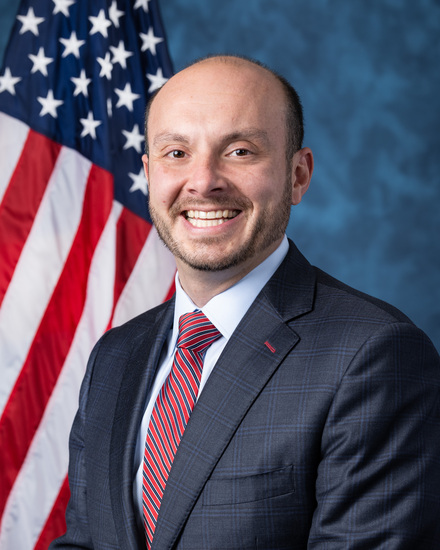
Rep. Andrew R. Garbarino
Sponsored bills
Maddy summaryThis bill extends the National Flood Insurance Program (NFIP) through September 30, 2025, instead of its previous expiration date of September 30, 2023. It modifies two key provisions of the National Flood Insurance Act to adjust the program's funding and expiration dates. If enacted after December 20, 2024, the changes apply retroactively from that date. The bill directly affects the ongoing operation of the NFIP, ensuring continued flood insurance coverage for policyholders in participating communities.
Maddy summaryHR 8662, the TSA Commuting Fairness Act, requires the Transportation Security Administration (TSA) to conduct a feasibility study on whether to count commuting time between employees' regular work locations and airport parking/transit stops as on-duty hours. The study, due within 270 days of enactment, must examine commute times at different airport sizes (small, medium, large hubs), current commuting patterns, potential employee and agency benefits, mobile reporting methods, and costs - including retirement pay implications. The bill directly affects TSA employees working at airport locations and mandates the study be submitted to relevant congressional committees. This procedural bill does not change current policy but sets a process for evaluating a potential adjustment to how commute time is treated.
Maddy summaryThe HUD Evaluation and Optimization Commission Act of 2024 establishes a 4-member commission to review and recommend improvements for HUD's housing programs. The commission, appointed by congressional leaders, will analyze program effectiveness, identify overlaps, and suggest structural changes to increase efficiency and better serve program participants. It must submit an initial report within 9 months and a final report with specific recommendations within 18 months, including proposed legislative changes for reorganizing HUD programs. These recommendations would receive expedited consideration in Congress through specific procedural rules. The commission would terminate 30 days after submitting its final report.
Maddy summaryThis bill requires federal financial regulators to coordinate with state insurance regulators before collecting data from insurance companies, ensuring they first check if the data is already available through state agencies or public sources. It strengthens confidentiality protections by preventing the sharing of nonpublic data with federal regulators from waiving existing privacy rights under federal or state law. Insurance companies and state regulators are directly affected, as the law governs how data is shared between federal financial regulators and state agencies. The bill modifies existing rules to streamline data collection while maintaining privacy safeguards.
Maddy summaryHR 5798, the Protecting Our Nation’s Capital Emergency Act of 2023, aims to address rising crime in Washington, D.C., by reversing two specific policies affecting the city’s police force. It restores collective bargaining rights for police discipline (by removing a 2022 restriction) and reinstates a longer statute of limitations for claims against Metropolitan Police Department members (repealing a 2022 law that shortened it). These changes target D.C. law enforcement officers directly, seeking to improve recruitment and retention by ensuring fairer treatment. The bill focuses solely on modifying these two legal provisions, without introducing new funding or crime-fighting measures.
Maddy summaryHR 5401, the 9/11 Memorial and Museum Act, provides a one-time federal grant of $5 million to $10 million to the National September 11 Memorial & Museum (operated by the World Trade Center Foundation). The grant funds the museum's operations, security, and maintenance, with specific requirements including free admission for veterans, first responders, and victims' families, dedicated weekly free public hours, and annual financial audits. The museum must also report annually to Congress on how the funds were used. This bill directly affects the museum's financial operations and access policies, not broader legislative changes.
Maddy summaryThis bill exempts specific orally administered drugs from Medicare Part D's manufacturer discount program. It targets drugs that: (1) received FDA approval under section 505 of the Federal Food, Drug, and Cosmetic Act, and (2) were granted a narrow CMS exception allowing reclassification as noninnovator drugs under Medicaid. The change modifies Medicare Part D rules to exclude these qualifying drugs from required manufacturer discounts. This directly affects Medicare Part D beneficiaries and drug manufacturers selling these specific medications. The policy change clarifies which drugs are subject to the discount program under existing law.
Maddy summaryThe PROVE IT Act of 2024 directs the U.S. Energy Secretary to study and publicly report on the greenhouse gas emissions intensity of key U.S. manufactured products (like steel, aluminum, lithium batteries, and critical minerals) compared to those produced in "covered countries" (including the EU, China, and major trading partners). It requires a transparent methodology for calculating emissions data, identifies gaps in existing data, and establishes a public online database showing U.S. emissions advantages for these products. The bill also mandates an annual report on foreign countries using forced labor or human rights abuses in the production of critical minerals or rare earths. Importantly, it clarifies the study does not create new taxes, fees, or mandatory reporting requirements.
Maddy summaryThis bill would impose increasing tariffs on Chinese-made drones (starting at 30% and rising to 45% over four years) to reduce reliance on Chinese drone manufacturers. It establishes a fund using tariff revenue to provide grants for first responders, farmers, ranchers, and critical infrastructure providers to purchase secure drones not made in China or by Chinese companies. The legislation also requires documentation for drones entering the US to verify they don't contain components made in China. The bill directly affects those who currently rely on Chinese-made drones for critical operations, as over 90% of drones used by first responders are made in China. Its goal is to strengthen national security by reducing dependence on Chinese drone technology for essential services.