

Maddy summaryThe Mental Health in Aviation Act of 2025 requires the Federal Aviation Administration (FAA) to update regulations within two years to encourage pilots and air traffic controllers to seek mental health care and disclose conditions without fear of losing medical clearance. It mandates annual reviews to improve the medical clearance process for mental health conditions - such as approving additional safe medications, enhancing examiner training, and reducing backlogs - and allocates $13.74 million yearly (2026-2029) to hire more aviation medical examiners. The bill also directs the FAA to implement recommendations from a mental health rulemaking committee and fund a public campaign to reduce stigma around mental health care in aviation. These provisions aim to support aviation workers' well-being while streamlining safety-related medical evaluations.
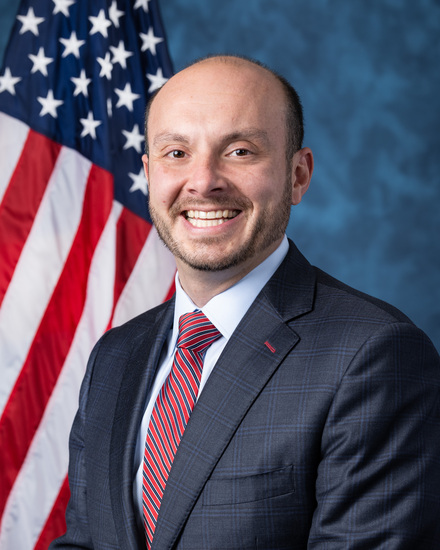
Rep. Andrew R. Garbarino
Sponsored bills
Maddy summaryThis bill creates new "Offices of Small Business" within each Securities and Exchange Commission (SEC) division that writes rules. These offices will coordinate with the existing Office of the Advocate for Small Business Capital Formation to shape rules affecting how small businesses access capital. The bill directly affects SEC rulemaking processes, ensuring small business perspectives are integrated into capital formation policies. It does not change existing securities regulations but establishes an internal structure for the SEC to consider small business needs during rule development.
Maddy summaryThe Cyber PIVOTT Act creates a program to build a skilled cyber workforce by providing full tuition scholarships to students in two-year cyber or cyber-relevant associate's degree programs at participating community colleges and technical schools. The program requires scholarship recipients to complete a two-year service obligation in a cyber role for federal, state, local, tribal, or territorial government, with exceptions for military service. It includes mandatory skills-based exercises, internships with government agencies or critical infrastructure sectors, and a database of cyber training resources mapped to job roles. The program aims to enroll 250 students in its first year, doubling annually until reaching 1,000 students per year, with a long-term goal of 10,000 students annually within ten years.
Maddy summaryHR 2808, the Homebuyers Privacy Protection Act, restricts how consumer reporting agencies share credit reports during mortgage applications. It prevents agencies from sending these reports to third parties unless the request is tied to a firm credit offer and the recipient has either the homebuyer’s explicit written consent or is directly involved in the mortgage (like the lender, loan servicer, or the homebuyer’s bank holding an active account). This directly affects homebuyers applying for residential mortgages by limiting unsolicited sharing of their credit information. The law amends the Fair Credit Reporting Act to strengthen privacy protections around mortgage-related credit data.
Maddy summaryThis bill reauthorizes and updates the Cybersecurity Act of 2015 to improve how federal agencies and critical infrastructure owners share cyber threat information. It requires regular updates to sharing procedures, explicitly allows the use of artificial intelligence *only* for cybersecurity purposes, and mandates new outreach to small or rural critical infrastructure operators (like local utilities or hospitals) to help them understand and participate in threat-sharing. The changes extend the Act's effective period until 2035 and clarify definitions to include modern threats like ransomware and IoT devices.
Maddy summaryHR 5061 establishes new authority for federal and local agencies to detect, identify, monitor, and mitigate unmanned aircraft systems (drones) that pose security threats to critical infrastructure, airports, and public events. The bill requires counter-UAS systems to meet minimum performance standards that ensure aviation safety and minimize interference with communications, with a list of approved systems maintained by the Secretary of Homeland Security. It creates a pilot program for state and local law enforcement to use authorized counter-UAS systems at covered sites (like critical infrastructure, oil refineries, and amusement parks) and covered events, with requirements for training, coordination, and privacy protections. The law includes annual reporting requirements and expires on October 1, 2030.
Maddy summaryThis bill changes Medicaid payment rules to provide more financial support for safety-net hospitals - those serving high numbers of low-income patients. It allows states to use unspent federal funds from prior years to increase payments to these hospitals, without exceeding the overall annual funding cap. States cannot recoup payments already made to hospitals under older rules, and must report any increased payments in their annual Medicaid reports. The changes apply to payments for Medicaid plan years starting after the bill's enactment.
Maddy summaryHR 5024, the Transit Funding Flexibility Act, removes a population restriction that previously limited certain federal transit grants to urban areas with fewer than 200,000 residents. It requires transit agencies receiving these grants to annually certify they maintain local funding for operating costs covered by federal money. If an agency fails to maintain this local funding, the bill mandates a 1/3 reduction in their next year's federal grant amount. This bill directly affects public transit agencies in smaller urban areas that now gain access to operating cost funding, while requiring them to sustain local financial commitments.
Maddy summaryHRES 636 is a symbolic House resolution condemning a July 28, 2025, shooting in New York City that killed three civilians and NYPD Officer Didarul Islam, alongside security officer Aland Etienne. It honors the victims, commends the NYPD's response, and condemns violence against law enforcement. The resolution does not create new laws or policies but formally expresses the House's stance against such violence and supports law enforcement. It was introduced by Representatives Stefanik, Tenney, and others and referred to the Oversight Committee.
Maddy summaryHJRES 111 is a joint resolution seeking congressional disapproval of a U.S. Fish and Wildlife Service rule on barred owl management. The rule, published in September 2024, outlined strategies to reduce barred owl populations to protect the endangered spotted owl. Under the Congressional Review Act, this resolution would nullify the rule, preventing its implementation. If enacted, the rule would have no legal effect, and the agency could not enforce the barred owl management strategy.