Emmett Till Antilynching Act This bill makes lynching a federal hate crime offense. Specifically, the bill imposes criminal penalties—a fine, a prison term of up to 30 years, or both—on an individual who conspires to commit a hate crime offense that results in death or serious bodily injury or that includes kidnapping or an attempt to kidnap, aggravated sexual abuse or an attempt to commit aggravated sexual abuse, or an attempt to kill.
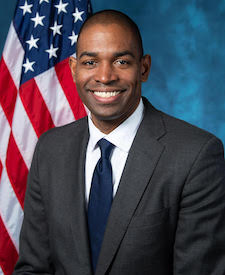
Rep. Antonio Delgado
Sponsored bills
Veterans Exposed to Toxic PFAS Act or the VET PFAS Act This bill provides eligibility for Department of Veterans Affairs (VA) hospital care and medical services to veterans and their family members (including those in utero) who have specified conditions and resided at a military installation where individuals were exposed to perfluoroalkyl and polyfluoroalkyl substances, commonly known as PFAS. PFAS are man-made and may have adverse human health effects. Hospital care and medical services may not be furnished for a condition that is found to have resulted from a cause other than the exposure to PFAS at a military installation. The VA may provide reimbursement for hospital care or medical services provided to a family member only after the family member or provider has exhausted all claims and remedies otherwise available for payment of such care. For disability compensation purposes, the bill establishes a presumption of service-connection for specified conditions in veterans who served at a military installation at which individuals were exposed to PFAS. Under a presumption of service-connection, specific conditions diagnosed in certain veterans are presumed to have been caused by the circumstances of their military service. Health care benefits and disability compensation may then be awarded.
Forced Arbitration Injustice Repeal Act of 2022 or the FAIR Act of 2022 This bill prohibits a predispute arbitration agreement from being valid or enforceable if it requires arbitration of an employment, consumer, antitrust, or civil rights dispute.
This resolution recognizes the important role of local nutrition programs supported through the Older Americans Act of 1965 in addressing senior hunger, malnutrition, and isolation.
This resolution condemns the violence and killing of 14 individuals on Bloody Sunday 50 years ago in Northern Ireland and supports justice for the victims and their families. The resolution urges the full implementation of the Good Friday Agreement to ensure peace and stability in Ireland. The resolution recognizes the findings of the Bloody Sunday Inquiry, also known as the Saville Inquiry, and calls upon the United Kingdom to support the prosecutions of individuals who committed unjustifiable crimes on Bloody Sunday based on the evidence collected. Finally, this resolution urges the European Union, including the Republic of Ireland, and the United Kingdom to act in good faith with regard to negotiations around Brexit and implementation of the Northern Ireland Protocol.
Honoring Harriet Tubman Act This bill requires the Joint Committee on the Library to obtain a statue of Harriet Tubman and place the statue in a suitable permanent location in National Statuary Hall.
This bill designates the facility of the United States Postal Service located at 66 Meserole Avenue in Brooklyn, New York, as the Joseph R. Lentol Post Office.
Fair Social Security for Domestic Violence Survivors Act This bill decreases for certain victims of domestic violence the number of years an individual must be married before a divorce to be eligible for spousal Social Security benefits based on the divorced spouse's work record.
This resolution condemns the terrorist attack on Congregation Beth Israel in Colleyville, Texas, on January 15, 2022. It also expresses support for the affected community, commends the actions of law enforcement and emergency responders, and reaffirms a commitment to combat hate, bigotry, anti-Semitism, and violence against Jewish Americans.
Women's Health Protection Act of 2021 This bill prohibits governmental restrictions on the provision of, and access to, abortion services. Specifically, governments may not limit a provider's ability to prescribe certain drugs, offer abortion services via telemedicine, or immediately provide abortion services when the provider determines a delay risks the patient's health. Furthermore, governments may not require a provider to perform unnecessary medical procedures, provide medically inaccurate information, comply with credentialing or other conditions that do not apply to providers whose services are medically comparable to abortions, or carry out all services connected to an abortion. In addition, governments may not (1) require patients to make medically unnecessary in-person visits before receiving abortion services or disclose their reasons for obtaining such services, or (2) prohibit abortion services before fetal viability or after fetal viability when a provider determines the pregnancy risks the patient's life or health. The bill also prohibits other governmental measures that are similar to the bill's specified restrictions or that otherwise single out and impede access to abortion services, unless a government demonstrates that the measure significantly advances the safety of abortion services or health of patients and cannot be achieved through less restrictive means. The Department of Justice, individuals, or providers may bring a lawsuit to enforce this bill, and states are not immune from suits for violations. The bill applies to restrictions imposed both prior and subsequent to the bill's enactment.