

For the People Act of 2021 This bill addresses voter access, election integrity and security, campaign finance, and ethics for the three branches of government. Specifically, the bill expands voter registration (e.g., automatic and same-day registration) and voting access (e.g., vote-by-mail and early voting). It also limits removing voters from voter rolls. The bill requires states to establish independent redistricting commissions to carry out congressional redistricting. Additionally, the bill sets forth provisions related to election security, including sharing intelligence information with state election officials, supporting states in securing their election systems, developing a national strategy to protect U.S. democratic institutions, establishing in the legislative branch the National Commission to Protect United States Democratic Institutions, and other provisions to improve the cybersecurity of election systems. Further, the bill addresses campaign finance, including by expanding the prohibition on campaign spending by foreign nationals, requiring additional disclosure of campaign-related fundraising and spending, requiring additional disclaimers regarding certain political advertising, and establishing an alternative campaign funding system for certain federal offices. The bill addresses ethics in all three branches of government, including by requiring a code of conduct for Supreme Court Justices, prohibiting Members of the House from serving on the board of a for-profit entity, and establishing additional conflict-of-interest and ethics provisions for federal employees and the White House. The bill requires the President, the Vice President, and certain candidates for those offices to disclose 10 years of tax returns.
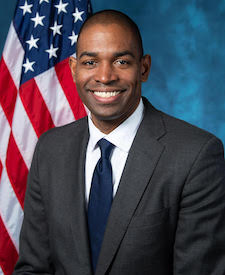
Rep. Antonio Delgado
Sponsored bills
Speeding Therapy Access Today Act of 2021 This bill requires and authorizes various actions to accelerate the development of therapies for rare diseases. The Food and Drug Administration (FDA) shall establish the Intercenter Institute on Rare Diseases and Conditions. The institute shall (1) coordinate engagement with relevant stakeholders, (2) build the FDA's expertise in the review of medical products to treat rare diseases, (3) coordinate regulatory science initiatives related to rare diseases, (4) establish and implement a program to make recommendations to address challenges associated with developing medical products to treat rare diseases in an individual or in very small populations, (5) convene a stakeholder meeting to consider potential amendments to labels for medical products to treat rare diseases, and (6) establish and carry out a program to facilitate voluntary communication between the sponsors of such medical products and third-party payers (e.g., insurance companies). The bill also authorizes the FDA to make grants to assist in developing practices related to the development and production of individualized therapies or therapies to treat very small populations. The bill also establishes an advisory committee to advise the FDA on issues related to the development of therapies to treat rare diseases.
Knowing the Efficiency and Efficacy of Permanent Telehealth Options Act of 2021 or the KEEP Telehealth Options Act of 2021 This bill requires certain agencies to report on the availability and effects of expanded telehealth services under Medicare, Medicaid, and the Children's Health Insurance Program (CHIP) during the public health emergency relating to COVID-19. Among other information, the Department of Health and Human Services must detail its actions during the emergency to expand access to telehealth services and must analyze telehealth usage by certain demographic groups. The Medicare Payment Advisory Commission and the Medicaid and CHIP Payment and Access Commission must report on the improvements and barriers to telehealth access during the emergency and the risks of fraudulent activity associated with expanded access.
TRICARE Reserve Select Improvement Act This bill expands TRICARE Reserve Select eligibility to include members of the Selected Reserve who are enrolled or eligible to enroll in the Federal Employees Health Benefits Program.
George Floyd Justice in Policing Act of 2021 This bill addresses a wide range of policies and issues regarding policing practices and law enforcement accountability. It increases accountability for law enforcement misconduct, restricts the use of certain policing practices, enhances transparency and data collection, and establishes best practices and training requirements. The bill enhances existing enforcement mechanisms to remedy violations by law enforcement. Among other things, it does the following: lowers the criminal intent standard—from willful to knowing or reckless—to convict a law enforcement officer for misconduct in a federal prosecution, limits qualified immunity as a defense to liability in a private civil action against a law enforcement officer, and grants administrative subpoena power to the Department of Justice (DOJ) in pattern-or-practice investigations. It establishes a framework to prevent and remedy racial profiling by law enforcement at the federal, state, and local levels. It also limits the unnecessary use of force and restricts the use of no-knock warrants, chokeholds, and carotid holds. The bill creates a national registry—the National Police Misconduct Registry—to compile data on complaints and records of police misconduct. It also establishes new reporting requirements, including on the use of force, officer misconduct, and routine policing practices (e.g., stops and searches). Finally, it directs DOJ to create uniform accreditation standards for law enforcement agencies and requires law enforcement officers to complete training on racial profiling, implicit bias, and the duty to intervene when another officer uses excessive force.
Postal Employee Appeal Rights Amendments Act This bill extends federal employee protections against adverse personnel actions, including the right to appeal such actions to the Merit Systems Protection Board, to additional categories of employees at the U.S. Postal Service (USPS). Specifically, it extends such protections to any officer or employee of the USPS who is not represented by a bargaining representative and is in a supervisory, professional, technical, clerical, administrative, or managerial position covered by the Executive and Administrative Schedule.
Postal Supervisors and Managers Fairness Act of 2021 This bill modifies procedures for negotiating pay and benefits of supervisory and other managerial personnel of the U.S. Postal Service (USPS). At least 60 days before the expiration of a pay decision, the USPS must propose to the supervisors' organization any changes in pay policies, pay schedules, or fringe benefit programs for members of such organization. Not later than 60 days after the USPS agrees to a collective bargaining agreement that affects the pay or benefits of supervisors or managers who are members of the supervisors' organization, the USPS shall provide a proposal regarding such matters to the organization. The bill makes binding the decision of the fact-finding panel appointed by the Federal Mediation and Conciliation Service in the event of an impasse between the USPS and a supervisors' organization over proposed changes in pay and benefits.
National Women's Hall of Fame Commemorative Coin Act of 2021 This bill directs the Department of the Treasury to mint and issue $5 gold coins, $1 silver coins, half-dollar clad coins, and proof silver $1 coins in recognition and celebration of the National Women's Hall of Fame in Seneca Falls, New York. All minted coins shall include a specified surcharge, which shall be paid to the National Women's Hall of Fame Foundation to establish an endowment fund to provide for the long-term financing of the hall's operations.
Retired Pay Restoration Act This bill allows the receipt of both military retired pay and veterans' disability compensation with respect to any service-connected disability. Under current law, only individuals with service-connected disabilities rated at 50% or more receive both without offset. Individuals who were retired or separated after at least 20 years of military service due to a service-connected disability shall be eligible for the full concurrent receipt of both veterans' disability compensation and either military retired pay or combat-related special pay.
This joint resolution proposes a constitutional amendment authorizing Congress and the states to set reasonable limits on the raising and spending of money by candidates and others to influence elections. The amendment grants Congress and the states the power to implement and enforce this amendment by legislation. They are allowed to distinguish between natural persons and corporations or other artificial entities created by law, including by prohibiting such entities from spending money to influence elections.