

Access for Rural Communities Act or the ARC Act This bill allows sole community hospitals and Medicare-dependent small rural hospitals to have the Centers for Medicare & Medicaid Services (CMS) recalculate certain payment adjustments that were initially determined by Medicare administrative contractors. Specifically, if a hospital received a volume decrease adjustment from an administrative contractor prior to FY2018, the hospital may elect to have the CMS recalculate the adjustment using methodology that took effect in FY2018, as specified. The bill's provisions do not apply to final determinations made by administrative contractors more than three years before the date of enactment of this bill.
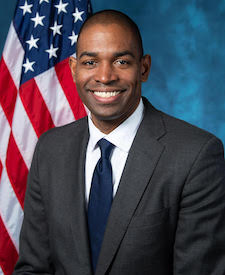
Rep. Antonio Delgado
Sponsored bills
Safety, Accountability, and Federal Enforcement of Limos Act of 2021 or the SAFE Limos Act This bill sets out requirements to improve the safety of limousines. Within two years of the bill's enactment, the Department of Transportation (DOT) must apply to newly manufactured limousines specified motor vehicle safety standards related to the installation of seat belts and other occupant crash protections. In addition, DOT must report on the feasibility, benefits, and costs of retrofitting limousines to meet those standards. DOT must also develop additional motor vehicle safety standards to improve limousine safety. This includes standards related to (1) side impact protection, roof crush resistance, and other aspects of crashworthiness; (2) evacuation in the event the exit in the passenger compartment is blocked; and (3) the use of event data recorders. Additionally, the bill requires that individuals who remodel new limousines submit to DOT and annually update a plan for mitigating limousine safety risks. The plan must include, among other topics, verification that the remodeled limousines meet applicable safety standards. Further, individuals who modify used vehicles into limousines must certify that the modified vehicles meet such standards. The bill also requires limousine operators to disclose the date of, results of, and any corrective action needed to pass the most recent vehicle inspection. The Federal Trade Commissions shall enforce the disclosure requirements.
Take Unsafe Limos Off the Road Act This bill directs the Department of Transportation to award grants to states that have enacted and are enforcing laws that require the impoundment or immobilization of stretch limousines if such limousines are found to have certain defects upon inspection.
End the Limo Loophole Act This bill revises the definition of commercial motor vehicle to include vehicles that are designed to transport 9 or more passengers including the driver (currently, at least 16 passengers including the driver) and requires the Federal Motor Carrier Safety Administration to finalize a rulemaking to require states to implement an annual inspection program for commercial passenger-carrying vehicles.
Affordable Housing for Homeless Veterans Act of 2021 This bill reauthorizes and modifies a program of the Department of Veterans Affairs (VA) that provides housing assistance to homeless veterans. Specifically, the bill authorizes the VA to enter into agreements with specified entities (e.g., nonprofit organizations or tribal entities) through September 30, 2025, to assist homeless veterans and their families in acquiring shelter or permanent housing. Under the bill, the VA may enter into agreements where an entity that is buying, leasing, or receiving property agrees to sell or rent the property directly to homeless veterans or veterans at risk of homelessness.
VA Supply Chain Resiliency Act This bill addresses the Department of Veterans Affairs (VA) supply chain processes, particularly during emergency periods. The bill requires the VA to submit a report containing a description of the items and quantities of items that are critical with respect to the VA's ongoing response to the COVID-19 (i.e., coronavirus disease 2019) pandemic and future epidemic, pandemic, emergency, national emergency, or natural disaster scenarios. The VA and the Department of Defense (DOD) must enter into an agreement to provide for the participation of the VA in the Warstopper Program of the Defense Logistics Agency (DLA) of DOD. The Warstopper Program was established to satisfy requirements for sudden and sustained increases in production of critical industrial and medical items. Under such an agreement, the DLA must ensure the maintenance and stability of the items the VA identifies as critical in its report (and that the VA and DOD determine are appropriate for the program), establish guidance for the participation of the VA in the program, and use existing and new contracts and agreements to reserve the supply of critical items. Finally, the VA must ensure it does not exclusively rely on holding regional, physical inventories of critical items in order to respond to greater than expected needs during epidemic, pandemic, emergency, national emergency, or natural disaster situations.
This resolution thanks the teachers of the United States and promotes the teaching profession by encouraging students, parents, school administrators, and public officials to recognize National Teacher Appreciation Week.
Creating Opportunities Now for Necessary and Effective Care Technologies (CONNECT) for Health Act of 2021 or the CONNECT for Health Act of 2021 This bill expands coverage of telehealth services under Medicare. Among other provisions, the bill allows the Centers for Medicare & Medicaid Services (CMS) to waive certain restrictions, such as restrictions on the types of technology that may be used; permanently removes geographic restrictions on originating sites (i.e., the location of the beneficiary) and allows the home of the beneficiary to serve as the originating site for all services; permanently allows federally qualified health centers and rural health clinics to serve as the distant site (i.e., the location of the health care practitioner); and allows the CMS to generally waive coverage restrictions during any public health emergency. Additionally, the CMS must report on the effects of expanded telehealth services during the COVID-19 public health emergency, including with respect to the utilization, quality, and outcomes of services. The Center for Medicare and Medicaid Innovation may also test alternative payment models relating to expanded telehealth services.
Kids Eat Local Act This bill modifies Department of Agriculture requirements for the national school food programs relating to the purchases of locally produced food. The bill allows institutions participating in the school food programs to use locally grown, locally raised, or locally caught as a product specification in food procurement requests.
Colonel John McHugh Tuition Fairness for Survivors Act This bill requires the Department of Veterans Affairs to disapprove courses of education provided by public institutions of higher learning if such institutions charge a higher rate for tuition and fees than in-state tuition for individuals who are entitled to educational assistance under the Survivors' and Dependents' Educational Assistance program.