

Public Service Freedom to Negotiate Act of 20 21 This bill provides minimum collective bargaining rights and procedures for public employees and prohibits strikes by certain public safety workers. The Federal Labor Relations Authority (FLRA) shall determine for each state whether the laws of such state substantially provide for each of the minimum standard collective bargaining rights and procedures specified by this bill, including the right of public employees and supervisory employees to self-organize, form or join a labor organization, or collectively bargain. The FLRA must issue rules and take actions to establish and administer bargaining rights and procedures for those states that do not substantially provide for them. No employers, emergency services employees, or law enforcement officers may engage in a lockout, strike, or any other organized job action that is likely to result in a measurable disruption of the delivery of emergency or public safety services. Furthermore, no labor organization may be the cause of a violation of such prohibition.
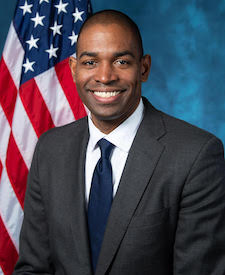
Rep. Antonio Delgado
Sponsored bills
State, Local, Tribal, and Territorial Fiscal Recovery, Infrastructure, and Disaster Relief Flexibility Act This bill allows states, tribes, territories, and localities to use certain COVID-19 relief funds for new categories of spending, including for natural disasters and infrastructure projects. It also makes changes to expenditure deadlines and other aspects of this funding. Specifically, recipients may use funds for emergency relief from natural disasters and associated negative economic impacts of natural disasters. In addition, recipients may use a portion of their COVID-19 relief funds for designated infrastructure projects, such as nationally significant freight and highway projects. Furthermore, the bill allows recipients to expend COVID-19 relief funds on these types of infrastructure projects until September 30, 2026. Under current law, recipients must expend the funds by December 31, 2024. Other changes in the bill include (1) modifying eligibility and allocation requirements for funding set aside for counties and Indian tribes that are near public lands, (2) allowing Indian tribes an additional year to expend their COVID-19 relief funds, and (3) establishing a process for government entities to decline COVID-19 relief funds and requiring any declined funds to be used to reduce the federal deficit.
Financial Exploitation Prevention Act of 2021 This bill allows for the delay of the redemption of a security issued by an open-end investment management company if the company or transfer agent reasonably believes the redemption involves the financial exploitation of an individual age 65 or older or an individual age 18 or older who is unable to protect his or her own interests. Open-end investment management companies offer securities in pooled investment vehicles such as mutual funds. Additionally, the Securities and Exchange Commission must make legislative and regulatory recommendations to address the financial exploitation of such adults.
Information and Communication Technology Strategy Act This bill requires the National Telecommunications and Information Administration to report on the information and communication technology supply chain and to develop a strategy to ensure the economic competitiveness of trusted information and communication technology vendors. The report must include (1) an identification of technology that is critical to U.S. economic competitiveness and the industrial capacity of U.S. vendors and other trusted vendors that produce such technology, (2) an assessment of whether and to what extent there is a dependence by providers of advanced telecommunications capability in the United States on technology that is not trusted, and (3) an identification of federal government actions and resources needed to support the economic competitiveness of trusted vendors and reduce dependence on companies that are not trusted.
EB-5 Reform and Integrity Act of 2021 This bill reauthorizes the EB-5 Regional Center program through FY2026 and makes various changes to the program, such as imposing various oversight requirements. (EB-5 visas provide permanent resident status to qualified alien investors. A regional center allows EB-5 aliens to pool investments to meet various investment and job creation requirements.) Oversight-related provisions include requiring each center to (1) notify the Department of Homeland Security (DHS) of proposed changes to the center's structure, (2) maintain certain records and make such records available to DHS for audits, (3) obtain approval for each particular investment offering, and (4) annually report to DHS. The bill prohibits certain individuals and entities from involvement in a center, such as (1) a person who had committed a violation involving fraud in the previous 10 years, (2) a non-U.S. national not admitted for permanent residence, or (3) a foreign government official. DHS shall deny petitions, such as a petition to certify a regional center or to classify an alien as an alien investor, if approval would threaten U.S. national interest. The bill provides various enforcement authority to DHS and U.S. Citizenship and Immigration Services, including the ability to permanently bar an individual from participating in the regional center program. The bill establishes the EB-5 Integrity Fund to fund program enforcement activities. The bill contains various provisions related to EB-5 petitions, such as a provision authorizing DHS to extend an alien's conditional permanent residence status.
Equal Access to Abortion Coverage in Health Insurance Act of 2021 or the EACH Act of 2021 This bill requires federal health care programs to provide coverage for abortion services and requires federal facilities to provide access to those services. The bill also permits qualified health plans to use funds attributable to premium tax credits and reduced cost sharing assistance to pay for abortion services.
Revising and Expediting Actions for the Crisis Hotline for Veterans Act or the REACH for Veterans Act This bill requires the Department of Veterans Affairs (VA) to update training and procedures for call responders of the Veterans Crisis Line. Specifically, the VA must enter into an agreement with an outside organization to review the training for crisis line call responders. The VA must update the training if any deficiencies are identified after the review. Among other requirements, the VA must develop guidelines on retraining and quality management for when a call responder has an adverse event or needs improvement, annually perform a common cause analysis for identified callers to the crisis line who died by suicide in situations where the crisis line was the last point of contact, develop enhanced guidance and procedures to respond to calls to the crisis line related to substance use and overdose risk, review the current emergency dispatch standard operating procedure of the crisis line, and solicit feedback from veterans service organizations on how to conduct outreach regarding the move to 988 as the new suicide and mental health crisis hotline. Each call responder must be subject to at least two calls per month that are silently monitored by a supervisor to check for quality of conduct. The Veterans Crisis Line, Office of Mental Health and Suicide Prevention of the VA, and National Center for Patient Safety of the VA must establish quality management processes and expectations for staff of the crisis line.
Manufacturing American Dynamism in Entrepreneurship and Harnessing Education to Retool Employees Act or the MADE HERE Act This bill requires the National Institute of Standards and Technology, the Department of Energy, and the Department of Defense to establish a manufacturing cluster program to award resources and grants to eligible manufacturing clusters, and it establishes an interagency entity to oversee and coordinate the activities of manufacturing cluster programs at federal agencies. A manufacturing cluster is a geographic concentration of companies and institutions within a particular field of manufacturing that engage collaboratively in workforce development, technology development, supply chain sourcing, and other activities. The program shall be comprised of three phases wherein awards shall be distributed to manufacturing clusters for (1) the development of a detailed implementation plan, (2) the implementation of such plan, and (3) continuing the activities of the cluster. Phase two and three awards may be used for purposes such as developing and deploying educational programs for cluster members, funding efforts with respect to supply chain sourcing and innovation, and developing shared infrastructure or resources for cluster members.
Urban Waters Federal Partnership Act of 2021 This bill provides statutory authority for the Urban Waters Federal Partnership Program. Under the program, the Environmental Protection Agency and other specified agencies must reconnect urban communities, particularly urban communities that are overburdened or economically distressed, with their waterways by improving coordination among federal agencies.
Growing Opportunities in Agriculture Act or the GO Ag Act This bill directs the Department of Education to award competitive grants to eligible entities (e.g., local educational agencies) to create new agricultural education programs in secondary schools. Agricultural education refers to career and technical education that is focused on agriculture, including classroom or laboratory instruction, work-based learning, and leadership education that is delivered through career and technical student organizations.