

Growing Climate Solutions Act of 2021 This bill authorizes the Department of Agriculture (USDA) to establish a voluntary Greenhouse Gas Technical Assistance Provider and Third-Party Verifier Certification Program to help reduce entry barriers into voluntary environmental credit markets for farmers, ranchers, and private forest landowners. A voluntary environmental credit market is a market through which agriculture and forestry credits may be bought or sold. Entities eligible to participate in the program are (1) providers of technical assistance to farmers, ranchers, or private forest landowners in carrying out sustainable land use management practices that prevent, reduce, or mitigate greenhouse gas emissions, or sequester carbon; or (2) third-party verifiers that conduct the verification of the processes described in the protocols for voluntary environmental credit markets. Among other requirements, USDA must publish (1) a list of protocols and qualifications for eligible entities; (2) information describing how entities may self-certify under the program; (3) information describing how entities may obtain the expertise to meet the protocols and qualifications; and (4) instructions and suggestions to assist farmers, ranchers, and private forest landowners in facilitating the development of agriculture or forestry credits and accessing voluntary environmental credit markets. USDA must also establish an advisory council to make recommendations regarding the list of protocols and qualifications, best practices, and voluntary environmental credit markets. The bill also rescinds certain funds provided in the American Rescue Plan Act of 2021 and makes the funds available for the certification program.
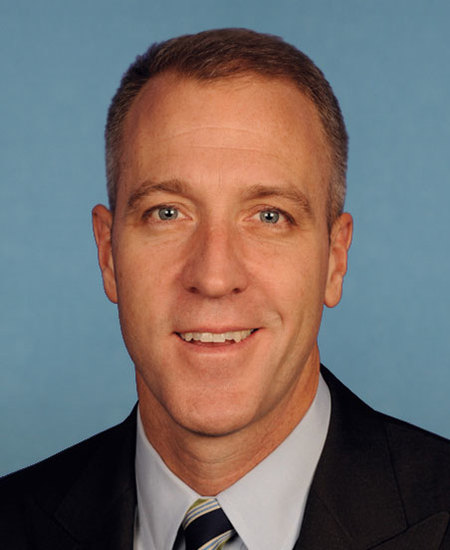
Rep. Sean Patrick Maloney
Sponsored bills
National Origin-Based Antidiscrimination for Nonimmigrants Act or the NO BAN Act This bill imposes limitations on the President's authority to suspend or restrict aliens from entering the United States. It also prohibits religious discrimination in various immigration-related decisions, such as whether to issue an immigrant or nonimmigrant visa, unless there is a statutory basis for such discrimination. The President may temporarily restrict the entry of any aliens or class of aliens after the Department of State determines that the restriction would address specific and credible facts that threaten U.S. interests such as security or public safety. The bill also imposes limitations on such restrictions, such as requiring the President, State Department, and the Department of Homeland Security (DHS) to (1) only issue a restriction when required to address a compelling government interest, and (2) narrowly tailor the suspension to use the least restrictive means to achieve such an interest. Before imposing a restriction, the State Department and DHS shall consult with Congress. The State Department and DHS shall report to Congress about the restriction within 48 hours of the restriction's imposition. If such a report is not made, the restriction shall immediately terminate. Individuals or entities present in the United States and unlawfully harmed by such a restriction may sue in federal court. DHS may suspend the entry of aliens traveling to the United States on a commercial airline that failed to comply with regulations related to detecting fraudulent travel documents.
Washington, D.C. Admission Act This bill provides for admission into the United States of the state of Washington, Douglass Commonwealth, composed of most of the territory of the District of Columbia. The commonwealth shall be admitted to the Union on an equal footing with the other states. The Mayor of the District of Columbia shall issue a proclamation for the first elections to Congress of two Senators and one Representative of the commonwealth. The bill applies current District laws to the commonwealth and continues pending judicial proceedings. The commonwealth (1) shall consist of all District territory, with specified exclusions for federal buildings and monuments, including the principal federal monuments, the White House, the Capitol Building, the U.S. Supreme Court Building, and the federal executive, legislative, and judicial office buildings located adjacent to the Mall and the Capitol Building; and (2) may not impose taxes on federal property except as Congress permits. District territory excluded from the commonwealth shall be known as the Capital and shall be the seat of the federal government. The bill maintains the federal government's authority over military lands and specified other property. The bill provides for expedited consideration of a joint resolution repealing the Twenty-third Amendment to the Constitution, which provides for the appointment of electors of the President and Vice President. The bill continues certain federal authorities and responsibilities, including regarding employee benefits, agencies, courts, and college tuition assistance, until the commonwealth certifies that it is prepared to take over the authorities and responsibilities. The bill establishes the Statehood Transition Commission to advise the President, Congress, and District and commonwealth leaders on the transition.
Access to Contraception for Servicemembers and Dependents Act of 2021 This bill addresses Department of Defense (DOD) contraceptive care and family planning services. Specifically, the bill prohibits cost-sharing with respect to TRICARE beneficiaries for specified prescription contraceptives. Additionally, the bill prohibits cost-sharing for TRICARE Select and TRICARE Prime beneficiaries in relation to any in-network method of contraception or contraceptive care (including with respect to insertion, removal, and follow-up), any sterilization procedure, or any related patient education or counseling service. The bill requires DOD to provide information on all methods of emergency contraception and care to sexual assault survivors at its medical treatment facilities. Upon request by a sexual assault survivor, DOD must provide such emergency contraception or a prescription for emergency contraception. Finally, DOD must establish a uniform standard curriculum for education programs on family planning for all members of the Armed Forces. Such education programs must be provided to service members during their first year of service and at other appropriate times, as determined by each military department.
Fire Fighters and EMS Employer-Employee Cooperation Act This bill requires the Federal Labor Relations Authority to determine whether a state substantially provides fire and emergency medical services (EMS) personnel the right to form and join a labor organization; recognition by fire and EMS employers of the employees' labor organization, agreement to bargain with the organization, and reduction of any agreements to writing in a contract or memorandum of understanding; the right to bargain over hours, wages, and terms and conditions of employment; and arbitration or other mechanisms to resolve an impasse in collective bargaining negotiations. The bill makes the authority responsible for (1) determining the appropriateness of units for labor representation; (2) supervising elections; (3) conducting hearings and resolving complaints of unfair labor practices; and (4) protecting the right of employees to form, join, or assist any labor organization, or to refrain from doing so. An employer, fire and EMS personnel, or labor organization may not engage in a lockout, sickout, work slowdown, strike, or any other organized job action that will measurably disrupt the delivery of emergency services and is designed to compel an employer, fire and EMS personnel, or labor organization to agree to the terms of a proposed contract.
Promoting Access to Broadband Act of 2021 This bill requires the Federal Communications Commission (FCC) to establish a grant program to provide states with resources to inform their residents who are Medicaid enrollees, Supplemental Nutrition Assistance Program participants, or low-income individuals about the FCC's Lifeline program. The Lifeline program is designed to reduce the cost of communications services for low-income consumers.
Lead Abatement for Families Act of 2021 This bill requires the Department of Housing and Urban Development (HUD) to identify federally assisted housing projects that use lead-based water pipes and allows HUD to award grants for the replacement of these pipes to public housing agencies and other owners.
Commission to Study and Develop Reparation Proposals for African Americans Act This bill establishes the Commission to Study and Develop Reparation Proposals for African Americans. The commission shall examine slavery and discrimination in the colonies and the United States from 1619 to the present and recommend appropriate remedies. The commission shall identify (1) the role of the federal and state governments in supporting the institution of slavery, (2) forms of discrimination in the public and private sectors against freed slaves and their descendants, and (3) lingering negative effects of slavery on living African Americans and society.
Healthy Families Act This bill provides for paid and unpaid sick leave for employees to meet their own medical needs and those of their families. It requires employers with 15 or more employees to provide their employees with at least one hour of earned paid sick leave for every 30 hours worked, up to a maximum of 56 hours of paid sick leave in a year. An employer with fewer than 15 employees may also provide the same amount of paid sick leave, but may opt out of such requirement, in which case such employer must provide its employees at least 56 hours of unpaid leave in a year. An employee may use sick leave for absences (1) resulting from a physical or mental illness, injury or medical condition; (2) resulting from obtaining professional medical diagnosis or care, or preventive medical care; (3) to care for a child, parent, spouse, a domestic partner, or other blood or close relative; and (4) resulting from domestic violence, sexual assault, or stalking. The bill makes it unlawful for any employer to interfere with, restrain, or deny the exercise of an employee's right to accrue sick leave as provided by this bill. An employee may take legal action to enforce the right to sick leave granted by this bill and the Department of Labor must investigate complaints of violations of the requirements of this bill. Labor is authorized to conduct a public awareness campaign to educate and inform the public of the requirements for paid sick leave provided by this bill.
Providing Responsible Emergency Plans for Animals at Risk of E merging Disasters Act or the PREPARED Act This bill establishes requirements governing the care of animals by entities, such as zoos, in emergencies or disasters. Specifically, the bill requires each research facility, dealer, exhibitor, intermediate handler, and carrier to develop and follow a contingency plan to provide for the humane handling, treatment, transportation, housing, and care of their animals in the event of an emergency or disaster.