

Equal Access to Abortion Coverage in Health Insurance Act of 2021 or the EACH Act of 2021 This bill requires federal health care programs to provide coverage for abortion services and requires federal facilities to provide access to those services. The bill also permits qualified health plans to use funds attributable to premium tax credits and reduced cost sharing assistance to pay for abortion services.
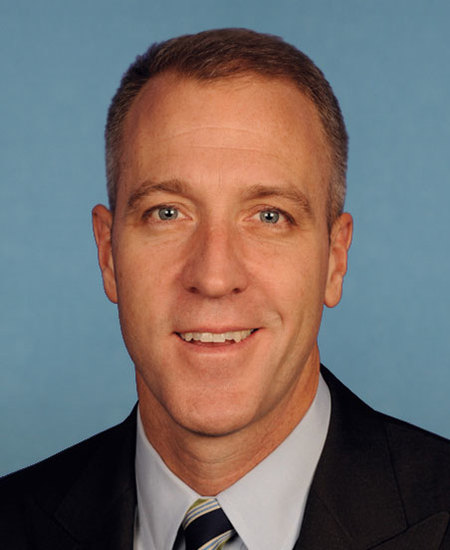
Rep. Sean Patrick Maloney
Sponsored bills
Revising and Expediting Actions for the Crisis Hotline for Veterans Act or the REACH for Veterans Act This bill requires the Department of Veterans Affairs (VA) to update training and procedures for call responders of the Veterans Crisis Line. Specifically, the VA must enter into an agreement with an outside organization to review the training for crisis line call responders. The VA must update the training if any deficiencies are identified after the review. Among other requirements, the VA must develop guidelines on retraining and quality management for when a call responder has an adverse event or needs improvement, annually perform a common cause analysis for identified callers to the crisis line who died by suicide in situations where the crisis line was the last point of contact, develop enhanced guidance and procedures to respond to calls to the crisis line related to substance use and overdose risk, review the current emergency dispatch standard operating procedure of the crisis line, and solicit feedback from veterans service organizations on how to conduct outreach regarding the move to 988 as the new suicide and mental health crisis hotline. Each call responder must be subject to at least two calls per month that are silently monitored by a supervisor to check for quality of conduct. The Veterans Crisis Line, Office of Mental Health and Suicide Prevention of the VA, and National Center for Patient Safety of the VA must establish quality management processes and expectations for staff of the crisis line.
Cosmetic Supply Chain Transparency Act of 2021 This bill requires the Food and Drug Administration (FDA) to maintain a list of certain nonfunctional constituents in cosmetics that are harmful to human health or the environment, authorizes the FDA to request from a brand owner (i.e., the entity bringing a cosmetic to market) certain information about a cosmetic's ingredients, and addresses related issues. For each listed nonfunctional constituent, the list must identify the ingredient or cosmetic (or category of ingredient or cosmetic) in which the constituent is known or reasonably expected to be present. The FDA must also (1) establish procedures for petitions to add substances to the list, (2) issue guidance for industry related to testing and detecting such nonfunctional constituents, and (3) establish a committee to provide advice on creating the list and developing the required industry guidance. Within a year of a nonfunctional constituent being added to the list, a supplier of an ingredient or cosmetic must test for that constituent and provide a brand owner the results and other information before selling the ingredient or cosmetic to the brand owner. A supplier of an ingredient or cosmetic must provide additional information about the item upon a brand owner's request. Brand owners must maintain records with information about the suppliers of ingredients and raw materials used in their cosmetics and provide such information to the FDA upon request. The bill also imposes civil penalties for brand owners and suppliers that violate this bill's provisions.
Maddy summaryHR 5537, the Toxic-Free Beauty Act of 2021, bans specific chemicals in cosmetics under federal law. It prohibits the use of substances like certain PFAS (water-repellent chemicals), phthalates (e.g., dibutyl phthalate), formaldehyde, mercury, and specific parabens in cosmetic products. The ban directly affects cosmetic manufacturers, requiring them to reformulate products, and benefits consumers by removing these chemicals from beauty items. The law takes effect on January 1, 2025, with the ban applying to products bearing or containing the listed substances.
Cosmetic Fragrance and Flavor Ingredient Right to Know Act of 2021 This bill imposes disclosure and labeling requirements on cosmetics products that contain certain ingredients. A cosmetics product that fails to meet such requirements may not be sold. Within two years of this bill's enactment, a cosmetics product's labeling or packaging must indicate the use of any ingredient that (1) is identified on specified lists of harmful or potentially harmful chemicals, such as chemicals identified as carcinogenic to humans by the Environmental Protection Agency or toxic air contaminants under California regulations; or (2) must be disclosed under certain European Union laws and is present in a product above specified concentrations. The Food and Drug Administration must publish and periodically update on its website a list of the ingredients subject to this requirement. Within one year of this bill's enactment, a brand owner (i.e., the entity bringing a cosmetics product to market) must disclose certain information on its website if a cosmetics product contains any fragrance or flavor ingredient that is (1) present in the product above a certain concentration, or (2) subject to this bill's labeling or packaging requirement. The website must disclose the use of the ingredient in question and other information, such as the ingredient's functional purpose. The use of an ingredient subject to this bill's requirements shall not be treated as a confidential trade secret, but the concentration of such an ingredient shall be treated as confidential commercial information.
Cosmetic Safety for Communities of Color and Professional Salon Workers Act of 2021 This bill imposes labeling requirements on cosmetics intended for professional use, requires research on health issues relating to cosmetics, and addresses related issues. The Food and Drug Administration (FDA) must require (1) the labeling for cosmetics intended for professional use to include the name of each ingredient in descending order of predominance; and (2) the manufacturer, distributor, or seller of such a cosmetic to provide this information on its website. The Occupational Safety and Health Administration must issue a standard requiring each manufacturer or importer selling a cosmetic intended for professional use to (1) obtain or develop a safety data sheet for the cosmetic in various languages; and (2) make the data sheet available to relevant distributors and employers, such as hair salon owners. The standard must also require employers to make the data sheet available to employees exposed to the product and provide to employees versions of the sheet in languages other than English upon request. The FDA must conduct (or award grants for) research into chemicals linked to adverse health effects and most commonly found in cosmetics that are (1) marketed to women and girls of color; or (2) used by professional nail, hair, and beauty salon workers. The FDA must also award grants to support research focused on designing safer cosmetic chemicals, such as those with no inherent toxicity. The FDA must take actions to ensure that cosmetics marketed to women and girls of color are in full compliance with FDA requirements.
Animal Freedom from Testing, Experiments, and Research Act of 2021 or the AFTER Act of 2021 This bill requires federal research facilities to facilitate the adoption or nonlaboratory placement of certain warm-blooded animals (e.g., dogs, cats, monkeys, guinea pigs, hamsters, and rabbits) with animal rescue organizations, animal sanctuaries, animal shelters, or individuals. In order to be adopted or placed, the animals must (1) no longer be needed for research; (2) be suitable for release; (3) not be birds, rats, or mice.
This bill requires the Department of Defense (DOD) to conduct outreach to build awareness among former members of the Armed Forces of the process established for the review of discharge characterizations related to sexual orientation (i.e., on the basis of Don't Ask, Don't Tell or a similar policy). DOD must also provide for specified relief for former members of the Armed Forces who were impacted by the discharge characterizations and ensure that DOD oral historians review related facts and receive testimony from affected individuals.
Israel Relations Normalization Act of 2021 This bill requires the Department of State to take certain actions promoting the normalization of relations between Israel, Arab states, and other relevant countries and regions. Specifically, the State Department must develop a strategy on expanding and strengthening the Abraham Accords (the term used to refer collectively to agreements between Israel and the United Arab Emirates and between Israel and Bahrain marking the public normalization of relations between the two Arab countries and Israel). The strategy must include a description of how the U.S. government will encourage further normalization of relations with Israel. In addition, the State Department must report on options for U.S. international efforts to promote the strengthening of ties between Israel, Arab states, and other relevant countries and regions. The State Department must also report on the status of the normalization of relations with Israel, including information on (1) laws that punish individuals for people-to-people relations with Israelis (i.e., anti-normalization laws), and (2) evidence of steps taken by Arab governments toward permitting or encouraging normalized relations between their citizens or residents and Israeli citizens.
Eliminating a Quantifiably Unjust Application of the Law Act of 2021 or the EQUAL Act of 2021 This bill eliminates the federal sentencing disparity between drug offenses involving crack cocaine and powder cocaine. Currently, different threshold quantities of crack cocaine and powder cocaine (e.g., 28 grams of crack cocaine and 500 grams of powder cocaine) trigger the same statutory criminal penalties. This bill eliminates the lower quantity thresholds for crack cocaine offenses. Under the bill, the same threshold quantities of crack cocaine and powder cocaine trigger the same statutory criminal penalties. The change applies to future cases and cases pending on the date of enactment. With respect to past cases, the bill authorizes a sentencing court to impose a reduced sentence on a defendant who was convicted or sentenced for a specified crack cocaine offense before this bill's enactment. A defendant does not have to be present at the sentence reduction hearing. Finally, the bill prohibits the reduction of a sentence that was previously reduced.