Climate Resilience Workforce Act This bill sets forth provisions to establish a climate resilience workforce, a national climate resilience action plan, an Office of Climate Resilience within the White House, and related efforts and entities.
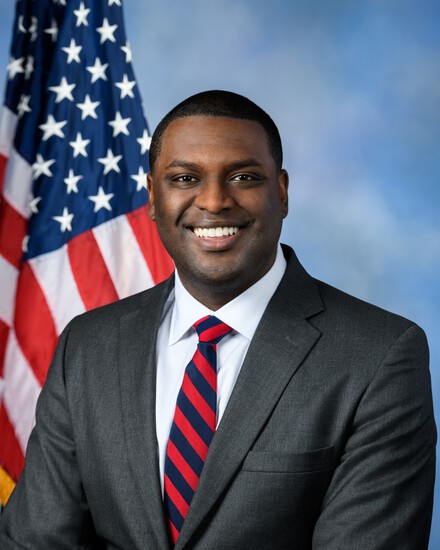
Rep. Mondaire Jones
Sponsored bills
Camp Lejeune Justice Act of 2022 This bill allows certain individuals to sue and recover damages for harm from exposure to contaminated water at Camp Lejeune in North Carolina between August 1, 1953, and December 31, 1987. This action is available only to individuals who were exposed to contaminated water for at least 30 days. The bill prohibits the U.S. government from asserting specified immunity from litigation in response to such a lawsuit. The bill also prohibits an individual who brings such an action from bringing a separate tort action against the United States based on the same harm.
Family Notification of Death, Injury, or Illness in Custody Act of 2021 This bill requires the Department of Justice (DOJ) to develop policies and procedures for notifying next-of-kin or other emergency contacts in the event of the death, or serious illness or serious injury, of an individual in custody. The bill requires DOJ to implement the policies and procedures at its detention agencies. Further, the bill requires DOJ to distribute model policies and procedures to state, territorial, tribal, and local detention agencies.
Comprehensive Addiction Resources Emergency Act of 2021 This bill establishes programs, grants, and other activities to address substance use disorders. Specifically, the Department of Health and Human Services (HHS) must establish a program for purchasing and distributing opioid overdose reversal drugs for states and Indian tribes. HHS must also award grants for and otherwise support addressing substance use, particularly in states, tribes, territories, and localities with disproportionately high drug overdose rates; increasing access to preventive, medical, recovery, and related services; developing innovative models of delivering treatment and harm reduction services; and expanding the treatment capacity of Medicaid providers. In addition, HHS must issue model standards of care for treatment services and recovery residences and may award grants for training health care professionals. The bill also supports prevention and treatment services for workers, addiction and pain management research, and data collection on substance use disorders. Further, dispensers, distributors, and manufacturers of schedule II controlled substances (e.g., oxycodone), with the exception of opioid treatment programs, must certify that they maintain effective drug diversion controls. Violators are subject to specified civil and criminal penalties. Collected penalties shall be used for the grant programs and other substance use disorder activities established under the bill.

Assessing Monetary Influence in the Courts of the United States Act or the AMICUS Act This bill requires certain disclosures in relation to amicus briefs (i.e., briefs that are filed by those who are not a party to a case but have an interest in the case). Specifically, each amicus brief that is filed in a U.S. court of appeals or the Supreme Court must list the name of any person who contributed (1) to the preparation or submission of the brief, (2) at least 3% of the gross annual revenue of the entity filing the brief for the previous year, or (3) more than $100,000 in the previous year to the filer. Such requirements do not apply to routine commercial transactions that are unrelated to amicus brief filings. The bill also prohibits those who file amicus briefs from giving gifts or providing travel to a judge of a U.S. court of appeals or a justice of the Supreme Court, except for reimbursements for travel expenses in relation to law school appearances. Violators are subject to civil penalties.
Fair and Independent Experts in Clemency Act or the FIX Clemency Act This bill establishes the independent U.S. Clemency Board, which shall review applications and recommend individuals for clemency directly to the President. It also abolishes the Office of the Pardon Attorney of the Department of Justice and transfers its functions, assets, and personnel to the board.
Bivens Act of 2021 This bill provides individuals with a statutory right to sue and recover damages from federal officials for violations of their constitutional rights. Currently, individuals have a statutory right to bring such suits against state or local officials (e.g., law enforcement), commonly known as Section 1983 suits or Bivens actions. Although the statute does not explicitly authorize such suits against federal officials, the Supreme Court has found this right to be inferred from the Constitution in certain situations (e.g., Fourth Amendment violations committed by federal law enforcement officers).
Stop Corporate Capture Act This bill modifies the process for federal agency rulemaking. Specifically, it (1) requires interested parties who submit a study or research as part of a comment to a proposed rule to disclose the source of the funding for the study or research, (2) limits the use of the negotiated rulemaking process to government agencies, (3) provides statutory authority for the judicial principle that requires courts to defer to an agency's reasonable or permissible interpretation of a federal law when the law is silent or ambiguous (i.e., the Chevron doctrine), and (4) establishes an Office of the Public Advocate to support public participation in the rulemaking process.
Repeal Existing Policies that Encourage and Allow Legal HIV Discrimination Act of 2022 or the REPEAL HIV Discrimination Act of 2022 This bill addresses federal and state laws, policies, and regulations that may burden people living with HIV/AIDS. Specifically, the bill directs the Department of Justice (DOJ), the Department of Health and Human Services (HHS), the Department of Defense (DOD), and the White House Office of National AIDS Policy to initiate a national review of federal (including military) and state laws, policies, regulations, and judicial precedents and decisions regarding criminal and related civil commitment cases involving people living with HIV/AIDS. DOJ must transmit to Congress and make publicly available the results of such review with related recommendations. The White House Office of National AIDS Policy must also develop and publicly release guidance to assist states with handling relevant cases. The office, DOJ, HHS, and DOD must transmit to the President and Congress any proposals necessary to implement adjustments to federal laws, policies, or regulations. This bill shall not be construed to discourage the prosecution of individuals who act with the intent to do harm to another individual by intentionally transmitting HIV.
Lebanon TPS Act of 2021 This bill permits nationals of Lebanon to qualify for temporary protected status, which prevents their removal from the United States and allows them to obtain employment and travel authorization. Such status shall be available to qualifying nationals of Lebanon for 18 months starting from this bill's enactment. To qualify, an individual must meet various requirements, such as not having been convicted for certain crimes.