

This resolution declares that (1) the United States needs a Marshall Plan for Moms to revitalize and restore mothers in the workforce; and (2) mothers, especially mothers of color have been pushed to the brink of economic, social, and emotional collapse during the COVID-19 (i.e., coronavirus disease 2019) pandemic because of the existing economic and social inequalities women have long faced. The resolution also states that any relief and long-term recovery package to address the COVID-19 crisis must recognize and rebuild moms in the workforce by including certain policies such as establishing a robust paid leave plan; rebuilding and stabilizing the child care industry; providing necessary child poverty reduction tools for families' economic security that include recurring child benefits and an expanded and improved child tax credit and earned income tax credit; establishing an expanded unemployment insurance program that benefits struggling workers, including those experiencing long-term unemployment; raising the federal minimum wage to $15 per hour or higher for all minimum wage workers; and providing access to mental health support for mothers. Finally, the resolution declares that employers and policymakers must prioritize addressing the economic cliff facing mothers and make permanent the policies set forth in this resolution so that mothers are protected against any future economic calamities.
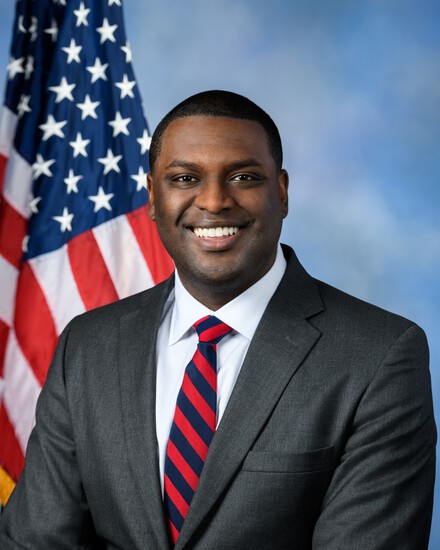
Rep. Mondaire Jones
Sponsored bills
Prohibit Auto Insurance Discrimination Act or the PAID Act This bill prohibits an automobile insurer from considering specified factors when determining a consumer's insurance rates or eligibility. These prohibited factors include gender, employment status, zip code, census tract, marital status, and credit score. Automobile insurers must make underwriting rules and rate filings available to the public. The Federal Trade Commission may enforce a violation of these requirements as an unfair or deceptive act or practice.
Building COVID-19 Vaccine Confidence Act of 2021 This bill establishes a program to disseminate information about COVID-19 (i.e., coronavirus disease 2019) vaccinations. To carry out this program, the Centers for Disease Control and Prevention (CDC) must award grants to health departments and certain nonprofits. In awarding the grants, the CDC must coordinate with the Office of Minority Health and, as appropriate, other federal partners.
Living Donor Protection Act of 2021 This bill prohibits certain insurance carriers from discriminating against, and provides other protections for, living organ donors. Specifically, carriers may not deny, cancel, or otherwise impose conditions on policies for life insurance, disability insurance, or long-term care insurance based on an individual's status as a living organ donor. The bill also expressly specifies that recovery from organ-donation surgery constitutes a serious health condition that entitles eligible employees to job-protected medical leave. In addition, the Department of Health and Human Services must update educational materials on live organ donation to include information about the benefits of live organ donation and about access to insurance for living organ donors.
Electric Vehicles for Underserved Communities Act of 2021 This bill requires the Department of Energy (DOE) to support the deployment of electric vehicle charging infrastructure in underserved or disadvantaged communities. Specifically, DOE must establish an EV Charging Equity Program. Under the program, DOE must provide technical assistance and award grants to increase the deployment and accessibility of electric vehicle charging infrastructure in such communities. If practicable, DOE must ensure that relevant programs promote electric vehicle charging infrastructure, support clean and multimodal transportation, provide improved air quality and emissions reductions, and prioritize the needs of such communities.
Electric Credit Access Ready at Sale Act of 2021 or the Electric CARS Act of 2021 This bill modifies and extends tax credits for electric cars and alternative motor vehicles. The bill extends the tax credit for new qualified plug-in electric drive motor vehicles through 2031. In addition, the bill modifies the credit to remove the limitation on the number of vehicles per manufacturer that are eligible for the credit, allow a taxpayer to assign the credit to a financing entity, and allow an unused credit to be carried forward for five years. The bill also extends through 2031 the tax credits for (1) alternative fuel vehicle refueling property, and (2) alternative motor vehicles.
Confederate Monument Removal Act This bill prohibits a state from providing for display in National Statuary Hall a statue of a person who voluntarily served with the Confederate States of America, and it provides for the removal, return, and replacement of any statue currently on display that depicts such a person.
Full-Service Community School Expansion Act of 2021 This bill reauthorizes through FY2025 and expands the Full-Service Community Schools program. The program provides support for full-service community schools that serve children and their families, particularly for children who attend high-poverty elementary and secondary schools. Specifically, the bill directs the Department of Education (ED) to award grants to eligible entities to plan, implement, expand, and support full-service community schools. An eligible entity is a consortium of (1) one or more local educational agencies or the Bureau of Indian Education; and (2) one or more community-based organizations, nonprofit organizations, Indian tribes, tribal organizations, or other entities. A community school refers to a public elementary or secondary school that incorporates the four pillars of community schools. These four pillars are defined by the bill as (1) integrated student supports that address out-of-school barriers to learning (e.g., medical care and assistance with housing, transportation, or nutrition); (2) expanded and enriched learning time and opportunities (e.g., before- and after-school programs); (3) family and community engagement (e.g., adult education); and (4) collaborative leadership and practices, which must include a school-based leadership team, a community school coordinator, and a community-wide leadership team. Further, the bill directs ED to award grants to states to plan, implement, and expand community schools. A state educational agency that receives a grant must meet certain requirements, such as providing subgrants to local educational agencies, establishing a state-level steering committee, and establishing goals for the implementation and expansion of community schools throughout the state.
Food Allergy Safety, Treatment, Education, and Research Act of 2021 or the FASTER Act of 2021 This bill expands the definition of major food allergen for purposes of certain food-labeling requirements to specifically include sesame. In addition, the Department of Health and Human Services must report on certain information related to food allergy research and data collection activities.
This resolution expresses the sense of the House of Representatives that it is the duty of the federal government to create a federal job guarantee.