This resolution condemns the assassination of Haitian President Jovenel Moise on July 7, 2021, and extends condolences to his family and the people of Haiti.
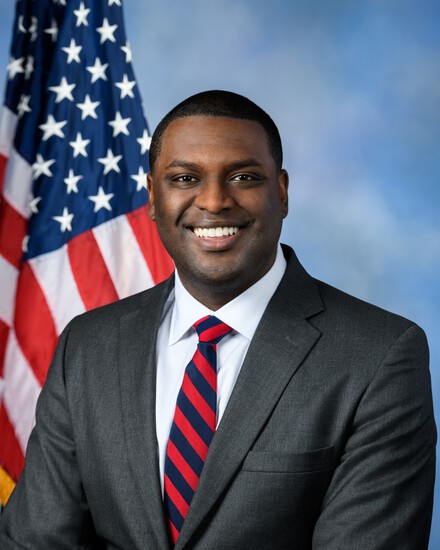
Rep. Mondaire Jones
Sponsored bills
Diversity and Inclusion at the Department of State Act This bill establishes a new position and requires other activities to promote diversity and inclusion in the Department of State. The bill creates the presidentially-appointed position of Chief Diversity and Inclusion Officer in the Office of the Deputy Secretary of State to, among other activities, develop a strategic plan to guide implementation of diversity and inclusion efforts and support State Department personnel from traditionally underrepresented groups. The officer reports directly to the Secretary of State. Additionally, the State Department must establish a Diversity and Inclusion Leadership Council to coordinate applicable strategic plans, initiatives, and policies. The bill also modifies merit selection processes for promotions, performance pay, and related matters to promote diversity and inclusion in the Foreign Service. Specifically, it adds factors (e.g., testimony from peers and subordinates or demonstrated support for diversity and inclusion) that may be considered in recommendations and rankings related to a Foreign Service officer's performance. The State Department must also establish a mentorship program for entry- and mid-level members of the Foreign Service and periodically offer a Senior Executive Service development program to members of the civil service in the top two pay grades. Senior Executive Service members serve as high-level managers within federal agencies. The bill requires the State Department to report on its diversity and inclusion efforts, as well as demographic information about members of boards that make personnel decisions and candidates for the Senior Executive Service.
Voters on the Move Registration Act of 2021 This bill requires the Consumer Financial Protection Bureau to develop, and specified agencies to distribute, a statement providing individuals with information on how to register to vote and their voting rights. This information must be provided to individuals upon their participation in certain rental assistance programs or application for certain residential mortgages.
Critically Endangered Animals Conservation Act of 2021 This bill provides statutory authority for the Critically Endangered Animals Conservation Fund, which finances a grant program to protect critically endangered species. Specifically, the bill requires the Department of the Interior to establish the fund as a separate account in the Multinational Species Conservation Fund. Critically endangered species means any animal species categorized on the International Union for Conservation of Nature (IUCN) Red List of Threatened Species as either endangered or critically endangered. The term also means any other animals species categorized on such list as data deficient or under a threat category lower than endangered if Interior determines that (1) the most recent IUCN Red List assessment indicates that the population is decreasing, or (2) such species is facing new or emerging threats.
Exposing Discrimination in Higher Education Act This bill requires the Department of Education's Office for Civil Rights to publish prominently on its website the names of the institutions of higher education (IHEs) that request, and the names of the IHEs that receive, religious exemptions from the prohibition on sex discrimination in federally funded education programs and activities. It also requires an IHE that requests, receives, exercises, or intends to exercise such a religious exemption to publish prominently on its website certain information with respect to such exemption.
United States Commitment to Peacekeeping Act of 2021 This bill repeals a limit on U.S. funding for, details U.S. policy objectives for, and revises reporting requirements related to United Nations (U.N.) peacekeeping operations. Under current law, the United States may contribute no more than 25% of the assessed costs for a U.N. peacekeeping operation; the bill eliminates that funding restriction. The Department of State must instruct the U.S. Permanent Representative to the United Nations to advance the U.S. policy objectives outlined in the bill for standardizing performance assessments of, diversifying the funding base for, and other aspects of U.N. peacekeeping operations. The bill modifies annual reports about U.S. participation in U.N. activities by eliminating a requirement to report on costs of U.N. peacekeeping operations in the prior fiscal year and by adding a requirement to report on U.S. efforts to implement reforms of U.N. peacekeeping. Additionally, the State Department must report on (1) strengthening the role of conflict prevention in U.N. missions, and (2) transitioning U.N. peacekeeping operations to host-country security forces.
Closing the Meal Gap Act of 202 1 This bill revises the requirements for calculating Supplemental Nutrition Assistance Program (SNAP) benefits. The bill increases the minimum SNAP benefit and requires benefits to be calculated using the value of a low-cost food plan. The Department of Agriculture (USDA) must determine the requirements for the low-cost food plan, which is the diet required to feed a family of four, consisting of a man and a woman 19-50 years of age, a child 6-8 years of age, and a child 9-11 years of age. USDA must (1) reevaluate and publish the market baskets of the plan by January 1, 2027, and every five years thereafter, based on current food prices, food composition data, consumption patterns, and dietary guidance; and (2) make adjustments to the plan to account for household size, changes in the cost of the diet, and the costs of food in specified areas. The bill modifies the requirements for calculating household income to determine SNAP eligibility by (1) authorizing a standard medical expense deduction for households containing an elderly or disabled member, and (2) eliminating the cap on the excess shelter expense deduction. The bill eliminates certain work requirements for SNAP. The requirements apply to able-bodied adults who are ages 18-49 and have no dependent children. The bill allows Puerto Rico, American Samoa, and the Northern Mariana Islands to participate in SNAP. Currently, the three territories receive block grants instead of participating in SNAP.

Extinction Crisis Emergency Act of 2021 This bill requires the President to declare the global wildlife extinction crisis a national emergency and to take certain actions to restore wildlife. Specifically, the President shall direct the U.S. Fish and Wildlife Service and the National Marine Fisheries Service to review all species that are identified as critically imperiled, critically endangered, endangered, or vulnerable, and to use all authorities to propose and finalize protections for all species that may warrant protection; and establish new national wildlife refuges and new marine protected areas. The Departments of Commerce and the Interior must, after accepting public comment, conduct annual reviews of every nation's compliance with any international fishery conservation program or international program for endangered or threatened species, and take specified actions. The President must enlist all federal agencies to help fight the wildlife extinction crisis by directing each federal agency to take specified actions to prioritize the recovery of endangered species and to rebuild healthy wildlife and plant populations, including by fully integrating climate change concerns into the conservation and recovery of endangered species. The President must direct the Department of Defense to prioritize the protection of endangered species and rare habitats on U.S. military installations around the world.
Averting Loss of Life and Injury by Expediting SIVs Act of 2021 or the Allies Act of 2021 This bill increases the number of special immigrant visas available to qualified Afghan nationals who worked for the U.S. government or the North Atlantic Treaty Organization (NATO) missions in Afghanistan. The bill also relaxes certain qualifications for such visas. Specifically, this bill makes available an additional 8,000 visas for principal aliens under this special visa program, to be available until all such visas have been issued. (The numerical limitations in this program apply only to the principal alien who applies for the visa, not to any accompanying spouse or child.) Under this bill, an alien may qualify based on a credible basis for concern about the possibility of an ongoing serious threat in Afghanistan due to their work with the U.S. government or a NATO mission, where currently the alien must have experienced such a threat. The bill also eliminates a requirement for each applicant to submit a credible sworn statement describing that threat. Furthermore, for an applicant qualifying for a visa by performing duties for U.S. military personnel stationed with a NATO mission, this bill eliminates a requirement that the duties performed qualify as sensitive and trusted duties. If an alien submits a visa application that included an accompanying spouse or child but the alien passes away before the application is granted, the surviving spouse or child shall remain eligible to receive a visa under that application. Currently, a surviving spouse or child retains eligibility only if the application was approved before the alien passed away.
Universal School Meals Program Act of 2021 This bill revises requirements under the food and nutrition programs of the Department of Agriculture, such as the school lunch and breakfast programs. For example, the bill permanently provides free meals to all school children regardless of income. The bill increases the reimbursement rate for school food authorities participating in the food and nutrition programs. The bill also prohibits school food authorities from (1) physically segregating or otherwise discriminating against any child participating in the free breakfast program, or (2) overtly identifying a child participating in the program with a special token or announcement. Additionally, the bill expands the summer food service program by making all children eligible for participation in the program. Further, the bill revises eligibility determinations for measuring poverty to include runaway or homeless youth, foster children, migratory children, and children participating in specified programs (e.g., Head Start).