

Maddy summaryThe ABC Act (HR 2491) requires the Centers for Medicare & Medicaid Services and the Social Security Administration to review and simplify eligibility processes, forms, and communications for Medicare, Medicaid, CHIP, and Social Security programs. It specifically aims to reduce duplicate paperwork for family caregivers - defined as individuals supporting people with disabilities or health needs - and improve accessibility through features like ADA-compliant websites, translation services, and reduced call wait times. The agencies must gather input from caregivers and organizations, then implement changes to streamline interactions. Within two years, they must report findings and proposed actions to Congress, with follow-up reports every two years. This procedural bill focuses on administrative improvements, not new benefits.
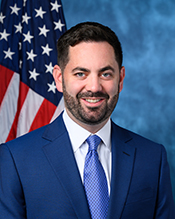
Rep. Michael Lawler
Sponsored bills
Maddy summaryHR 2077, the Helping Heroes Act, establishes the Veteran Family Resource Program within the Department of Veterans Affairs. The program requires the VA to appoint family coordinators at each Veterans Health Administration network within five years to help veterans and their families access VA benefits and community resources addressing social needs like housing, food, and mental health. Coordinators must assess family needs, build relationships, and connect veterans to services, including wellness programs for children. The VA must also conduct a survey of disabled veterans' families every five years to identify unmet needs and report program outcomes to Congress within two years of implementation. This bill directly affects veterans (especially those with disabilities) and their families by connecting them to support services through VA and community partnerships.
Maddy summaryThe FARMLAND Act of 2025 strengthens oversight of foreign ownership of U.S. agricultural land, particularly from countries like China and other "foreign entities of concern" as defined in the law. It requires agricultural land buyers to conduct due diligence and certify compliance, creates civil penalties for false or missing reports, and prohibits foreign persons from participating in Farm Service Agency programs. The bill mandates annual reports to Congress on foreign ownership of farmland by specific countries and requires development of a centralized database tracking foreign ownership. It also expands the Committee on Foreign Investment in the United States' authority to review certain real estate transactions involving foreign entities of concern.
Maddy summaryThis bill establishes special base pay rates for wildland firefighters employed by the Forest Service or Department of the Interior, increasing their base pay by specific percentages (from 1.5% to 42%) based on their grade. It creates "incident response premium pay" at 450% of hourly rate for firefighters deployed to respond to qualifying wildfire incidents, with a yearly maximum of $9,000. The bill also provides for paid rest and recuperation leave following wildfire incident response. These provisions replace temporary pay increases that were previously authorized under other legislation and directly affect wildland firefighters who perform duties related to wildland fires.
Save America's Forgotten Equines Act of 2025 or the SAFE Act of 2025 This bill permanently prohibits the slaughter of equines (e.g., horses and mules) for human consumption. (Current law prohibits the slaughter of dogs and cats for human consumption. This bill extends the prohibition to equines.) Specifically, this bill prohibits a person from knowingly (1) slaughtering an equine for human consumption; or (2) shipping, transporting, possessing, purchasing, selling, or donating an equine to be slaughtered for human consumption or equine parts for human consumption. The bill subjects a violator to a fine. The bill applies to conduct in or affecting interstate or foreign commerce or within the special maritime and territorial jurisdiction of the United States. However, it does not apply to an activity carried out by an Indian for a religious ceremony. As background, in recent years, the appropriations acts have prohibited the Department of Agriculture (USDA) from using federal funds to inspect horses before they are slaughtered for human consumption. Therefore, there are currently no USDA-inspected horse slaughter facilities in the United States.
Maddy summaryHR 1565, the Voluntary Public Access Improvement Act of 2025, directs $150 million in federal funds (from the Commodity Credit Corporation) to support public access to wetland conservation areas between fiscal years 2025 and 2029. Specifically, $3 million of this funding must be used to create voluntary agreements with states and tribal governments, encouraging public access to lands protected under wetland reserve easements. This bill directly affects landowners with these easements and state/tribal entities managing conservation programs. It provides a concrete funding mechanism to improve public access without mandating access or changing landowner obligations. The focus is on using existing federal resources to facilitate voluntary partnerships for recreation and education on conservation lands.
Delivering for Rural Seniors Act of 2025 This bill directs the Food and Nutrition Service (FNS) to award competitive grants to state agencies under a home delivery pilot program for participants in the Commodity Supplemental Food Program (CSFP). As background, the CSFP works to improve the health of low-income persons at least 60 years of age by supplementing their diets with nutritious Department of Agriculture foods. Under the pilot program, a state agency must distribute grant funds to an eligible entity (i.e., a local agency or subdistributing agency) to operate projects that facilitate home delivery of commodities to CSFP participants. Grant funds may be used for costs associated with transportation and distribution of commodities to CSFP participants, staffing required to operate home delivery services, and home delivery outreach to CSFP participants or potential participants. A state agency must prioritize eligible entities that serve CSFP participants who reside in rural areas. A state agency must also submit an annual report to FNS about the project, including best practices regarding the use of home delivery to improve the effectiveness of the CSFP.
Maddy summaryThis bill requires food facilities manufacturing or processing infant and toddler food (for children up to 24 months) to conduct quarterly testing for toxic metals like lead, cadmium, mercury, and arsenic in final products. Facilities must maintain detailed records of sampling plans, test results, and lab accreditation for at least two years or the product’s shelf life, whichever is longer. Manufacturers must report confirmed positive pathogen tests (like Cronobacter) to the FDA within 24 hours and implement environmental monitoring for sanitation controls in powdered infant formula production. These requirements apply directly to food facilities producing infant/toddler food, aiming to strengthen safety testing and transparency without specifying enforcement outcomes.
Maddy summaryThis bill requires colleges receiving federal financial aid to prohibit events promoting antisemitism, using the International Holocaust Remembrance Alliance's 2016 working definition (including contemporary examples). It bans institutions from authorizing, funding, or otherwise supporting such events on campus. The policy change applies directly to all higher education institutions covered by the Higher Education Act of 1965. This amendment modifies existing federal funding requirements for colleges.
Maddy summaryHR 2429 requires the Secretary of Transportation to create and implement a 10-year campus modernization plan for the U.S. Merchant Marine Academy within 180 days. The bill directs the modernization of outdated facilities - including new training labs, a safety training pool, updated athletic facilities, and infrastructure upgrades like electrical systems and accessibility improvements - to support midshipmen training for maritime careers and national defense. It authorizes $1.02 billion in funding (starting in 2026) for phased construction and renovations over 10 years, prioritizing facilities needed for Coast Guard licensing exams, physical readiness, and campus safety. The plan directly affects the academy’s midshipmen, faculty, and operations by replacing aging infrastructure that currently hinders training.