

Maddy summaryHRES 395 is a non-binding resolution (not a law) that establishes a symbolic "Bill of Rights" for U.S. law enforcement officers during internal investigations into alleged misconduct. It outlines specific procedural protections, including the right to have legal counsel present during interviews, the right to know investigation details in advance, protection from offensive language or threats during questioning, and the right to not face discipline for invoking the Fifth Amendment. The resolution aims to support officers by ensuring fair investigation processes while condemning calls to defund or dismantle police departments. It does not create new legal rights or change existing laws but encourages states to adopt similar protections for officers.
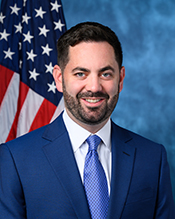
Rep. Michael Lawler
Sponsored bills
Maddy summaryThe Law Enforcement Officers Equity Act expands federal retirement benefits to include specific non-traditional law enforcement roles, such as IRS tax collection officers, U.S. Postal Inspection Service employees, Department of Veterans Affairs police, and certain U.S. Customs and Border Protection seized property specialists. It directly affects current and future federal workers in these positions who were previously excluded from law enforcement retirement benefits under the Federal Employees Retirement System and Civil Service Retirement System. The bill allows current employees (incumbents) to elect to count prior service toward retirement by paying a deposit covering the difference in retirement contributions, with government contributions made over 10 years. It also temporarily exempts law enforcement officers from mandatory separation for three years after enactment.
Maddy summaryHR 3241, the Defense Workforce Integration Act of 2025, creates pathways for military personnel medically disqualified from service to transition into civilian defense jobs. It requires the Defense Department to establish a process within one year for entry-level service members (like those in basic training or ROTC) who can't serve due to medical reasons to qualify for civilian roles in the Department of Defense. The bill also mandates a new program to connect medically disqualified individuals with employment opportunities in the defense industrial base, cybersecurity, research, and other national security support roles. Additionally, it directs the Navy to provide career information about Military Sealift Command and shipbuilder training to personnel during transition assistance. The Secretary of Defense must report on implementation to Congress within one year.
Maddy summaryHR 3246, "Violet’s Law," amends the Animal Welfare Act to require federal research facilities to create plans for placing eligible animals (dogs, cats, nonhuman primates, guinea pigs, hamsters, or rabbits) no longer needed for research. It directs federal departments and agencies operating such facilities to develop standards within one year of enactment to facilitate adoption or placement with qualified organizations like animal rescue groups, sanctuaries, or shelters. Animals must be certified by a licensed veterinarian as free of infectious disease or physical issues endangering health before release. This applies directly to all U.S. federal agencies conducting animal research, mandating concrete steps to transition animals out of research settings into permanent care.
Maddy summaryHR 3208, the "No Official Palestine Entry Act of 2025," prevents U.S. funding for United Nations agencies that grant Palestine any status, rights, or privileges beyond its current observer status. The bill amends two existing laws to replace the phrase "full membership" with "any status, rights, or privileges beyond observer status" in funding restrictions. This directly affects U.S. government decisions on contributing to UN agencies if Palestine's standing is upgraded. The policy change specifically targets funding eligibility, not direct impacts on Palestinian citizens or officials. The bill explicitly excludes Taiwan from its provisions.
Maddy summaryHR 3206, the Protecting America's Property Rights Act, requires Fannie Mae and Freddie Mac (the "Enterprises") to use third-party insurance products regulated by state authorities for mortgage lien and title protection. It mandates that any mortgage purchased by these entities must involve products regulated by state insurance or financial authorities, as defined in existing federal law. To enforce this, the bill adds a 1.00% capital requirement on the unpaid principal balance of mortgages that don’t meet this standard. The Director of the Federal Housing Finance Agency must issue implementing regulations within 180 days of the bill’s enactment.
Maddy summaryHR 3184, the PFAS Alternatives Act, funds research to develop turnout gear (firefighter safety clothing) without harmful PFAS chemicals, directly affecting firefighters who wear this gear. It authorizes $25 million annually (2025-2029) for grants to eligible organizations to research and test PFAS-free gear, requiring partnerships with firefighting groups to translate findings into practice. The bill also allocates $2 million yearly (2027-2031) for training programs on safe gear use and decontamination. Its goal is to reduce firefighters' exposure to chemicals linked to occupational illnesses during operations.
Maddy summaryThis bill creates a new system for recognizing and regulating individuals who help veterans file benefit claims. It requires the VA to provide veterans with information about free assistance options and maintain a public list of accredited representatives. The bill sets a maximum fee limit of $12,500 or 5 times the monthly benefit increase for representatives, and establishes penalties for unaccredited representatives who charge improper fees. The law aims to protect veterans from unscrupulous representatives while ensuring they have access to quality assistance with their benefit claims.
Maddy summaryThis bill amends the TAIPEI Act to clarify that UN Resolution 2758 does not address Taiwan's representation in international organizations or Taiwan's sovereignty. It directs U.S. officials in international bodies to actively resist China's efforts to distort policies affecting Taiwan's participation and to advocate for Taiwan's meaningful engagement. The bill also requires the U.S. government to report on China's attempts to undermine Taiwan's international partnerships and observer status. These provisions aim to strengthen Taiwan's ability to participate in global organizations without altering its political status.
Maddy summaryThe STABLE Act of 2025 establishes a regulatory framework for stablecoins, which are digital assets designed to maintain a stable value relative to a national currency. It restricts stablecoin issuance to "permitted payment stablecoin issuers," including bank subsidiaries, federally-approved nonbank entities, and state-qualified issuers. These issuers must maintain 1:1 reserves backed by specific assets (like U.S. currency, Treasury securities, or demand deposits), publish monthly reserve reports, and cannot pay interest to stablecoin holders. The Act also includes transparency requirements, restrictions on leadership (prohibiting those with certain felony convictions), and preempts conflicting state laws for federally-approved issuers.