

Maddy summaryHRES 855 is a non-binding House resolution expressing support for National Adoption Day (November 22, 2025) and National Adoption Month (November). It promotes awareness about children in foster care awaiting adoption - highlighting that 49,994 U.S. children were waiting for adoptive families in 2023 - and encourages the public to consider adoption. The resolution recognizes that every child deserves a permanent, loving family and urges Americans to support this goal throughout November and the year. As a symbolic gesture, it does not create new laws or policies.
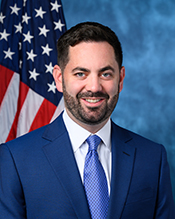
Rep. Michael Lawler
Sponsored bills
Maddy summaryHR 5905, the "Helping Our Heroes Act," allows volunteer firefighters and emergency medical personnel to claim a tax deduction for their service hours. Specifically, each hour of qualified volunteer work (up to 300 hours per year) is treated as a $20 charitable contribution to their organization, verified by the IRS. This applies to volunteers providing fire, medical, rescue, or search services - including required training - and excludes those receiving wage-like compensation. The bill also expands access by enabling non-itemizing taxpayers to claim this deduction, effective for 2026 tax years.
Maddy summaryHR 5913, the Community Investment and Prosperity Act, amends two existing banking regulations by increasing a percentage threshold from 15% to 20% in two specific legal provisions. It revises the Revised Statutes (12 U.S.C. 24) and the Federal Reserve Act (12 U.S.C. 338a), specifically altering the fifth sentence of designated paragraphs. These changes directly affect how national banks and financial institutions calculate certain regulatory requirements under federal law. The bill makes a technical adjustment to existing banking rules without creating new programs or altering broader community investment policies.
Maddy summaryThis non-binding House Resolution (HRES 848) expresses congressional support for U.S. funding of Gavi, the Vaccine Alliance, to expand vaccine access in low-income countries. It highlights Gavi’s role in immunizing over 1.1 billion children since 2000, averting an estimated 18.8 million deaths, and delivering malaria vaccines to combat a disease killing 580,000 children annually in Africa. The resolution emphasizes that U.S. investment leverages global health security by reducing disease spread and returning $54 in economic benefits for every $1 spent. It urges continued U.S. financial commitments to Gavi’s 2026-2030 strategy, which aims to deliver 50 million malaria vaccine doses and strengthen health systems.
Prevent Government Shutdowns Act This bill provides continuing appropriations to prevent a government shutdown if the appropriations bills for a fiscal year have not been enacted before the fiscal year begins and continuing appropriations are not in effect. Specifically, the bill provides appropriations at the rate of operations that was provided for the prior fiscal year to continue programs, projects, and activities that were funded in the preceding fiscal year. The bill also limits official travel, congressional recesses or adjournments, and the consideration of legislation that is unrelated to appropriations after the beginning of a fiscal year if the appropriations process has not been completed.
Maddy summaryThis House resolution condemns Hamas for killing civilians in Gaza since the October 10, 2025 ceasefire, citing executions used to suppress dissent. It references Hamas’s U.S. designation as a Foreign Terrorist Organization and reaffirms U.S. support for the ceasefire and civilian safety. As a non-binding statement, it does not create new laws or policies but expresses diplomatic disapproval of Hamas’s actions. The resolution directly addresses Hamas’s conduct and the U.S. position on Gaza stability.
Maddy summaryHRES 831 is a symbolic resolution expressing the U.S. House of Representatives' support for designating October 2025 as "National Down Syndrome Awareness Month." It does not create new laws or allocate funds but publicly acknowledges the Down syndrome community, highlighting that about 6,000 babies are born with Down syndrome annually in the U.S. and noting increased federal research funding for Down syndrome (from $18 million in 2014 to $133 million in 2023). The resolution celebrates individuals with Down syndrome and their families, commends advocates and researchers, and reaffirms congressional commitment to supporting the community through policy and research. As a non-binding resolution, it directly affects public recognition and awareness, not legal or financial obligations.
Maddy summaryHR 5835, the REPO Implementation Act of 2025, establishes a mechanism to use frozen Russian sovereign assets held abroad for Ukraine's benefit. It creates a "Ukraine Support Fund" to hold these assets without confiscation and requires the U.S. Treasury to invest them in U.S. government obligations. The bill mandates quarterly transfers of at least $250 million from the fund to Ukraine for assistance, with final amounts spent when less remains. It also requires the President to report to Congress on Russian assets held by foreign countries (including G7/EU members) and urges diplomatic efforts to secure similar asset repurposing from those nations.
Maddy summaryThis bill ensures SNAP (food stamp) benefits continue uninterrupted during government funding gaps in fiscal year 2026. It directs the USDA to use existing Treasury funds to pay SNAP benefits if Congress fails to pass a full-year budget for the Department of Agriculture by September 30, 2025. The bill also covers retroactive payments for missed benefits starting September 30, 2025, through the bill's enactment date. Benefits funded this way stop once Congress enacts a full FY2026 budget for the USDA. It directly affects SNAP recipients who rely on these benefits during budget delays.
Maddy summaryHRES 824 is a ceremonial House resolution recognizing the religious and historical significance of Diwali, the festival of lights. It acknowledges Diwali’s meaning across Hindu, Sikh, and Jain traditions - symbolizing light over darkness, good over evil, and marking spiritual milestones like Guru Hargobind’s release and Lord Mahavira’s Nirvana. The resolution expresses respect for Indian-Americans and the global Indian diaspora, highlighting Diwali’s role in U.S. religious diversity. As a non-binding recognition, it does not create new laws, policies, or funding, but formally honors the cultural observance.