

Maddy summaryHR 7137, the Shutdown Fairness Act, requires federal agencies to pay covered employees (including most federal workers and military personnel) and covered contractors their regular pay during government shutdowns. It appropriates funds from the Treasury to cover standard employee compensation and contractor payments for work performed during a lapse in regular appropriations, ensuring pay continues without delay (within 7 days if a shutdown is ongoing at enactment) and aligns with regular pay schedules. The bill applies only to individuals employed or with accepted offers before the shutdown began and mandates that these payments be charged to future appropriations. It does not change agency obligations under existing contracts or authorize new spending beyond the specified shutdown period.
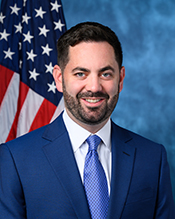
Rep. Michael Lawler
Sponsored bills
Maddy summaryHR 7109, the Small Business Child Care Investment Act, creates new loan access for eligible nonprofit child care centers. It allows these centers - defined as 501(c)(3) organizations providing care for children birth to school age, meeting licensing, background check, and anti-discrimination requirements - to be treated as small businesses for SBA loans. The bill requires loans over $500,000 to include a payment guarantee and mandates that SBA loans be made through banks or financial institutions (not directly by SBA). It also requires the SBA to report annually to Congress on the number and value of these loans.
Maddy summaryThe SEPSIS Act (HR 7116) establishes a dedicated sepsis program within the CDC to improve national sepsis response. It requires the CDC Director to lead education campaigns on hospital sepsis best practices, enhance pediatric sepsis data collection, and coordinate with Medicare/Medicaid to develop quality measures. Hospitals would be asked to report on sepsis protocol adoption, with a voluntary "honor roll" recognizing top performers in early detection and treatment. The bill authorizes $20 million annually (2026-2030) for these efforts and mandates annual congressional briefings on sepsis data and hospital progress. This directly affects hospitals, CDC operations, and federal health agencies working to reduce sepsis-related deaths and costs.
Maddy summaryHR 7100 establishes a Department of Justice Task Force on Anti-Sikh Hate and Discrimination to address systemic bias against Sikhs. The Task Force must draft a formal definition of anti-Sikh hate for DOJ use, develop educational programs for law enforcement and schools, and produce annual reports on hate crimes and trends. It requires quarterly collaboration with Sikh organizations and translation of materials into Punjabi. The bill directly affects Sikhs in the U.S. (who face disproportionate targeting as noted in FBI data) and mandates federal agencies to improve hate crime data collection and response. This is a policy-focused measure to standardize definitions, enhance reporting, and support community safety through DOJ action.
Maddy summaryHR 7118, the Genomic Answers for Children’s Health Act of 2026, requires Medicaid to cover whole genome and whole exome sequencing for Medicaid-eligible children with specific medical needs, including genetic disorders, rare diseases, congenital anomalies, developmental delays, or intellectual disabilities. It mandates that this testing be ordered as a first-tier test by a physician and paid separately, not bundled with other services. The bill also requires the Department of Health and Human Services to convene stakeholders, conduct outreach to raise awareness, and publish a report within two years detailing state payment rates and usage data. Additionally, it directs a Comptroller General report assessing implementation barriers, workforce challenges, and payment alignment with market costs. The changes take effect January 1, 2027.
Maddy summaryHR 7107, the Accountability for NYCHA Act of 2026, mandates an investigation by HUD's Inspector General into New York City Housing Authority (NYCHA) compliance with its 2019 agreement to fix housing deficiencies. The investigation will review NYCHA's progress on safety issues like lead paint and mold, assess oversight by the city-appointed Monitor, survey housing conditions, and examine potential fraud or violations. The Inspector General must submit a report to Congress within 180 days detailing findings and recommending actions to compel NYCHA to meet its legal obligations. This bill directly affects NYCHA, HUD, and the city Monitor, focusing on accountability rather than creating new housing standards. It is procedural, requiring an investigation and report, not altering housing policies.
Maddy summaryThe RAYS Act (HR 7092) requires secondary schools to include suicide prevention contact information on student identification cards or, if cards aren't issued, on school websites and student-accessible online platforms. Schools must list the 988 Suicide and Crisis Lifeline, Crisis Text Line, and a local suicide prevention hotline. The bill also allows schools to optionally add more mental health resources and mandates federal outreach to inform students, parents, and staff about these services. It takes effect one year after enactment for physical ID cards and 60 days later for digital methods.
Maddy summaryHR 7108 requires public housing agencies under federal oversight (such as those managed by an external receiver or federal monitor) to annually report key details to HUD, including the status of oversight, appointment dates, and the current overseer. It mandates that HUD’s Inspector General conduct detailed reviews of these agencies upon request from relevant congressional committees, assessing compliance with HUD agreements, housing conditions, allegations of fraud, and oversight effectiveness. The bill directly affects public housing agencies designated under the 1937 Housing Act that have been placed under federal management. Key mechanisms include standardized annual reporting by agencies and independent IG analyses triggered by Congress, aimed at improving transparency and accountability.
Maddy summaryThe Build HUBS Act extends and improves the Transportation Infrastructure Finance and Innovation (TIFIA) and Railroad Rehabilitation and Improvement Financing (RRIF) programs to support housing near transit. It creates new definitions for "attainable housing projects" (affordable to households earning up to 120% of area median income, with most units affordable to those earning up to 80% of area median income) and allows an "investment-creditworthiness assessment alternative" instead of requiring investment-grade ratings for financing. The bill requires at least 75% of TIFIA funding for attainable housing projects to go toward residential components, sets a lower interest rate (half the Treasury Rate) for these projects, and exempts certain land acquisition activities from environmental review requirements under the National Environmental Policy Act.
Maddy summaryThe Find It Early Act requires most health insurance plans, Medicare, Medicaid, TRICARE, and VA benefits to cover certain breast cancer screenings without cost-sharing for specific at-risk groups. It affects individuals at increased breast cancer risk (as determined by medical guidelines), those with dense breast tissue (as defined by the American College of Radiology), and others requiring screening due to factors like age, race, ethnicity, or family history. The bill mandates coverage for various screening methods including mammograms, ultrasounds, MRI, and other technologies at frequencies recommended by the National Comprehensive Cancer Network. This requirement takes effect for plan years beginning January 1, 2026, removing financial barriers to early detection.