

Maddy summaryHR 7248 (MARINA Act) standardizes fees and lease terms for marinas operating on Corps of Engineers waterways. It caps rent at 1% of marina sales (including food, fuel, and boat services), creates fixed administrative fee tiers ($50,000 for major projects, $5,000 for moderate reviews, $1,000 for routine matters), and sets minimum lease terms at 50 years for initial agreements. The bill also prohibits requiring wages above federal minimum wage and mandates a public fee schedule. It directly affects all marina operators under Corps leases, ensuring consistent pricing and reducing arbitrary fees across all districts.
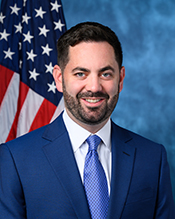
Rep. Michael Lawler
Sponsored bills
Maddy summaryThis resolution is a symbolic gesture supporting the designation of January 25-31, 2026, as "National School Choice Week." It does not create new laws or affect specific groups, but formally expresses the House's backing for raising public awareness about parental education options. The resolution encourages parents to learn about K-12 education choices (including public schools, charters, private schools, and homeschooling) and urges communities to host events during that week. It has no binding effect and focuses solely on recognition and awareness, not policy change.
Maddy summaryHRES 1022 is a non-binding congressional resolution expressing support for Catholic schools and celebrating the 52nd annual National Catholic Schools Week (January 25-31, 2026). It recognizes Catholic schools' contributions to education, noting their role in serving 1.7 million students across diverse backgrounds, with high graduation rates and community-focused values. The resolution specifically supports the week's goals, highlights the National Catholic Educational Association and U.S. Conference of Catholic Bishops' partnership, and applauds the 2026 theme "Catholic Schools: United in Faith and Community." It does not create new policies, allocate funding, or impose obligations.
Maddy summaryThe VSAFE Act of 2025 establishes a Veterans Scam and Fraud Evasion Officer within the Department of Veterans Affairs to prevent and address fraud targeting veterans. This officer will develop communication plans, training, and reporting systems for veterans, families, caregivers, and survivors to identify and avoid scams, while coordinating with agencies like the IRS, DOJ, and Social Security Administration. The bill also modifies a home loan fee deadline in the VA loan program, changing a date from June 9, 2034, to June 23, 2034. It does not create new full-time positions or alter existing Inspector General authority.
Maddy summaryThe Human Trafficking Awareness Training Recognition Act of 2026 creates a certification program for employers in industries with high human trafficking prevalence, allowing them to earn recognition after providing employee training on identifying and responding to human trafficking. Employers must apply annually between January 31 and April 30, detailing their training efforts, and the Secretary of Homeland Security will issue a one-year certificate to qualifying employers. The program prohibits false displays of certification, mandates annual reports to Congress on participation and costs, and authorizes application fees to cover administrative expenses.
Maddy summaryHR 7219, the FAIR MAP Act, requires states to redraw congressional districts to be contiguous, compact, and non-partisan, avoiding favoritism toward incumbents or political parties. It mandates that districts maintain population equality based on citizen and legally present immigrant counts (excluding undocumented individuals) and prohibits states from redrawing districts more than once between federal censuses unless required by court order. The bill also adds a citizenship checkbox to the 2030 and future decennial censuses to determine apportionment and bans ranked-choice voting for federal elections. Additionally, it requires photo ID for in-person voting and signature verification for mail ballots for federal races, effective after 2026. These provisions directly affect how states establish congressional maps and conduct federal elections.
Maddy summaryThe CHAT Act requires companies that operate companion AI chatbots (software designed to simulate emotional support or friendship) to verify the age of every user before allowing access. For minors under 18, companies must obtain verifiable parental consent, link the minor’s account to a parent’s verified account, and block access to sexually explicit content. The law also mandates companies to monitor for suicidal thoughts in minor interactions and immediately notify parents, while displaying a clear reminder every 60 minutes that the user is interacting with an AI, not a human. These requirements apply to all companies offering such chatbots to U.S. users, with enforcement by the Federal Trade Commission.
Maddy summaryThis bill creates a tax credit for businesses selling products made with U.S.-grown cotton. The credit equals 24% of the cotton's market value if processed only in the U.S. or in countries with U.S. trade deals, or 18% for other processing locations. To qualify, cotton must be digitally traced from U.S. farms to finished products and certified by the USDA as meeting origin requirements. It directly affects clothing and textile manufacturers selling qualifying products in the U.S. market.
Maddy summaryThis bill creates a tax exclusion allowing eligible law enforcement officers to exclude up to $100,000 of their ordinary income from taxable income each year. To qualify, officers must have worked full-time as law enforcement for at least 5 cumulative years and earn up to $100,000 annually. It covers police, corrections officers, probation/parole officers, sheriffs, deputies, and school resource officers. The exclusion applies to the first $100,000 of ordinary income earned during a taxable year. The provision takes effect after the bill's enactment.
Maddy summaryThe Veteran Suicide Prevention Act requires the Department of Veterans Affairs (VA) to conduct a comprehensive review of all veterans who died by suicide during the five years before the bill's enactment. The review must analyze demographics, medication history (including black box warnings and psychotropic drugs), prescribing patterns, combat trauma, and facility-specific suicide rates. The VA must submit a public report to Congress within 30 days of completing the review, detailing findings and recommendations to improve veteran safety. This applies to all veterans who received VA care during the relevant five-year period. The law aims to identify systemic patterns and inform future suicide prevention efforts.