

Maddy summaryThe PREDICT Act prohibits federal government officials, including Members of Congress, their spouses and dependents, high-ranking executive branch employees, and political appointees from trading on prediction markets tied to political events. This restriction applies to any agreement or transaction where payment depends on whether a specific political event occurs, does not occur, or happens to a certain degree. If a covered individual violates this rule, they must pay a 10% fee and forfeit any profits from the transaction, with penalties paid from personal funds rather than government salaries or allowances. The Office of Government Ethics will issue guidance on undefined terms and publish details of any fines on a public website.
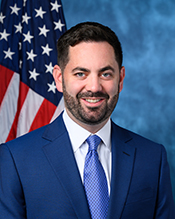
Rep. Michael Lawler
Sponsored bills
Maddy summaryThe Military Financial Literacy Act of 2026 expands personalized financial and housing counseling services for members of the Armed Forces. It requires the Department of Defense to establish a one-on-one counseling program within one year that covers credit management, budgeting, anti-predatory lending, rental planning, VA home loans, and legal protections under the Servicemembers Civil Relief Act. The program must partner with HUD-approved, tax-exempt Veteran Service Organizations that have expertise in financial literacy and housing stability. The Secretary of Defense must submit a report to Congress within two years detailing the number of service members who received counseling, completion rates, and indicators of financial stress or housing instability among participants.
Maddy summaryThe HOWIE Act requires railroads to report train accidents that cause fires or damage alongside tracks if the railroad suspects its actions caused the incident. This rule applies to all railroad companies operating under federal regulations and aims to improve transparency around infrastructure emergencies. The bill directs the Federal Railroad Administration to update existing reporting standards to include these specific scenarios. By mandating these reports, the legislation seeks to ensure that potential infrastructure hazards are documented and addressed more systematically.
Maddy summaryThis bill establishes a new Office of the Chief Economist within the Commodity Futures Trading Commission (CFTC). The Chief Economist will serve as the agency's primary economic advisor, conducting analysis on regulatory impacts, market structures, and financial data. The bill also grants the CFTC special hiring authority to appoint economists and market specialists to this office without requiring competitive service appointments. This change updates existing CFTC procedures to require coordination with the new office when reviewing market regulations.
Maddy summaryThe FREEDOM Act creates a new De-Risking Compensation Program to reimburse energy project developers when regulatory actions cause projects to be canceled or become unviable. Project sponsors pay annual premiums (1.5% of capital contribution) to enroll, and can receive compensation if agencies fail to meet deadlines or revoke permits. The bill establishes strict permitting timelines (90 days for routine authorizations, 1 year for complex authorizations) and creates a Permitting Performance Fund to pay for contractor work when agencies miss deadlines. It prohibits agencies from halting or delaying "fully permitted projects" (projects that have received most required authorizations). The bill directly affects energy developers, federal agencies, and the federal government through new compensation obligations.
Governing Unaccredited Representatives Defrauding VA Benefits Act or the GUARD VA Benefits Act This bill imposes fines on individuals for soliciting, contracting for, charging, or receiving any unauthorized fee or compensation with respect to the preparation, presentation, or prosecution of any claim for Department of Veterans Affairs benefits. The attempted commission of such offenses is also punishable by fine.
Maddy summaryThis bill exempts H-1B visa holders working in healthcare from a presidential restriction that requires a $100,000 payment for entry into the United States. It directly affects foreign medical professionals and healthcare workers who hold H-1B nonimmigrant visas. The legislation removes the additional fee requirement for these workers while limiting any fees that may be charged to the standard amount already established under immigration law. The bill defines healthcare workers using the existing definition from the Affordable Care Act and was introduced in the 119th Congress in March 2026.
Maddy summaryThis bill establishes a dedicated Transportation Security Trust Fund to ensure money collected from airline passenger security fees is used exclusively for aviation security purposes. The fund would support the Transportation Security Administration by paying salaries and benefits for its personnel, funding passenger and baggage screening operations, and purchasing security technology and infrastructure. Additionally, the legislation guarantees that aviation security operations can continue without interruption during government funding lapses, prioritizing frontline staff compensation and operational expenses before using remaining funds for technology upgrades.
Enhanced Iran Sanctions Act of 2025 This bill imposes sanctions on certain foreign persons (individuals and entities) that are involved in Iran's petroleum sector as well as certain associated persons. The bill also requires or authorizes actions to facilitate the enforcement of sanctions on Iran. Specifically, the bill requires the President to impose visa- and property-blocking sanctions on any foreign person that, after the bill's enactment, knowingly engages in any transaction related to the processing, export, or sale of oil, condensates, gas, liquefied natural gas, or other petrochemical products in whole or in part from Iran. The President must also impose sanctions on certain foreign persons associated with a sanctioned individual or entity. For example, the President must sanction the subsidiaries and corporate officers of a sanctioned business. The bill provides certain exceptions to these sanctions, including specifying that sanctions do not apply to the importation of goods or to conducting or facilitating transactions for humanitarian assistance. The Department of State must establish an interagency working group that shall seek to establish a multilateral contact group to coordinate international efforts to enforce sanctions on Iran. The bill expands the State Department rewards program to authorize a reward payment to any individual who furnishes information leading to the identification of a person (1) subject to sanctions under this bill, or (2) that has attempted or is attempting to evade sanctions under this bill.
Maddy summaryThis bill, known as the Improving Dental Administration Act of 2026, would allow certain state laws about dental benefits to override federal rules under the Employee Retirement Income Security Act. It directly affects states that have their own regulations governing dental insurance and benefit plans for employees. The key provision creates an exemption that takes effect 18 months after the bill is enacted, permitting state laws related to dental benefit administration to apply even if they differ from federal requirements. The exemption only applies to state laws that do not conflict with existing federal laws in the Employee Retirement Income Security Act.