

Coastal State Climate Preparedness Act of 2023 This bill directs the Department of Commerce to establish a coastal climate change adaptation preparedness and response program. Under the program, Commerce must (1) assist coastal states with voluntarily developing coastal climate change adaptation plans, and (2) provide financial and technical assistance as well as training for coastal states to implement the adaptation plans.
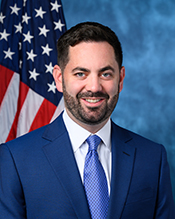
Rep. Michael Lawler
Sponsored bills
Maddy summaryThis bill requires that AM radio receivers be included as standard equipment in all new motor vehicles (such as cars and trucks) sold in the United States, with a rule to be issued by the Department of Transportation within one year. The rule must ensure AM radio is easily accessible on the dashboard and allows manufacturers to use digital AM radio technology instead of traditional AM. During the one-year period between the bill's enactment and the rule's effective date, manufacturers must clearly label vehicles without AM radio. The bill also directs a study to evaluate whether an alternative system could deliver emergency alerts as reliably as AM radio across the country, especially during crises.
Healthcare Extension and Accessibility for Developmentally disabled and Underserved Population Act of 2023 or the HEADs UP Act of 2023 This bill authorizes the Department of Health and Human Services (HHS) to award grants to support health centers that provide services for individuals with developmental disabilities, including dental care. Grant recipients must provide specialized treatment to individuals with developmental disabilities as necessary. The bill also provides statutory authority for HHS to designate individuals with developmental disabilities as health-professional shortage population groups for the purposes of the National Health Service Corps (NHSC). The NHSC provides scholarships and student loan repayment awards to eligible providers who agree to work with designated populations or in areas that face shortages of primary care, dental care, and mental health care providers.
Maddy summaryHR 3337, the Fuels Parity Act, removes a prohibition that previously excluded corn starch ethanol from being counted as "advanced biofuel" under the Clean Air Act. This change directly affects corn-based ethanol producers by allowing corn starch ethanol to qualify under renewable fuel standards. The bill also requires the EPA to update its methodology for calculating greenhouse gas emissions from corn-based ethanol and biomass-based diesel every five years, starting 90 days after enactment, with the first update mandating the use of the Argonne National Laboratory's GREET model. These provisions aim to standardize how emissions are assessed for these fuels under federal renewable fuel programs.
Maddy summaryHR 3312, the Moms Matter Act, establishes a $25 million annual grant program (2024-2027) for community organizations, health providers, and local governments to address maternal mental health and substance use disorders. It prioritizes funding for initiatives in areas with high maternal mortality rates, health disparities, or health professional shortage areas, focusing on evidence-based services like integrated mental health care in prenatal settings, postpartum support, stigma reduction, and provider training. The bill also creates a $15 million annual workforce program (2024-2028) to diversify maternal mental health providers through scholarships, training in bias/racism, and recruitment in underserved communities. These grants directly affect pregnant and postpartum individuals in high-risk demographic groups and aim to improve access to specialized care through concrete program requirements.
Maddy summaryHRES 424 is a non-binding resolution recognizing the 100th anniversary of the birth of His Holiness Pramukh Swami Maharaj, the spiritual leader of the BAPS Swaminarayan Sanstha. It formally honors his life and legacy as the founder of a global Hindu organization with thousands of places of worship. The resolution has no policy impact or effect on any individuals or groups; it serves solely as a commemorative gesture by the U.S. House of Representatives.
This resolution calls for the immediate extradition or rendering of convicted criminals William Morales, Joanne Chesimard, and others receiving safe harbor in Cuba to the United States. The resolution also urges the Secretary of State, Attorney General, and international community to continue to press for the immediate return of all fugitives from justice to the United States.
Maddy summaryHR 3513, the EANS Extension Act, extends funding deadlines for two emergency education assistance programs. It keeps EANS I funds (from the 2021 Consolidated Appropriations Act) available through September 30, 2023, and extends EANS II funds (from the American Rescue Plan Act) through 2024. These extensions apply to schools and educational programs receiving these specific federal funds, allowing them to use the money longer than originally scheduled. The bill makes these changes without altering the underlying program requirements or creating new policies.
Maddy summaryHR 3541, the Accounting STEM Pursuit Act of 2023, amends the Elementary and Secondary Education Act to include accounting education in school curricula. It requires schools to offer accounting career awareness and programs, particularly to students from groups underrepresented in accounting careers. The bill positions accounting as a STEM field and aims to expand student exposure to accounting through grade 12 courses. This change directly affects K-12 students and schools by integrating accounting into educational opportunities to diversify the future accounting workforce.
Maddy summaryThis bill establishes federal standards for labor-management cooperation between public safety employers (state and local governments) and public safety workers (law enforcement officers, firefighters, and emergency medical services personnel). It requires the Federal Labor Relations Authority to determine if states substantially provide rights like collective bargaining, union representation, and binding arbitration for these workers. States found lacking would need to follow federal bargaining procedures after a two-year transition period or following the next legislative session. The bill explicitly respects existing state laws that provide comparable or better rights to public safety workers. It also prohibits strikes or work stoppages that would disrupt emergency services.