

Maddy summaryThis resolution formally designates May as Lyme and Tick-borne Disease Awareness Month to highlight the growing prevalence of these illnesses across the United States. The bill cites data showing a significant increase in reported cases and emergency room visits for tick bites, emphasizing the need for public education and early detection. By supporting this designation, the House aims to encourage awareness and promote better clinical responses to Lyme disease and related conditions. The measure does not create new laws or funding but serves as a symbolic gesture to draw attention to the issue.
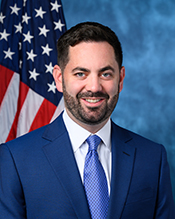
Rep. Michael Lawler
Sponsored bills
Maddy summaryThe Supporting Newborn Parents Act of 2026 creates a new tax credit of $2,000 for each child born to a taxpayer during the tax year. To receive this credit, parents must have earned income, with the maximum amount limited to 20% of their earnings, and the benefit phases out as family income rises. The bill allows parents to request an advance payment of the credit shortly after a child's birth by providing their information when applying for a Social Security number. Additionally, the legislation requires the Treasury to establish an online portal to help parents understand how to make elections regarding advance payments and estimated income figures.
Maddy summaryThe Federal Halo Act creates a new federal crime for approaching or staying within 15 feet of a law enforcement officer after receiving a verbal warning to stop. This provision applies to any individual who knowingly violates such a warning with the intent to interfere with the officer's duties, threaten them, or harass them. The bill defines harassment as a course of conduct that intentionally causes substantial emotional distress to the officer without a legitimate purpose. Anyone convicted of this offense could face a fine, up to five years in prison, or both penalties.
Maddy summaryThe IGNITE HBCU Excellence Act authorizes federal grants to Historically Black Colleges and Universities (HBCUs) to fund long-term improvements to their campus facilities and infrastructure. These grants are awarded competitively to eligible HBCUs based on criteria such as the age of their facilities, deferred maintenance needs, financial capacity, and student enrollment levels. Recipients may use the funds to construct or renovate buildings, upgrade technology and broadband systems, improve safety measures, and develop workforce training hubs, while being prohibited from using the money for routine maintenance or athletic facilities. The legislation also includes provisions for reporting on project outcomes and requires institutions to create comprehensive master plans that involve consultation with diverse campus and community stakeholders.
Maddy summaryThis bill expands housing benefits for volunteer firefighters and other first responders by allowing them to receive a $18,000 income deduction when applying for USDA single-family housing loans. It also grants these volunteers eligibility to purchase discounted homes through the Good Neighbor Next Door program and similar federal housing sales initiatives. To qualify, individuals must provide a verification letter from their volunteer organization confirming at least two years of service, meeting specific hour or membership requirements, and holding valid state or tribal certification. The legislation defines "qualified volunteer first responders" based on existing Internal Revenue Code standards and requires proof of a commitment to continue volunteering for at least one year after buying a home.
Maddy summaryThis bill creates a new funding stream for medium-sized cities with populations between 200,000 and 999,999 that operate public transit systems. It directs 1.5 percent of unallocated federal transit funds to these eligible areas based on how well their performance matches that of larger cities with over 1 million residents. To qualify, a city must meet or exceed the national average in at least one specific metric, such as passenger miles per vehicle or ridership per capita. The Department of Transportation will use existing data to calculate these rankings and distribute the money accordingly.
Maddy summaryThe Officer Wellness and Peer Support Act of 2026 directs the Attorney General to submit a report on strategies for improving mental health support for law enforcement officers. This report, due within 270 days of enactment, will outline best practices for reducing mental health stigma, encouraging access to counseling and screening, and ensuring the confidentiality of these services. The requirement involves consulting with various law enforcement agencies, professional organizations, and mental health groups to gather input. Additionally, the bill defines "law enforcement officer" broadly to include police, corrections, probation, parole, and judicial officers. Ultimately, the legislation mandates the collection of information and recommendations rather than establishing new federal programs or funding.
This resolution expresses support for police officers and other law enforcement personnel. The resolution further recognizes law enforcement officers across the United States in the pursuit of preserving safe and secure communities; the need to ensure that such officers have the equipment, training, and resources necessary to protect their health and safety while they are protecting the public; and the law enforcement community for acts of sacrifice and heroism. The resolution expresses condolences and appreciation to the loved ones of each law enforcement officer who has made the ultimate sacrifice in the line of duty.
Maddy summaryThis bill allows the United States to use Foreign Military Financing funds to pay for defense equipment and services sold directly by private companies to foreign countries. Currently, these funds are typically reserved for government-to-government sales, but this legislation expands eligibility to include direct commercial contracts. The Secretary of State must approve each arrangement in consultation with the Secretary of Defense to ensure it aligns with national security interests. Additionally, the bill requires new regulations within 180 days to oversee audits, reporting, and compliance for these commercial transactions. This expansion operates alongside the existing Foreign Military Sales program without replacing it.
Maddy summaryThis House resolution condemns the ongoing civil war in Sudan and calls for an end to external support provided to the warring parties, the Sudanese Armed Forces and the Rapid Support Forces. It urges the Trump Administration to stop supplying weapons or other assistance to these groups and to negotiate a peaceful settlement that restores democratic governance. The bill also highlights the severe humanitarian crisis affecting millions of people and demands that aid workers be granted safe, unrestricted access to deliver essential supplies. Additionally, it calls on the international community to support post-conflict reconstruction and establish a justice mechanism to hold perpetrators of war crimes accountable.