

Maddy summaryHR 6119, the State Department Security Notification Act, requires the Secretary of State to notify Congress when certain high-level diplomatic officials lose their security clearances. Specifically, it applies to officials at or above Assistant Secretary level, chief of mission roles, or ambassadors/special envoys reporting directly to the Secretary. Within 15 days of a clearance suspension or revocation, the Secretary must submit a written notification to the House Foreign Affairs and Senate Foreign Relations committees, followed by a detailed briefing within 30 days covering the reasons for the action and the official's current employment status. The bill establishes a formal process for congressional oversight of security clearance actions affecting senior diplomatic personnel.
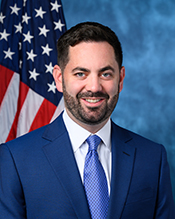
Rep. Michael Lawler
Sponsored bills
Maddy summaryThis bill codifies the Young African Leaders Initiative (YALI) as a formal U.S. government program. It authorizes annual fellowships for African leaders aged 25-35 to participate in U.S.-based leadership training (including the Mandela Washington Fellowship) and establishes at least four regional leadership centers across sub-Saharan Africa for ongoing professional development in business, civic engagement, and public administration. The program requires annual congressional reports on progress and impacts, with implementation ending after five years. Directly affecting young African leaders (ages 18-35 for regional centers) in business, civic leadership, and governance, it provides structured training, networking, and technical assistance to strengthen U.S.-Africa partnerships.
Maddy summaryThis bill would authorize the U.S. government to confiscate Russian sovereign assets held in U.S. jurisdiction and use those funds to support Ukraine's reconstruction and humanitarian needs following Russia's invasion. It prohibits releasing these blocked assets until Russia fully compensates Ukraine or agrees to an international compensation mechanism. The bill establishes a "Ukraine Support Fund" to hold confiscated assets and requires regular congressional reporting on how these funds are allocated for Ukraine's recovery. It also includes provisions for international coordination with allies on sanctions and asset management related to Russia's invasion of Ukraine.
Maddy summaryThe SHIP Act imposes sanctions on foreign entities that knowingly handle Iranian petroleum, targeting those involved in port operations, transportation, refining, or ship-to-ship transfers of Iranian oil. Starting 90 days after enactment, the President must block assets, deny visas, and impose penalties on individuals or companies engaging in these activities, including family members or owners of sanctioned entities. It requires annual reports tracking Iran's oil exports, revenues, and key players like shipping companies and ports. The sanctions terminate if the President certifies Iran has stopped supporting terrorism and dismantled weapons programs.
Maddy summaryHR 6247 amends Section 1229(m)(1)(B) of the 2008 National Defense Authorization Act to change the description of the Office of the Special Inspector General for Afghanistan Reconstruction's (SIGAR) mandate. The bill replaces the phrase "reconstruction of Afghanistan" with "assistance for the benefit of the Afghan people" in the law. This technical adjustment broadens SIGAR's oversight scope to include all U.S. assistance to Afghanistan, not just physical reconstruction projects. The change directly affects SIGAR's reporting requirements under the law.
Maddy summaryThis bill requires the Inspector General of five specific federal agencies (State, Defense, Homeland Security, FBI, and CIA) to report within 90 days on any employees with financial, organizational, or communication ties to Hamas - including social media posts supporting Hamas. It also mandates a broader 180-day report from the Comptroller General on the prevalence of such ties across these agencies, including recommendations for future legislation. The bill directly affects all employees (including military personnel) in those agencies who have any connection to Hamas as defined by the legislation. It focuses on transparency and investigation, not immediate action against employees, and does not change current hiring or employment policies.
Maddy summaryHR 340, the "Hamas and Other Palestinian Terrorist Groups International Financing Prevention Act," imposes sanctions on foreign individuals, entities, and governments that provide significant financial, material, or transactional support to Hamas, the Palestinian Islamic Jihad, or their affiliates. The bill requires the President to identify those supporting these groups and mandates sanctions including restrictions on exports, defense sales, and financial transactions over $10 million, while exempting humanitarian assistance like medicine and food. It also requires regular reports on foreign countries that host or support these groups' financial networks and mandates actions to disrupt their fundraising and money laundering activities. The legislation terminates after 3 years or if Hamas and Palestinian Islamic Jihad are no longer designated as terrorist organizations under U.S. law.
Maddy summaryHRES 821 is a symbolic resolution designating November 12 as Creutzfeldt-Jakob Disease (CJD) Awareness Day. It formally supports raising public awareness about CJD, a rare, rapidly progressive, and fatal brain disorder affecting patients and their families. The resolution recognizes the challenges posed by CJD's rarity and swift progression, without proposing any new policies or funding. It serves as a non-binding acknowledgment of the disease's impact, intended to benefit those directly affected by CJD.
Maddy summaryHRES 806 is a symbolic resolution designating October 2023 as "World Menopause Awareness Month" and expressing the House's support for improved global awareness and access to care during menopause. It highlights that menopause affects millions of women, with symptoms like hot flashes (experienced by 75% of U.S. women) and potential impacts on work productivity and health risks like heart disease. The resolution encourages the Health and Human Services, Defense, and Veterans Affairs secretaries to share menopause information, fund research, and update treatment tools to support women's health. It does not create new laws or funding but aims to raise awareness and guide existing agency efforts.
Maddy summaryThis resolution (HRES 791) expresses the House of Representatives' support for designating October 2023 as "National Down Syndrome Awareness Month." It does not create new laws or allocate funding but formally recognizes the contributions and inclusion of people with Down syndrome in society. The resolution highlights increased life expectancy, workplace participation, and federal research investment (noting NIH funding rose from $18M to $124M since 2014), while commending advocates and emphasizing the community's role in driving policy improvements. It serves as a symbolic acknowledgment to celebrate the Down syndrome community and reaffirm ongoing support for research and inclusion efforts.