

Financial Stability Oversight Council Reform Act This bill subjects the budgets of the Financial Stability Oversight Council (FSOC) and the Office of Financial Research (OFR) to the annual appropriations process and establishes requirements for reports and a public notice and comment period. The budgets of the FSOC and the OFR are funded by assessments on financial institutions which are deposited into the Financial Research Fund and, under current law, are immediately available to be spent. This bill requires the funding from the Financial Research Fund to be made available by appropriations acts. The OFR must submit quarterly reports to Congress regarding its finances; workforce; and actions taken to achieve the goals, objectives, and performance measures of the office. The OFR must provide a public notice and comment period of at least 90 days before issuing any proposed report, rule, or regulation. The bill expands the duties of the OFR to include publishing an annual work plan; consulting with other federal departments and agencies with relevant expertise prior to preparing any public report with respect to a specified entity, class of entities, or financial product or service; and developing and implementing a cybersecurity plan. The Government Accountability Office must annually audit the cybersecurity plan and its implementation.
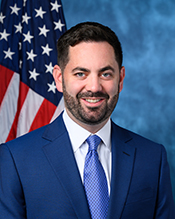
Rep. Michael Lawler
Sponsored bills
This bill allows certain small businesses a new tax credit for 10% of their qualified drug threat mitigation research expenses. Such expenses include research into mitigating or treating the effects of specified drugs, including any emerging drugs, fentanyl, a fentanyl-related substance, or methamphetamine.
Maddy summaryHR 6980, the DOCTORS Act, reallocates unused J-1 visa waivers that states did not use for foreign medical graduates. Each state must report unused waivers by September 30 annually, and the State Department will redistribute them equally over three years for the next fiscal year. Ten percent of redistributed waivers must support doctors working in facilities serving medically underserved communities. This directly affects state agencies managing visa waivers and impacts foreign doctors seeking permanent U.S. residency after training.
Maddy summaryThis bill requires cabinet secretaries (like the Secretary of Defense or Health Secretary) to notify Congress in writing within 24 hours if they cannot perform their duties. It applies to all cabinet members whose appointments require Senate confirmation. If a secretary cannot notify due to a medical emergency or other urgent situation, their agency must submit the notice instead. The law aims to ensure Congress is promptly informed about temporary leadership gaps in major federal departments.
Maddy summaryThis bill requires the U.S. Department of Agriculture (USDA) to create and post online information about energy-efficient pumping systems, detailing cost savings, energy reductions, water conservation, and carbon benefits for agricultural use. It also mandates a user-friendly online tool for farmers to input data about their current systems and estimate potential savings from upgrades. Additionally, the bill directs the USDA to establish training for energy auditors on pumping system efficiency and amend the Conservation Stewardship Program to include energy-efficient pumping systems as a qualifying activity. These provisions directly support farmers, ranchers, and aquaculture operations in making informed decisions about irrigation and water management infrastructure improvements.
Youth Lead Act This bill reauthorizes through FY2028 National Institute of Food and Agriculture grants to the Girl Scouts of the USA, the Boy Scouts of America, the National 4–H Council, and the National FFA Organization. These grants must be used to establish pilot projects to expand the programs carried out by the organizations in rural areas and small towns.
Maddy summaryThe NO TIME TO Waste Act establishes an Office of Food Loss and Waste within the Department of Agriculture to coordinate national efforts to reduce food loss and waste. It creates a grant program for states, local governments, and tribal entities to collect data on food waste reduction policies and develop model policies, while requiring federal contractors to report on their food waste reduction efforts. The bill sets a goal to reduce food loss and waste by 50% by 2030 compared to 2016 levels, with annual reports tracking progress to Congress. It also establishes regional coordinators to facilitate food recovery and partnerships between government, food businesses, and nonprofits, and mandates a national education campaign to teach consumers about food preservation, safety, and composting. Funding is authorized for fiscal years 2024-2028 to support these initiatives.
Maddy summaryHRES 955 is a resolution commending Taiwan for its democratic election history and supporting Taiwan's democratic institutions. It recognizes Taiwan's transition to democracy since the late 1980s, including 7 presidential and 9 legislative elections held since then, all deemed free and fair. The resolution specifically expresses support for Taiwan's upcoming January 13, 2024, elections and condemns interference by the Chinese Communist Party. It affirms U.S. commitment to a strong partnership with Taiwan across multiple domains and supports Taiwan's self-defense and liberty. As a procedural resolution, it does not create new law but formally expresses congressional support for Taiwan's democratic development.
Maddy summaryThe Affordable Connectivity Program Extension Act of 2024 allocates $7 billion in funding for the Affordable Connectivity Program (ACP) during fiscal year 2024. The ACP provides subsidies to low-income households to help cover the cost of internet service and connected devices like laptops or tablets. This funding ensures the program can continue supporting eligible households throughout the year, with the money remaining available until fully spent. The bill extends existing program funding without changing eligibility criteria or service requirements.
Maddy summaryThis bill requires the Environmental Protection Agency (EPA) to create a national strategy for communicating PFAS risks to the public. The strategy must share information about PFAS hazards in land, air, water (including drinking and agricultural water), and consumer products. It also mandates notifying people about how they might be exposed to PFAS and how to reduce that exposure, while consulting states with proven communication approaches. The bill directly affects communities near PFAS contamination sites and consumers using products containing these chemicals.